Energy Priorities Across the Globe: A Global Perspective
Policy makers, business leaders, and academics convening at COP28 in Dubai are focusing heavily on the intertwined topics of climate change and the energy transition. Discussions on these issues are vital, but aligning policies to address the future of energy is a complex task due to the varied and sometimes conflicting priorities among nations.
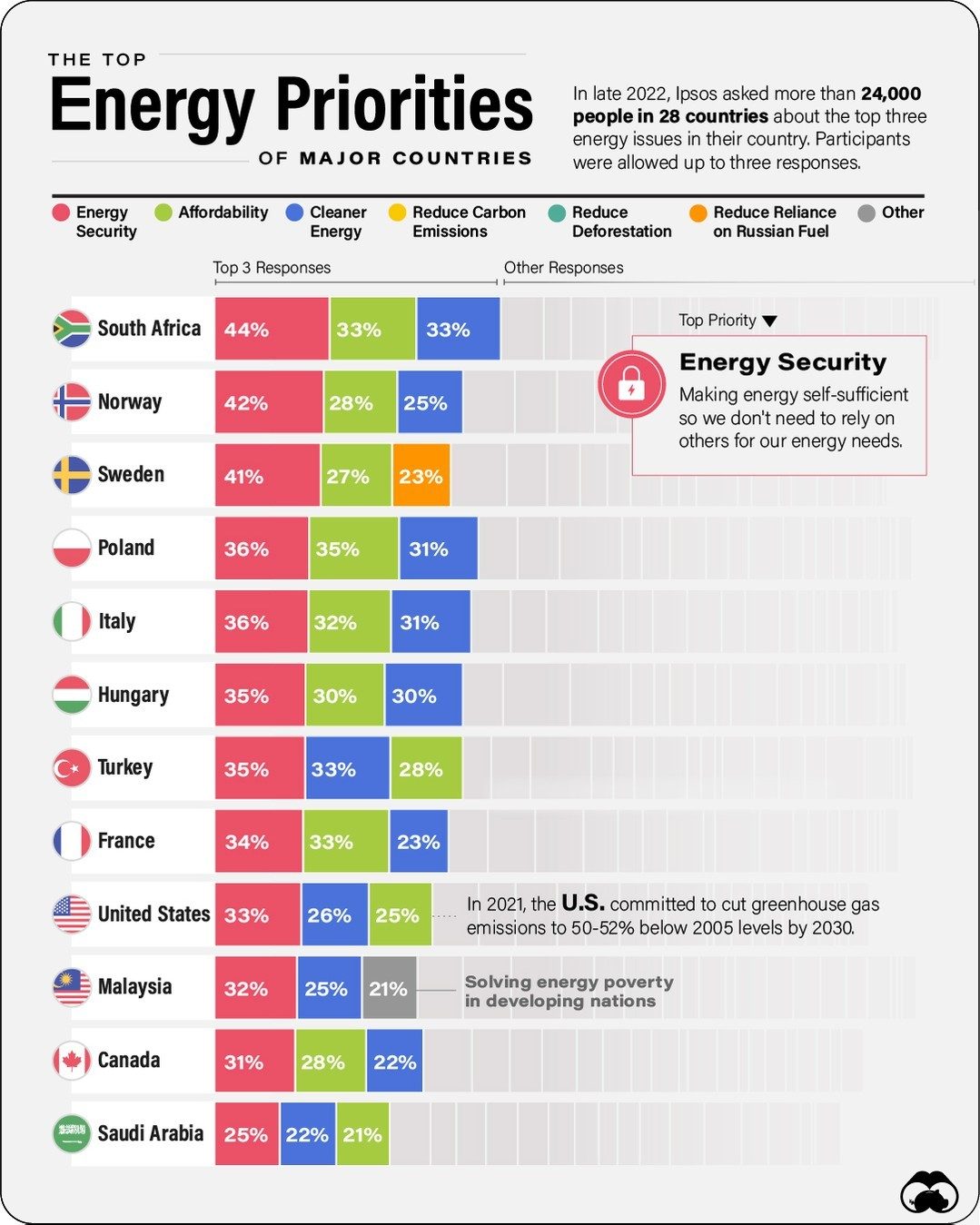
An Ipsos visualization highlights how 24,000 people from 28 different countries perceive the top energy issues in their respective nations. This infographic provides a valuable snapshot of global energy concerns, revealing both universal priorities and unique regional concerns. Key energy issues include energy security, affordability, cleaner energy, reducing carbon emissions, reliance on Russian fuel, and deforestation.
Understanding the Context: Why This Matters
The global energy landscape is undergoing significant changes, driven by the urgent need to mitigate climate change and ensure sustainable energy supplies. Understanding the diverse priorities of different countries is crucial for creating effective, universally applicable energy policies. It aids in identifying common ground that can lead to international cooperation, while also highlighting areas where tailored solutions might be necessary.
Main Discussion
Global Trends in Energy Priorities
The infographic reveals notable trends in global energy priorities. Energy security and affordability are universally important, but the relative emphasis on these factors varies significantly from one country to another. For instance, South Africa prioritizes energy security at 44%, while Norway and Sweden emphasize cleaner energy and reducing carbon emissions.
Regional Variations
France and the United States both prioritize energy security, but the former places greater emphasis on affordability and cleaner energy, whereas the latter focuses more on reducing carbon emissions. Great Britain and Germany share a strong focus on cleaner energy, while Australia and Canada prioritize energy security and affordability.
South Korea and China both prioritize energy security, with South Korea focusing more on cleaner energy and China more on reducing carbon emissions. Brazil prioritizes energy security and affordability, reflecting its reliance on hydropower and the need for stable, affordable energy supplies.
The Role of International Agreements
International agreements and global cooperation play a vital role in addressing these priorities. COP28 and similar forums provide platforms for nations to align their energy policies and work towards common goals. For example, the Paris Agreement aims to limit global warming to well below 2°C, with efforts to limit the increase to 1.5°C. This requires significant reductions in carbon emissions and a transition to cleaner energy sources.
International cooperation can also facilitate the sharing of technology and resources, enabling countries to implement more effective and sustainable energy policies. By working together, nations can overcome the challenges posed by conflicting priorities and create a more unified approach to energy management.
Practical Tips for Policy Makers and Business Leaders
Engage with Local Communities
Policy makers and business leaders should engage with local communities to understand their unique energy needs and concerns. This can help to develop policies and initiatives that are tailored to local contexts and more likely to be effective.
Foster International Cooperation
Encourage international cooperation to share best practices, technologies, and resources. This can help to accelerate the transition to cleaner energy and improve energy security and affordability.
Prioritize Flexible Policies
Develop policies that are flexible and adaptable to changing circumstances. This can help to ensure that energy policies remain effective in the face of new challenges and opportunities.
Address Conflicting Priorities
Acknowledge and address the conflicting priorities among nations. This can involve negotiating trade-offs and finding common ground to ensure that energy policies are both effective and fair.
Important Takeaways
- Energy security and affordability are universally important, but the relative emphasis on these factors varies significantly from one country to another.
- International cooperation is essential for addressing global energy challenges and creating effective, universally applicable policies.
- Policy makers and business leaders should engage with local communities, foster international cooperation, and prioritize flexible, adaptable policies.
- Tailored solutions may be necessary to address the unique energy needs and concerns of different regions.
Conclusion
The infographic presented by Ipsos offers a comprehensive view of global energy priorities, highlighting both universal concerns and regional variations. Understanding these priorities is crucial for creating effective, sustainable energy policies that address the diverse needs of different nations. By fostering international cooperation, engaging with local communities, and prioritizing adaptable policies, policy makers and business leaders can work towards a more secure, affordable, and sustainable energy future.
Watch the Reel
Questions readers ask
What is the purpose of the Ipsos visualization mentioned in the article?
The Ipsos visualization aims to illustrate how 24,000 individuals from 28 countries view the most pressing energy issues in their nations. It offers a global perspective on energy concerns, highlighting both shared priorities and unique regional issues.
Why is aligning energy policies a complex task according to the article?
Aligning energy policies is complex due to the varied and sometimes conflicting priorities among different nations. These priorities can range from energy security and affordability to cleaner energy sources and reducing carbon emissions.
Which topics are at the forefront of discussions at COP28 in Dubai?
The COP28 discussions in Dubai are heavily focused on climate change and the energy transition. These intertwined topics are crucial for shaping future energy policies and addressing global energy challenges.
What are some of the key energy issues highlighted in the Ipsos visualization?
Key energy issues highlighted include energy security, affordability, the transition to cleaner energy, reducing carbon emissions, and concerns about energy reliance on specific countries, such as Russia.
What are some of the differences in energy priorities among the 28 countries surveyed?
While some energy priorities are universal, such as energy security and affordability, there are also unique regional concerns. For instance, some countries may prioritize reducing reliance on certain energy suppliers, while others focus more on developing renewable energy trends.
How do global energy priorities shape the discussions at COP28?
Global energy priorities inform the discussions at COP28 by providing a comprehensive view of what different nations consider their top concerns. This helps in formulating policies that address these varied priorities, ensuring a more inclusive and effective approach to global energy challenges.
Related deep dives
Similar reads based on topic and creator.


Recent articles
Fresh deep dives from the latest Reels we unpacked.




Comments
Be the first to comment.