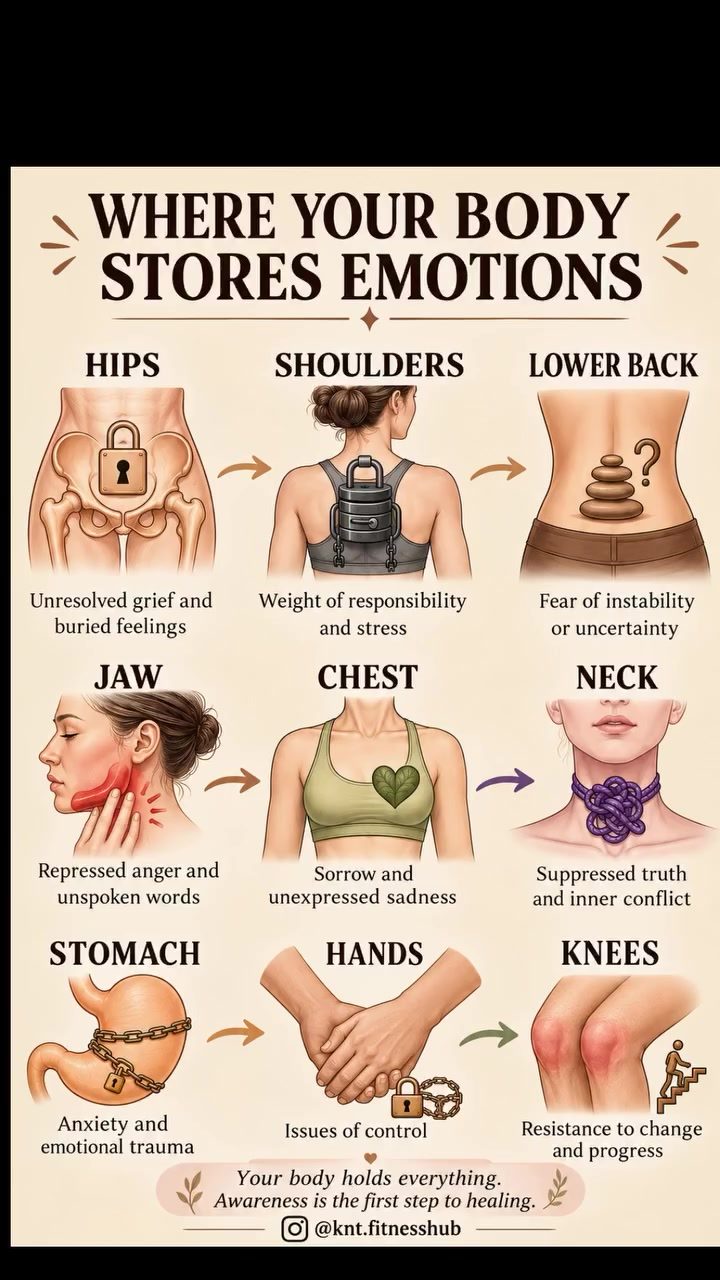
How Different Body Parts Store Emotions
The connection between our physical bodies and our emotional states is profound. Many people experience stress and difficult emotions as physical tension in various body parts. While the following information is based on a wellness illustration and not medical fact, it can serve as a helpful reminder to pay attention to our bodies and prioritize mental health.
Why This Matters
Understanding where your body stores emotions can help you recognize and address underlying issues. By becoming aware of these connections, you can take steps towards healing and improving your overall well-being. This knowledge also emphasizes the importance of self-care and seeking support when needed.
The Emotional Map of the Body
Hips and Lower Back
The hips and lower back are often associated with unresolved grief and buried feelings, as well as fear of instability or uncertainty. If you frequently experience tightness or discomfort in these areas, it might be a sign that you're carrying emotional baggage from past events.
Shoulders
Shoulders often bear the weight of responsibility or uncertainty. If you find yourself clenching your shoulders or feeling tension in this area, it could indicate that you're taking on too much or feeling overwhelmed by your obligations.
Jaw
Repressed anger and unspoken words can manifest as tension in the jaw. If you notice that you're grinding your teeth or clenching your jaw, consider whether there are emotions you need to express or conflicts you need to address.
Chest
The chest is connected to sorrow and unexpressed sadness. If you experience tightness or discomfort in your chest, it might be a sign that you're holding onto grief or sorrow and need to find a way to release these emotions.
Neck
Suppressed truth and inner conflict can show up as tension in the neck. If you frequently experience neck pain or stiffness, it could be a sign that you need to confront and address emotional turmoil within yourself.
Stomach
Anxiety and emotional trauma can be stored in the stomach. If you experience digestive issues or feelings of unease in your stomach, it might be a sign that you're carrying emotional stress and need to find ways to manage it.
Hands
Issues of control are often reflected in the hands. If you experience tension, tingling, or discomfort in your hands, consider whether you're feeling a lack of control in your life and need to find ways to regain a sense of empowerment.
Knees
Resistance to change and progress can manifest as issues in the knees. If you experience knee pain or discomfort, it might be a sign that you're resisting necessary changes or feeling stuck in your life.
Awareness and Healing
Awareness is the first step to healing. By paying attention to the emotional messages your body sends you, you can begin to address underlying issues and improve your overall well-being. Remember, it's essential to be gentle with yourself and seek support when needed.
The Connection Between Mind and Body
The mind-body connection is a powerful force that influences our overall well-being. By paying attention to the emotional messages our bodies send us, we can take steps towards healing and improving our mental and physical health.
Practical Tips for Addressing Emotional Tension
Mindfulness and Meditation
Mindfulness and meditation practices can help you become more aware of your emotions and the physical sensations they cause. By regularly practicing mindfulness, you can learn to recognize and address emotional tension before it becomes overwhelming.
Gentle Movement and Stretching
Gentle movement and stretching exercises can help release physical tension and promote emotional healing. Incorporate yoga, tai chi, or other low-impact exercises into your routine to help your body and mind relax and rejuvenate.
Deep Breathing
Deep breathing exercises can help you manage stress and release emotional tension. Try incorporating deep breathing exercises into your daily routine to promote a sense of calm and well-being.
Creative Expression
Engaging in creative activities, such as painting, writing, or playing music, can help you process and express your emotions. By channeling your feelings into a creative outlet, you can gain a deeper understanding of your emotional state and find relief from emotional tension.
Seeking Support
Don't hesitate to seek support from friends, family, or a mental health professional when needed. Talking about your feelings with someone you trust can provide emotional relief and help you gain new insights into your emotional state.
Important Takeaways
- The body and mind are deeply connected, and stress and difficult emotions can show up as physical tension in different parts of the body.
- Understanding where your body stores emotions can help you recognize and address underlying issues.
- Awareness is the first step to healing, and it's essential to be gentle with yourself and seek support when needed.
The Role of Self-Care
Self-care is an essential component of maintaining both physical and emotional health. Engaging in activities that nourish your body, mind, and soul can help you manage stress and promote overall well-being. Remember that self-care is not a luxury but a necessity for your well-being.
Embracing the Mind-Body Connection
By embracing the mind-body connection, you can take a holistic approach to your health and well-being. Pay attention to the physical sensations that accompany your emotions, and use this knowledge to guide your self-care and healing journey.
Conclusion
Your body and mind are intricately connected, and paying attention to the emotional messages your body sends you can be a powerful tool for healing and growth. By becoming aware of the emotional tension stored in different body parts, you can take steps towards addressing underlying issues and improving your overall well-being. Remember to be gentle with yourself, seek support when needed, and prioritize self-care in your daily life.
Watch the Reel
Questions readers ask
How do emotions manifest in the body, according to the article?
The article suggests that emotions often manifest as physical tension in specific body parts. This connection can help individuals recognize and address underlying emotional issues by paying attention to their bodily sensations.
What is the significance of understanding where emotions are stored in the body?
Recognizing where emotions are stored can help individuals identify and address underlying emotional issues. It can also encourage self-care and prompt individuals to seek supportive resources when needed.
Which body parts are mentioned as commonly storing emotions, according to the article?
The article specifically mentions the hips and lower back as areas where emotions are often stored. It also implies that various body parts can experience tension related to emotional states.
What should I do if I feel tension in my hips or lower back?
If you feel tension in these areas, consider it a signal to check in with your emotional state. Reflect on any stress or difficult emotions you might be experiencing and consider ways to address them, such as through self-care or seeking support.
Can understanding emotional tension in the body help improve well-being?
Yes, becoming aware of how emotions manifest physically can help you recognize and address underlying issues. This awareness can guide you towards healing and improving your overall well-being.
What does the article suggest about the relationship between the body and mental health?
The article emphasizes that the connection between the physical body and emotional states is profound. Paying attention to physical tension can serve as a reminder to prioritize mental health and seek appropriate support.
Is the information in the article based on medical research or general wellness insights?
The article states that the information is based on a wellness illustration and not medical fact. However, it can still be a helpful reminder to pay attention to our bodies and prioritize mental health.
Related deep dives
Similar reads based on topic and creator.




Recent articles
Fresh deep dives from the latest Reels we unpacked.




Comments
Be the first to comment.