The Impact of Electric Vehicles on Global Oil Savings
As the transportation sector increasingly embraces electrification, the global demand for oil is steadily decreasing. Electric vehicles (EVs) are playing a pivotal role in this shift, significantly reducing daily oil consumption. This article explores the substantial oil savings achieved through the adoption of electric vehicles between 2015 and 2025, highlighting the contributions of various vehicle types.
Why This Matters
Electric vehicles are not just a trend; they are a transformative force in the global energy landscape. The transition to EVs is reshaping the demand for oil, with electricity emerging as the new primary fuel source. Understanding the extent of this shift and the impact of different vehicle types is crucial for policymakers, investors, and consumers alike.
The Oil Savings Breakdown
Passenger Vehicles
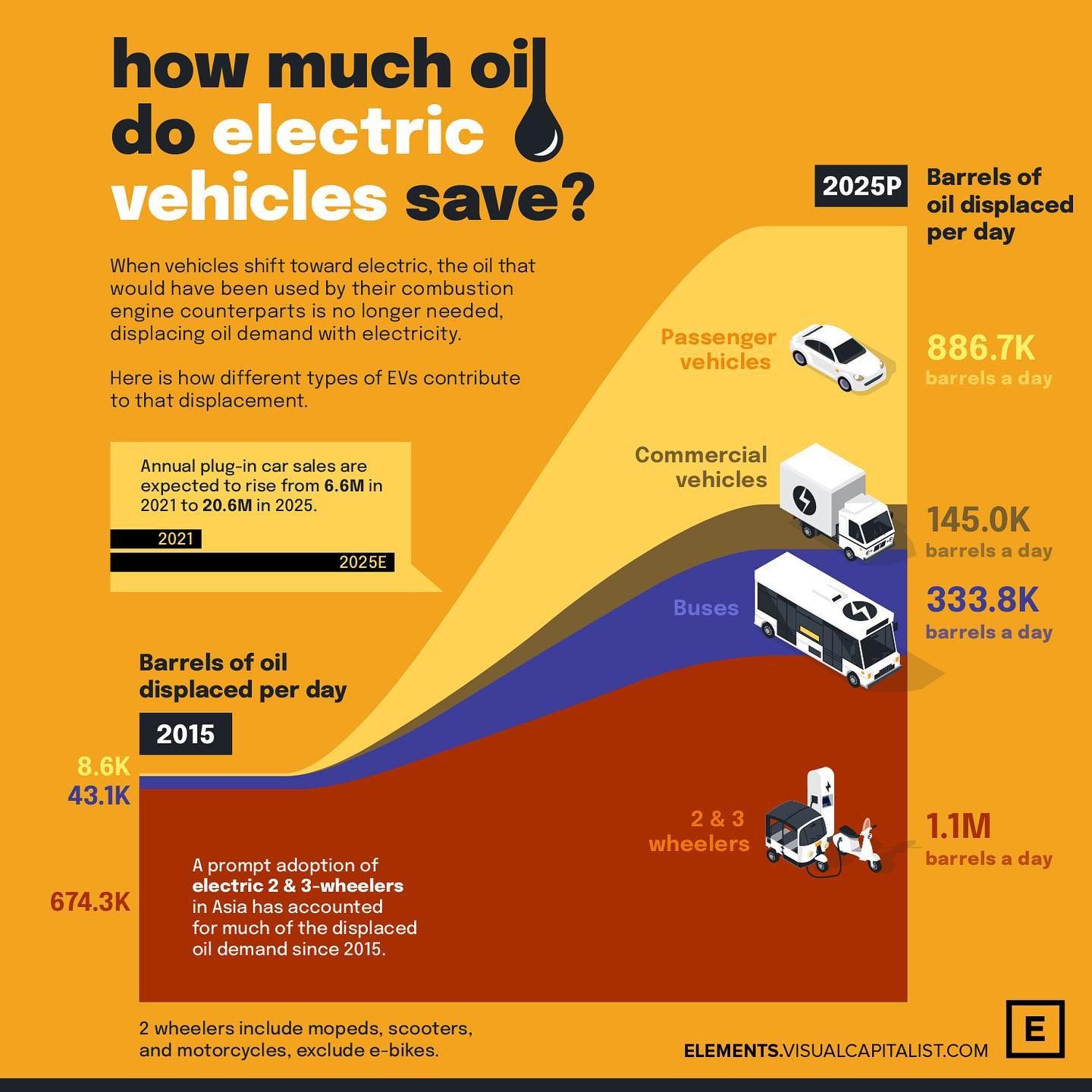
Passenger vehicles have been a significant contributor to oil displacement. In 2025, it is projected that passenger EVs will displace approximately 145,000 barrels of oil per day. This shift is driven by the growing popularity of plug-in electric cars, with annual sales expected to rise from 6.6 million in 2021 to 20.6 million in 2025. These figures underscore the rapid adoption of electric passenger vehicles and their substantial impact on global oil demand.
Commercial Vehicles
Commercial vehicles, including trucks and vans, are also making a notable impact. Although specific figures for 2025 are not provided, the trend indicates a significant reduction in oil demand as more commercial fleets transition to electric power. The adoption of electric commercial vehicles is driven by cost savings, regulatory pressures, and the desire for sustainability.
Buses
Electric buses are another key player in the reduction of oil demand. By 2025, electric buses are expected to displace 333,800 barrels of oil per day. This significant figure highlights the efficiency and environmental benefits of electrifying public transportation. Cities worldwide are increasingly investing in electric bus fleets to reduce emissions and lower operating costs.
2 & 3 Wheelers
The adoption of electric 2 & 3-wheelers, particularly in Asia, has accounted for a significant portion of the displaced oil demand since 2015. These vehicles, which include mopeds, scooters, and motorcycles (excluding e-bikes), are expected to displace 1.1 million barrels of oil per day by 2025. The rapid adoption of electric 2 & 3-wheelers in developing countries is driven by affordability, convenience, and environmental concerns.
Practical Tips for Encouraging EV Adoption
Government Incentives
Governments worldwide are implementing various incentives to encourage EV adoption. These include tax rebates, subsidies, and grants for purchasing electric vehicles. Additionally, many countries are investing in charging infrastructure to support the growing number of EVs on the road. By making EVs more accessible and convenient, governments can accelerate the transition away from oil.
Corporate Initiatives
Corporations are also playing a crucial role in promoting EV adoption. Many companies are electrifying their fleets and offering incentives for employees to switch to electric vehicles. Corporate initiatives not only reduce operational costs but also enhance a company's environmental credentials, attracting eco-conscious consumers and investors.
Consumer Awareness
Consumer awareness and education are essential for driving the adoption of electric vehicles. As more people understand the environmental and economic benefits of EVs, the demand for these vehicles is likely to increase. Public awareness campaigns and community-led initiatives can significantly boost consumer interest in electric vehicles.
Technological Advancements
Technological advancements in battery technology, charging infrastructure, and vehicle design are making electric vehicles more appealing. Improvements in battery life, charging speed, and vehicle range are addressing some of the key barriers to EV adoption. Innovations in electric vehicle technology will continue to drive the transition from oil to electricity.
Important Takeaways
The shift towards electric vehicles is not just an environmental imperative; it is also an economic reality. The significant oil savings achieved through EV adoption highlight the economic benefits of transitioning to electric power. By reducing oil demand, electric vehicles are helping to stabilize energy prices, lower operational costs, and enhance energy security.
The oil savings achieved by electric vehicles are a testament to the transformative power of technology. As the world continues to embrace electrification, the demand for oil will continue to decline, paving the way for a more sustainable and secure energy future. Understanding the impact of different vehicle types is crucial for maximizing the benefits of this transition and achieving a balanced and sustainable energy landscape.
Conclusion
The impact of electric vehicles on global oil savings is profound and far-reaching. From passenger vehicles to commercial fleets, buses, and 2 & 3-wheelers, each vehicle type plays a critical role in reducing oil demand. By understanding the contributions of different vehicle types, we can better navigate the evolving energy landscape and capitalize on the opportunities presented by the transition to electric power. The future of transportation is electric, and the benefits extend far beyond environmental sustainability to economic growth and energy security.
Watch the Reel
Questions readers ask
How much have electric vehicles reduced daily oil demand from 2015 to 2025?
The adoption of electric vehicles, including passenger cars, commercial vehicles, and buses, has led to a significant decrease in daily oil demand. From 2015 to 2025, the reduction in oil demand is driven by the increasing number of EVs on the road, which rely on electricity instead of fossil fuels.
Which types of electric vehicles have contributed the most to oil savings?
Plug-in cars and electric buses have been particularly effective in displacing oil usage. Plug-in cars account for a large portion of the oil savings due to their widespread adoption, while electric buses contribute significantly to reductions in commercial and public transportation sectors.
What is the impact of electric buses on global oil savings?
Electric buses have made a notable impact on global oil savings by reducing the demand for diesel fuel in public transportation. As cities around the world transition their bus fleets to electric, the cumulative effect on daily oil consumption is substantial, particularly in urban areas.
How do electric vehicles reshape the energy landscape?
Electric vehicles are shifting the energy landscape by reducing the reliance on oil and increasing the demand for electricity. This transition not only lowers greenhouse gas emissions but also promotes the development of renewable energy sources to power the growing fleet of EVs.
What role do commercial electric vehicles play in oil demand reduction?
Commercial electric vehicles, such as delivery vans and trucks, play a crucial role in reducing oil demand. By transitioning from diesel to electric, these vehicles help lower the overall consumption of fossil fuels in the transportation sector, contributing to significant oil savings.
What is the significance of passenger electric vehicle oil displacement from 2015 to 2025?
Passenger electric vehicles have been instrumental in displacing oil usage. Between 2015 and 2025, the increasing number of EVs on the road has substantially reduced the demand for gasoline, leading to notable oil savings and a shift towards more sustainable transportation options.
Related deep dives
Similar reads based on topic and creator.



Recent articles
Fresh deep dives from the latest Reels we unpacked.




Comments
Be the first to comment.