Getting a Federal Tax Credit for EVs and PHEVs in 2024
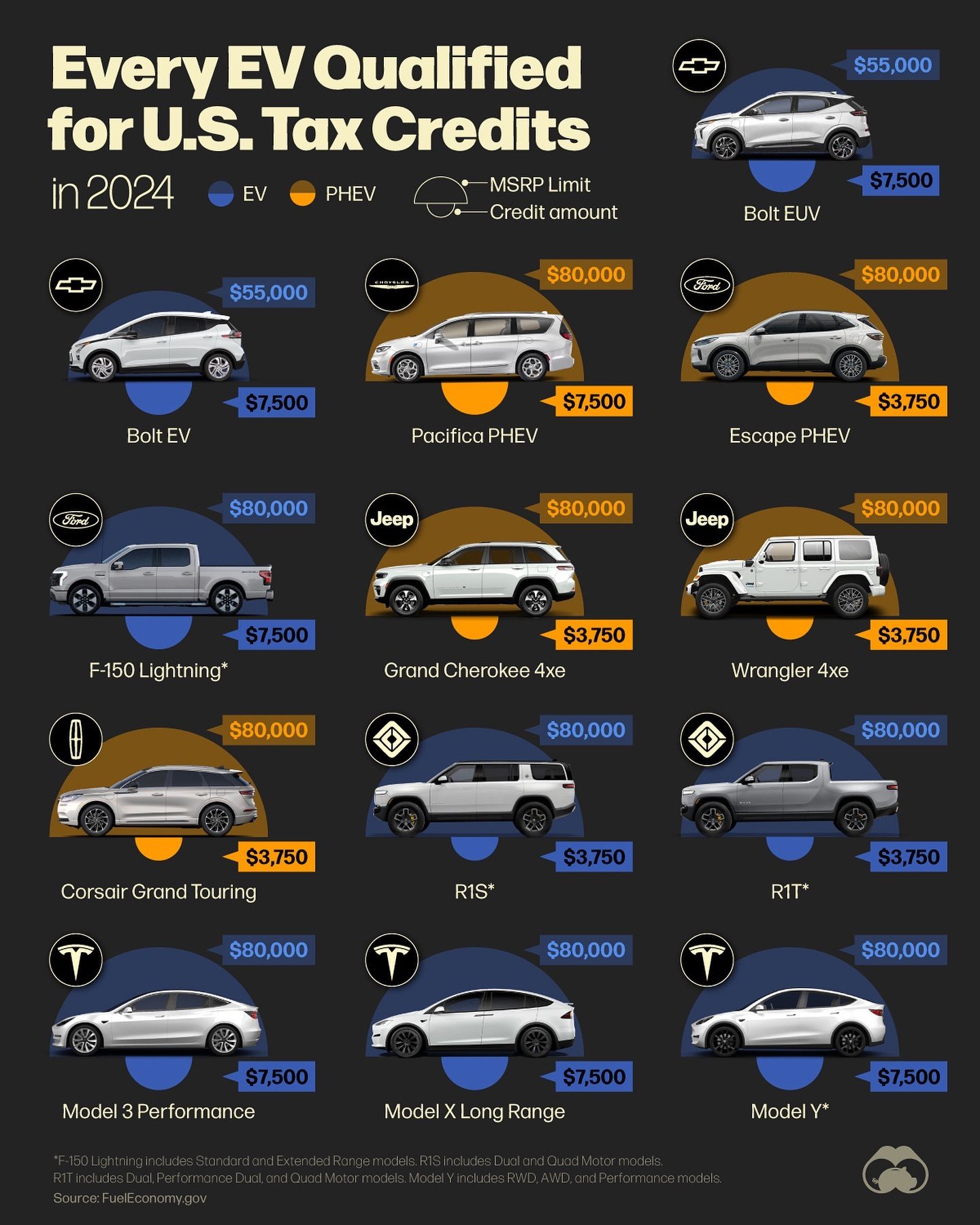
The number of electric vehicles (EVs) and plug-in hybrid electric vehicles (PHEVs) eligible for the U.S. federal tax credit has shrunk dramatically in 2024. The list of qualified models has dwindled from 43 to 13, primarily due to new battery sourcing rules. This shift means many popular models like the Nissan Leaf, Ford Mustang Mach-E, and some Tesla Model 3s are no longer eligible for the tax credit. Those looking to take advantage of the credit will need to focus on a smaller pool of vehicles from brands like Chevrolet, Ford, Jeep, and Tesla.
Why This Matters
Understanding the updated list of qualified vehicles is crucial for consumers and businesses looking to take advantage of federal incentives for purchasing electric or hybrid vehicles. The tax credit can significantly reduce the upfront cost of these vehicles, making them more accessible. The new rules also emphasize the importance of battery sourcing and manufacturing, which can influence future vehicle designs and production strategies.
Delving into the Details
Changes in the List of Eligible Vehicles
With the transition to stricter rules, the list of eligible vehicles has seen several changes. Many previously popular models are no longer eligible due to changes in battery sourcing requirements. The new rules emphasize the use of batteries made in the United States or from North American allies with specific labor standards.
The most substantial impacts of these changes have been on:
- Nissan Leaf: This model, once a staple in the EV market, is absent from the list.
- Ford Mustang Mach-E: Another popular model that is currently missing from the list, despite Ford's strong push into the EV market.
- Tesla Model 3: Some variants of this model have been excluded due to battery sourcing issues. However, the Model 3 Performance and Model 3 variants are still eligible for the tax credit.
Eligible Models and Their Credit Amounts
Despite the reduction in the number of qualified models, there are still some notable options available for those looking to take advantage of the tax credit. Below are some of the models that remain eligible, listed by their respective brands:
Chevrolet
- Bolt EUV: This model qualifies for the full $7,500 tax credit. Its MSRP limit is set at $55,000, making it a competitive option in the compact SUV segment.
Ford
- F-150 Lightning: This Ford model qualifies for the full $7,500 tax credit. The base and extended-range models are eligible for the tax credit.
- Pacifica PHEV: This minivan variant qualifies for the full $7,500 tax credit.
- Escape PHEV: This compact SUV variant qualifies for a $3,750 tax credit.
Jeep
- Grand Cherokee 4xe: This PHEV variant qualifies for a $3,750 tax credit.
- Wrangler 4xe: This iconic off-road vehicle's PHEV variant qualifies for a $3,750 tax credit.
Tesla
- Model 3 Performance: This high-performance variant qualifies for the full $7,500 tax credit.
- Model X Long Range: This luxury SUV variant qualifies for the full $7,500 tax credit.
- Model Y: This compact SUV qualifies for a full $7,500 credit. Unlike its sibling, the Model 3, it includes RWD, AWD, and Performance models.
Practical Tips
For anyone considering an eligible EV or PHEV, there are several practical considerations to keep in mind:
Verify Eligibility Before Purchasing
Ensure that the vehicle you are interested in remains eligible for the tax credit. Different variants of the same model may have different eligibility statuses.
Check MSRP Limits
Be aware of the vehicle's manufacturer's suggested retail price (MSRP) limits. Some vehicles may qualify for the full credit, while others may only qualify for a partial credit based on their MSRP.
Plan for Battery Sourcing
As the battery sourcing requirements are a significant factor in eligibility, consider how these rules may evolve in the future. This can influence your choice of vehicle and manufacturer.
Consult an Expert if Needed
If you are unsure about the tax credit process or the eligibility of a specific vehicle, consult with a tax professional or a knowledgeable salesperson at a dealership.
Important Takeaways
The reduction in eligible vehicles for the federal tax credit is a significant development in the EV and PHEV market. Here are the key points to remember:
- Shrinking List: The number of eligible models has decreased from 43 to 13, impacting many popular models.
- Eligible Models: Specific variants from Chevrolet, Ford, Jeep, and Tesla remain eligible. Models include the Chevrolet Bolt EUV, Ford F-150 Lightning, and various Tesla models.
- MSRP Limits: Be mindful of the MSRP limits for each model, as they can affect the amount of tax credit you receive.
- Battery Sourcing: The new rules place a greater emphasis on battery sourcing, which can influence future vehicle designs and production.
Conclusion
Understanding the current landscape of EV and PHEV tax credits in 2024 is essential for anyone looking to take advantage of federal incentives. While the list of eligible models has shrunk, there are still compelling options available. By staying informed and making strategic choices, consumers and businesses can make the most of these tax benefits and contribute to a more sustainable future.
Watch the Reel
Questions readers ask
Which electric and hybrid vehicles qualify for the federal tax credit in 2024?
In 2024, only 13 electric and hybrid vehicles qualify for the federal tax credit. These models are primarily from brands such as Chevrolet, Ford, Jeep, and Tesla. It's important to check the updated list, as many popular models from 2023, like the Ford Mustang Mach-E, are no longer eligible.
Why did the number of qualified electric vehicles for tax credits decrease in 2024?
The reduction in qualified electric vehicles is primarily due to new, stricter battery sourcing rules. These rules mandate that a certain percentage of battery components must be sourced from the U.S. or countries with which the U.S. has a free trade agreement, making many vehicles ineligible.
What is the maximum tax credit available for electric vehicles in 2024?
The maximum federal tax credit for electric vehicles in 2024 is $7,500. However, there is also a new credit of up to 500 for vehicles with batteries that meet specific sourcing requirements.
Are any Tesla models eligible for the electric vehicle tax credit in 2024?
Yes, certain Tesla models are eligible for the electric vehicle tax credit in 2024. However, the specific eligibility can vary based on the battery sourcing and manufacturing details of each model, so it's essential to check the updated list of qualified vehicles.
Which Ford electric vehicles qualify for the federal tax credit in 2024?
While the Ford Mustang Mach-E is no longer eligible, other Ford electric vehicles may qualify for the federal tax credit in 2024. It's crucial to verify the specific models and their eligibility based on the new battery sourcing rules.
What should I do if I purchased a vehicle in 2023 that is no longer eligible in 2024?
If you purchased a vehicle in 2023 that is no longer eligible for the tax credit in 2024, you may still be able to claim the credit on your 2023 taxes if you took delivery of the vehicle and all other requirements were met in 2023.
What is the 2024 tax credit for plug-in hybrid electric vehicles (PHEVs)?
The 2024 tax credit for plug-in hybrid electric vehicles (PHEVs) follows the same guidelines as electric vehicles, with a maximum credit of $7,500. However, the specific amount can vary based on the vehicle's battery capacity and other qualifying factors.
Related deep dives
Similar reads based on topic and creator.




Recent articles
Fresh deep dives from the latest Reels we unpacked.




Comments
Be the first to comment.