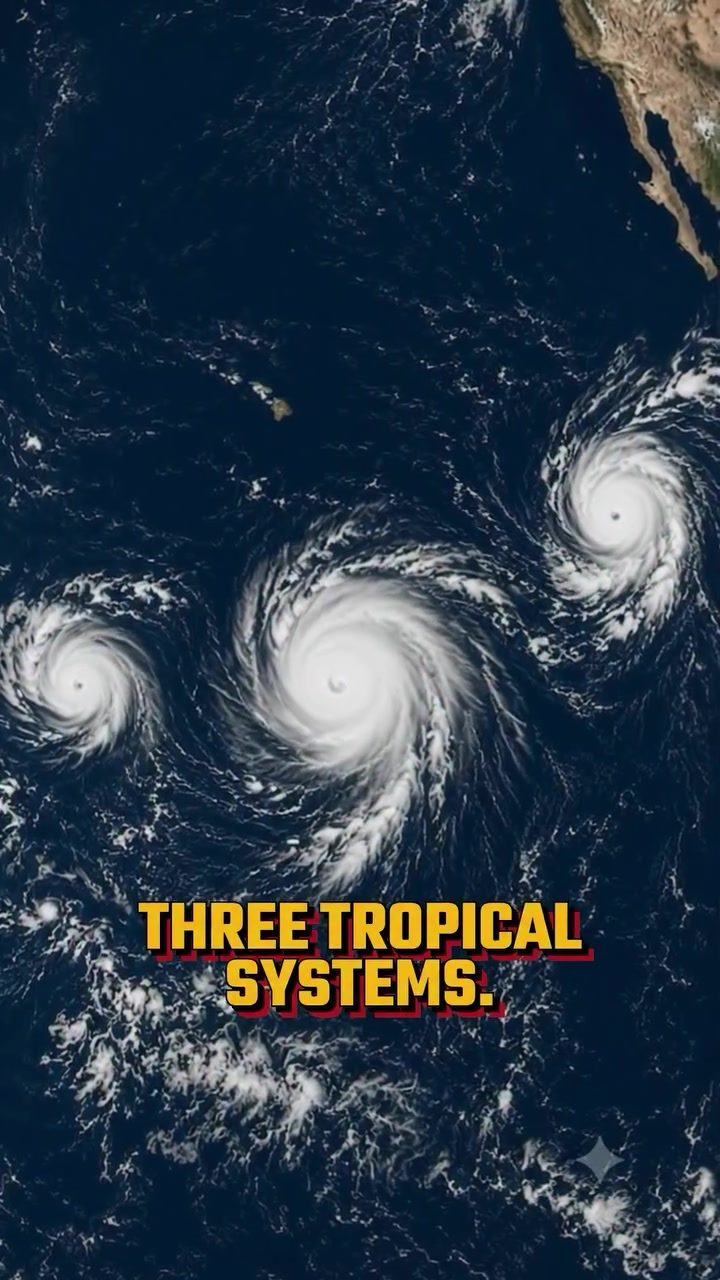
A Trio of Tropical Forces
The Pacific Ocean, a vast and powerful force in itself, is currently playing host to three simultaneous tropical systems. Hurricanes Lowell and Karina, along with Tropical Storm Marie, are all spinning within a concentrated burst of activity. This unusual clustering isn’t merely a coincidence. These storms are being fed by a combination of warm water, abundant moisture, and favorable wind patterns. These conditions allow the storms to intensify rapidly. Significant weather events, like this trio of storms, happen because of complex atmospheric and oceanic interactions. This time, however, the same weather producing all three storms is being driven by a familiar culprit.
An Atmospheric Symphony
This isn’t a case of three separate storms converging into one massive system. Instead, these are three distinct systems responding to the same atmospheric conditions at the same time. Climate patterns govern atmospheric conditions and can fuel storms. The role of El Niño is more subtle. This climatic influence reshapes the Pacific by altering wind patterns and altering sea surface temperatures. Sea surface temperatures, in particular, are critical because they act as recharge stations for storms. Higher sea surface temperatures are the fuel that can quickly escalate a system into a full-blown tropical storm. This phenomenon often creates wider weather anomalies.
El Niño: Incoming
The interplay between these tropical storms and El Niño isn't going away. Our planet’s weather is a complex system. That system's signals are indicating that this may be just the beginning of what El Niño has in store. Storm activity may increase throughout the Pacific. Already influenced by El Niño, the Pacific Ocean centers are candidates for more frequent and possibly more powerful storms of their own. Therefore, any storm that forms in these regions might prove difficult to predict. The wider implications of this could be felt from the Pacific Rim to the rest of the world. After all, weather patterns are globally connected. Change in one area usually leads to a ripple effect somewhere else.
Watch the Reel
Related deep dives
Similar reads based on topic and creator.




Recent articles
Fresh deep dives from the latest Reels we unpacked.



Comments
Be the first to comment.