Choosing Better Eggs: Quality, Sourcing, and Nutrition
Choosing better quality eggs is a smart way to improve your diet and overall health. While many people focus on eliminating entire food groups or adopting extreme diets, small, consistent choices can have a significant impact on your well-being. One such choice is selecting eggs that come from hens raised in better conditions and fed higher-quality diets.
Why Egg Sourcing Matters
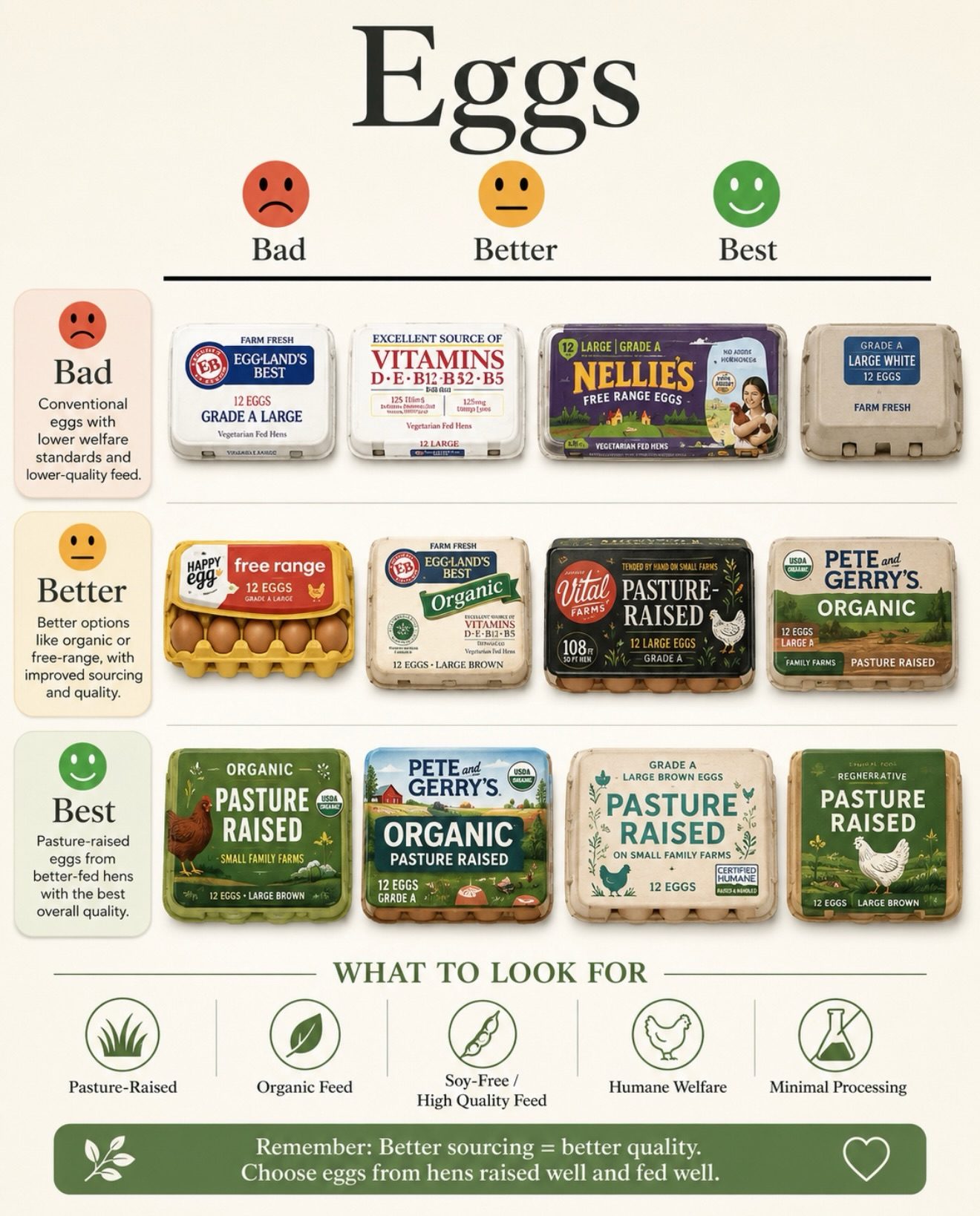
Eggs are a versatile and nutritious food, but not all eggs are created equal. The quality of an egg can vary greatly depending on how the hens are raised and what they are fed. The following tiered system helps to categorize eggs based on their sourcing and overall quality:
Bad Options
Conventional eggs often fall into the "bad" category. These eggs typically come from hens that are fed lower-quality feed and raised in confined spaces. This can lead to eggs that are less nutritious and potentially contain more contaminants.
Better Options
Free-range eggs are a step up from conventional eggs. Hens raised in free-range environments have more space to move around and access to the outdoors. This generally results in eggs that are more nutritious and better for your health.
Another good option is pasture-raised eggs. These eggs come from hens that are raised on pastures where they can forage for insects and plants, in addition to being fed a higher-quality diet. This results in eggs that are richer in nutrients like omega-3 fatty acids and vitamins.
Best Options
For the best quality eggs, look for those labeled as regenerative pasture-raised. These eggs come from hens that are raised on regenerative farms, which prioritize soil health, biodiversity, and animal welfare. The hens are fed a diet that includes organic feed, ensuring that the eggs are not only nutritious but also free from harmful chemicals and contaminants.
What to Look for When Choosing Eggs
When shopping for eggs, pay attention to the following factors to ensure you are choosing the best option for your health:
-
Feed Quality: Look for eggs that are labeled as soy-free and organically fed. This ensures that the hens are not consuming genetically modified organisms (GMOs) or pesticides, which can end up in the eggs.
-
Farming Methods: Opt for eggs from hens that are free-range or pasture-raised. These methods provide better living conditions for the hens, which can result in more nutritious eggs.
-
Humane Welfare: Choose eggs from brands that prioritize humane welfare practices. This includes providing ample space for the hens, access to the outdoors, and a diet that supports their natural behaviors.
-
Minimal Processing: Ensure that the eggs are minimally processed. This means they should not contain added hormones, antibiotics, or other additives that can affect their nutritional value.
Practical Tips for Choosing Better Quality Eggs
-
Read Labels: Always check the labels on egg cartons. Look for certifications like "USDA Organic," "Certified Humane," or "Pasture-Raised." These certifications indicate that the eggs meet certain standards for quality and welfare.
-
Know the Brands: Familiarize yourself with brands that are known for their high-quality eggs. For instance, Pete & Gerry's and Vital Farms are recognized for their pasture-raised eggs, while Happy Eggs is known for its free-range options.
-
Ask Questions: If you're unsure about the sourcing of a particular brand, don't hesitate to ask the store manager or check the brand's website for more information.
-
Experiment: Try different brands and types of eggs to see which ones you prefer in terms of taste and nutritional value. You might find that certain brands work better for specific dishes.
-
Support Local Farms: If possible, buy eggs from local farmers or farmers' markets. This way, you can be more certain about the conditions in which the hens are raised and the quality of their feed.
Important Takeaways
- Small Choices Matter: Choosing better quality eggs is a small but impactful step toward improving your diet and overall health.
- Quality Over Quantity: Opt for eggs that are sourced from hens raised in better conditions and fed a higher-quality diet.
- Read Labels: Always check the labels on egg cartons to ensure you are choosing the best option for your health.
- Support Sustainable Practices: By choosing eggs from brands that prioritize sustainable and humane practices, you can contribute to a healthier food system.
Conclusion
Choosing better quality eggs is a simple yet effective way to improve your diet and overall health. By opting for eggs that come from hens raised in better conditions and fed a higher-quality diet, you can enjoy more nutritious and flavorful eggs. Whether you choose free-range, pasture-raised, or regenerative pasture-raised eggs, making this small change can have a significant impact on your health and well-being.
Watch the Reel
Questions readers ask
What are the key differences between conventional and free-range eggs?
Conventional eggs come from hens typically raised in cages, with limited movement, while free-range eggs come from hens allowed to move freely in an outdoor area with shelters. This difference in living conditions can lead to variations in taste, nutrition, and overall quality. Free-range hens may have more opportunities to forage for food, resulting in eggs with a richer nutritional profile.
How do pasture-raised eggs compare to free-range eggs?
Pasture-raised eggs come from hens that have access to large, open pastures where they can forage for grass, bugs, and seeds, mimicking their natural diet. This results in eggs with a richer and more comprehensive nutritional profile, including higher levels of omega-3 fatty acids and vitamins. Furthermore, pasture-raised hens typically have better animal welfare compared to free-range hens, but the farming practices are more costly.
What makes regenerative pasture-raised eggs the best choice for health?
Regenerative pasture-raised eggs are considered the best option due to the hens' access to diverse, well-maintained pastures, promoting biodiversity and soil health. This results in eggs with higher levels of essential nutrients, including vitamins, minerals, and antioxidants. Additionally, regenerative practices ensure minimal use of antibiotics and hormones, making these eggs a healthier, more sustainable choice.
How do the nutrients in pasture-raised eggs differ from those in conventional eggs?
Pasture-raised eggs have significantly higher amounts of vitamin E, beta-carotene, and omega-3 fatty acids. They also tend to have lower levels of cholesterol and saturated fat. These differences are attributed to the hens' varied diet, which includes grasses and insects, leading to more nutrient-dense eggs.
Which type of eggs is best for baking and cooking?
Pasture-raised and free-range eggs are generally better for baking and cooking due to their richer flavor and higher nutritional content. Their yolks are often more vibrant and creamy, which can enhance the texture and taste of baked goods and cooked dishes. Additionally, these eggs are less likely to come from hens treated with antibiotics and hormones, which can be a concern for some consumers.
Do pasture-raised eggs contain more collagen?
Pasture-raised eggs are generally considered to have more collagen due to the hens' varied diet. The grasses and insects they consume provide essential nutrients that can contribute to the production of collagen, a protein vital for skin, hair, and nail health. This makes pasture-raised eggs an excellent choice for those looking to boost their collagen intake.
Recent articles
Fresh deep dives from the latest Reels we unpacked.




Comments
Be the first to comment.