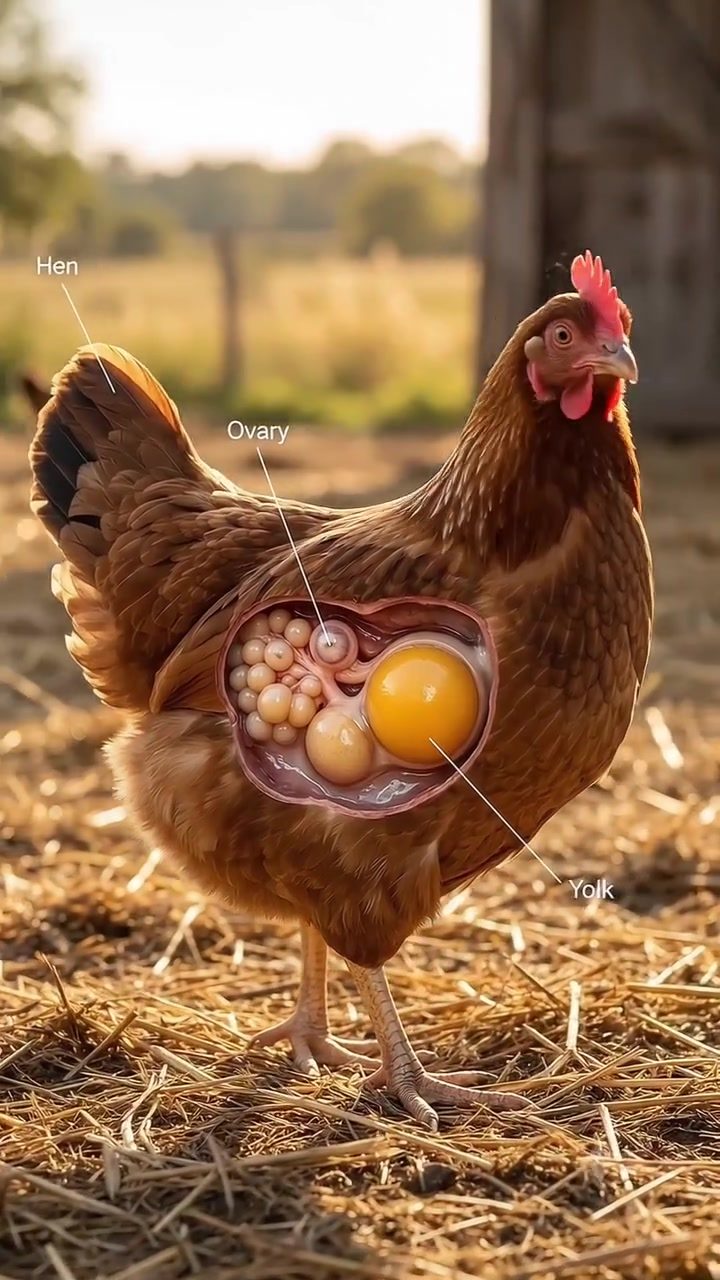
Egg Formation Inside a Hen: A Fascinating Journey
The formation of an egg inside a hen is a remarkable biological process, involving multiple stages and intricate mechanisms. This journey, from the ovary to a fully formed egg, is a testament to nature's engineering prowess.
Why This Matters
Eggs are a staple in many diets around the world, and understanding their formation can provide insights into the reproductive health of hens and the efficiency of egg production. Moreover, knowing the intricacies of egg formation can help in identifying and addressing potential issues in poultry farming, ensuring the well-being of both hens and the eggs they produce.
The Stages of Egg Formation
Ovarian Development
The journey of an egg begins in the hen's ovary, where multiple yolks are in various stages of development. This process is continuous, with new yolks developing even as others are released. The ovary is a dynamic organ, constantly producing yolks that will eventually become eggs.
The yolks, or ova, are initially small and immature, but they gradually grow and mature over time. This maturation process involves the accumulation of essential nutrients, which will nourish a potential embryo if the egg is fertilized. The yolk's development is a critical stage, as it sets the foundation for the entire egg formation process.
The Role of the Oviduct
Once a yolk is mature, it is released from the ovary in a process known as ovulation. The yolk then enters the oviduct, a long, coiled tube where the rest of the egg formation occurs. The oviduct has several distinct regions, each responsible for adding specific layers to the yolk.
Adding the Albumen
As the yolk travels through the magna portion of the oviduct, a thick layer of albumen, or egg white, is added. This layer provides additional nutrients and protection for the yolk. The albumen is predominantly composed of water, proteins, and minerals, giving the egg its characteristic white color and gel-like consistency.
Forming the Shell
Next, the yolk and albumen move to the isthmus portion of the oviduct, where the chalazae, the ropey strands that suspend the yolk, are added. These strands help to keep the yolk centered within the egg, ensuring that it remains stable and protected during the egg's development and eventual hatching.
Finally, the yolk and albumen enter the uterus, where the shell is added. The shell, composed primarily of calcium carbonate, provides a protective barrier around the egg. The shell's formation is a meticulous process, ensuring that the egg is strong enough to withstand external pressures but fragile enough to allow a chick to hatch if the egg is fertilized.
The Final Stages
Adding the Cuticle
Once the shell is formed, the egg travels to the vagina, where the cuticle, or bloom, is added. The cuticle is a thin, protective layer that helps to prevent bacteria from entering the egg. This final layer is crucial for maintaining the egg's freshness and preventing contamination.
The Egg's Journey to the Outside World
After the cuticle is added, the egg is ready to be laid. The entire process, from the development of the yolk to the formation of the shell, takes approximately 10 hours. During this time, the hen's body meticulously adds each layer, ensuring that the egg is fully formed and ready for the next stage of its journey.
Practical Tips
Supporting Hen Health
To support the egg formation process, it's essential to provide hens with a balanced diet rich in nutrients such as calcium, protein, and vitamins. Ensuring that hens have access to clean water and a stress-free environment can also enhance their reproductive health and the quality of the eggs they produce.
Monitoring Egg Production
Regular monitoring of hen health and egg production can help in identifying any potential issues early on. Keeping track of the number of eggs laid, their size, and quality can provide valuable insights into the health and well-being of the hens.
Ensuring Optimal Conditions
Maintaining optimal environmental conditions, such as temperature and humidity, can also support the egg formation process. Providing hens with a comfortable and safe environment can help in ensuring that the eggs they produce are of high quality and free from defects.
Important Takeaways
- Egg formation in hens involves several stages, starting with the development of the yolk in the ovary and concluding with the addition of the cuticle in the vagina.
- The oviduct plays a crucial role in the egg formation process, adding layers and shaping the yolk and albumen.
- The entire process of egg formation takes approximately 10 hours, and each layer added to the yolk serves a specific purpose in protecting and nourishing the potential embryo.
- Ensuring the health and well-being of hens, monitoring egg production, and maintaining optimal environmental conditions are essential for supporting the egg formation process.
Conclusion
The formation of an egg inside a hen is a complex and fascinating process, involving multiple stages and intricate mechanisms. Understanding this process can provide valuable insights into the reproductive health of hens, the quality of the eggs they produce, and the efficiency of egg production. By supporting hen health, monitoring egg production, and maintaining optimal environmental conditions, we can ensure that the eggs we consume are of high quality and free from defects. This knowledge can contribute to the well-being of both hens and the eggs they produce.
Watch the Reel
Questions readers ask
How long does it take for a hen to form an egg?
The entire process of egg formation in a hen takes approximately 24 to 26 hours. This includes the development of the yolk, the formation of the egg white, and the creation of the shell.
What is the role of the oviduct in egg formation?
The oviduct plays a crucial role in egg formation. After the yolk is released from the ovary, it travels through the oviduct where the egg white and shell membranes are deposited around it. The oviduct also adds the hard shell to the egg.
How many yolks can a hen's ovary hold at one time?
Hens can have multiple yolks in various stages of development in their ovaries. This is why hens have the ability to lay eggs in consistent cycles, with some yolks ready to move into the oviduct for completion of the egg formation process.
What is the significance of the layed hen's eggs?
Eggs are a significant source of nutrition, including proteins, vitamins, and minerals, eggs are a staple in many diets around the world. By understanding the formation process, farmers can ensure optimal health for their hens and improve the quality of the eggs.
What happens if a hen's egg formation process is disrupted?
Disruptions in a hen's egg formation process can lead to issues such as soft-shelled or shell-less eggs, or even a complete cessation of egg laying. This can be caused by factors like stress, poor nutrition, or diseases.
Can a hen lay an egg without a mate?
Yes, hens can lay eggs without a rooster. Hens lay unfertilized eggs unless they are fertilized by a rooster. These unfertilized eggs are the ones typically consumed by humans.
What is the purpose of the hen's hard shell?
The hard shell of the egg serves multiple purposes, including protection of the yolk and egg white, preventing bacterial contamination, and regulating the exchange of gases. It is crucial for the survival of the embryo in fertilized eggs and the preservation of quality in unfertilized eggs.
Recent articles
Fresh deep dives from the latest Reels we unpacked.




Comments
Be the first to comment.