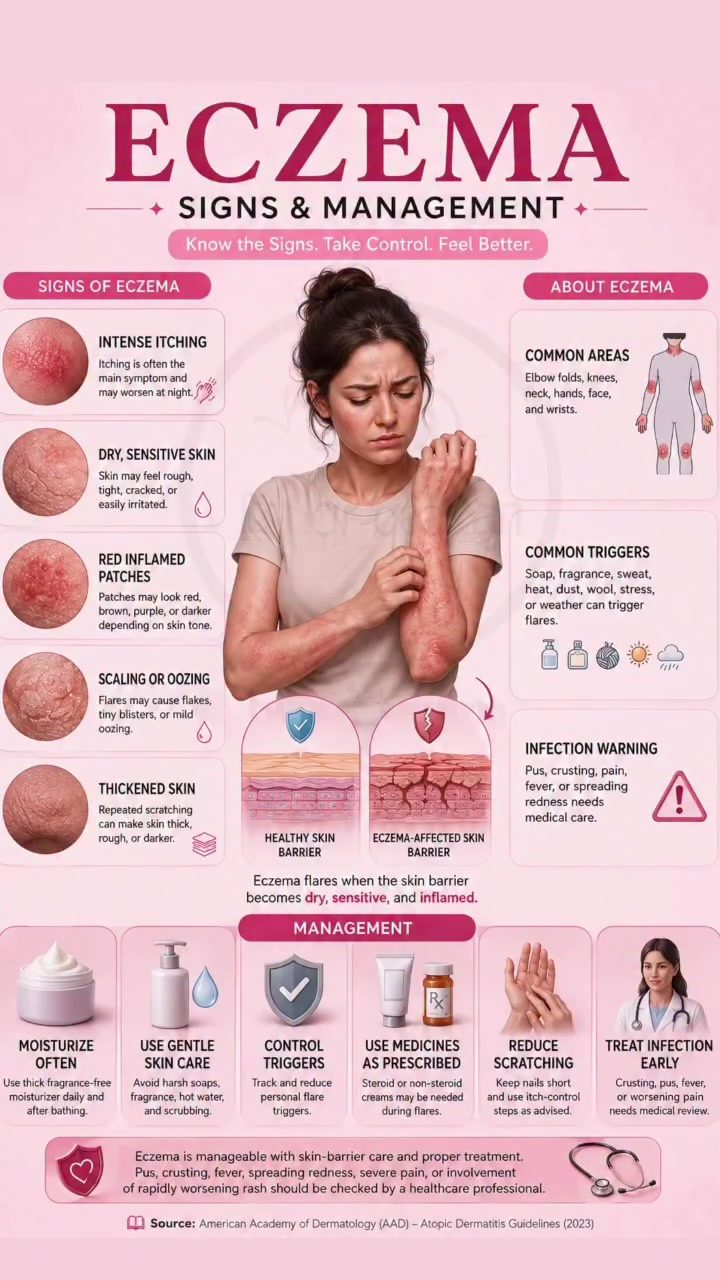
Eczema Signs and Management
Eczema is a common skin condition marked by inflammation, intense itching, and a weakened skin barrier. Proper care and treatment can often control symptoms, but recognizing the signs and understanding effective management strategies is crucial for taking control and feeling better.
Why This Matters
Eczema, also known as atopic dermatitis, affects millions of people worldwide. It is not merely a cosmetic issue; it can significantly impact an individual's quality of life. Managing eczema effectively involves understanding its signs, identifying triggers, and implementing a comprehensive skincare routine. By taking these steps, individuals can reduce flare-ups, alleviate discomfort, and improve their overall skin health.
Recognizing the Signs
Eczema manifests in various ways, and recognizing the signs is the first step in managing the condition. Look for the following indicators:
Intense Itching
One of the most distinguishing features of eczema is intense itching. This symptom can be particularly troublesome at night, disrupting sleep and exacerbating the condition. Itching is often the main symptom and may worsen during the night.
Dry, Sensitive Skin
The skin of individuals with eczema is typically dry and sensitive. It may feel rough, tight, or easily irritated. This sensitivity can lead to discomfort and further complications if not properly managed.
Red, Inflamed Patches
Eczema can cause red, inflamed patches on the skin. These patches may appear red, brown, purple, or darker depending on the individual's skin tone. The discoloration can be alarming, but recognizing it is a key step in managing the condition.
Scaling or Oozing
Flares of eczema can result in scaling or oozing. This may present as flakes, blisters, or mild oozing. Managing these symptoms effectively can prevent further complications and improve skin health.
Thickened Skin
Repeated scratching, a common response to eczema, can lead to thickened skin. This thickening can make the skin feel rough or appear darker, further complicating the condition.
Common Areas Affected
Eczema commonly affects specific areas of the body, including the elbow folds, knees, neck, hands, face, and wrists. These areas are particularly susceptible to irritation and inflammation, making them key focal points for management efforts.
Understanding Triggers
Identifying and controlling triggers is essential for managing eczema. Common triggers include:
Environmental Factors
Exposure to soap, fragrances, sweat, heat, dust, and wool can exacerbate eczema symptoms. Identifying and avoiding these triggers can significantly reduce flare-ups.
Stress and Weather
Both stress and changes in weather can act as triggers. Managing stress levels and preparing for seasonal changes can help mitigate these effects.
Management Strategies
Effective management of eczema involves a combination of skincare practices, lifestyle adjustments, and medical interventions.
Moisturizing
Regular moisturizing is essential for maintaining a healthy skin barrier. Use thick, fragrance-free moisturizers daily and after bathing. This helps to lock in moisture and reduce dryness and itching.
Gentle Skincare
Avoiding harsh soaps, fragrances, hot water, and scrubbing is crucial. Opt for gentle skincare products that are specifically formulated for sensitive skin. This can help prevent irritation and further complications.
Controlling Triggers
Tracking and reducing personal flare triggers is a key component of eczema management. Keep a record of what causes flare-ups and adjust your routine accordingly. This proactive approach can help minimize outbreaks and improve overall skin health.
Medication Use
Steroid and non-steroid creams may be prescribed to manage eczema flares. Following your prescribed treatment plan is vital for controlling symptoms and preventing complications. Consult with a healthcare provider to determine the best course of action.
Reducing Scratching
Keeping nails short and using itch-relieving creams can help reduce scratching. Scratching can exacerbate eczema symptoms and lead to further complications, so addressing the urge to scratch is crucial.
Early Infection Treatment
If you notice signs of infection, such as pus, crusting, pain, fever, or worsening redness, seek medical care immediately. Early treatment of infections can prevent complications and improve recovery.
Practical Tips for Managing Eczema
Implementing practical tips can significantly improve eczema management. Here are some key recommendations:
Daily Skincare Routine
Establish a consistent daily skincare routine that includes gentle cleansing, moisturizing, and the application of prescribed medications. Stick to a routine to maintain skin health and reduce flare-ups.
Avoiding Triggers
Identify and avoid common triggers. This may involve adjusting your diet, environment, and lifestyle to minimize exposure to irritants.
Stress Management
Stress can exacerbate eczema symptoms. Incorporate stress-relieving activities, such as yoga, meditation, or exercise, into your routine to help manage stress levels and reduce flare-ups.
Seasonal Adjustments
Eczema symptoms can worsen in certain seasons, such as winter. Adjust your skincare routine and environment to accommodate seasonal changes and maintain skin health.
Important Takeaways
Recognizing the signs of eczema and understanding its triggers are essential steps in managing the condition. By implementing a comprehensive skincare routine, controlling triggers, and seeking medical care when needed, individuals can effectively manage eczema and improve their quality of life.
Conclusion
Eczema is a manageable condition with the right knowledge and practices. By recognizing the signs, understanding triggers, and following a comprehensive management plan, individuals can take control of their eczema and achieve healthier, more comfortable skin. Always consult with a healthcare provider to tailor a treatment plan to your specific needs.
Watch the Reel
Questions readers ask
What are the most common symptoms of eczema?
The most common symptoms of eczema include intense itching, dry and sensitive skin, red or brown patches, and scaling or flaking. These symptoms can vary in severity and may come and go. Some people may also experience small, raised bumps that may leak fluid when scratched.
How can I find relief from eczema itching?
To find relief from eczema itching, try applying a cool, wet compress to the affected area, using gentle, fragrance-free moisturizers, and taking lukewarm baths with colloidal oatmeal. Avoid scratching the affected area, as it can worsen symptoms and increase the risk of infection. Keeping nails short and wearing light cotton gloves at night can also help prevent scratching.
What are some common triggers for eczema flare-ups?
Common triggers for eczema flare-ups include irritants like soaps, detergents, and fragrances, as well as allergens such as pet dander, pollen, and dust mites. Environmental factors like sweat, stress, and changes in humidity can also trigger symptoms. Keeping a journal to track flare-ups and potential triggers can help identify and avoid these factors.
What are the benefits of using a gentle skincare routine for eczema?
A gentle skincare routine can help reinforce the skin barrier, reduce inflammation, and alleviate discomfort. It can also help minimize the risk of flare-ups and infections. This includes using lukewarm (not hot) water, fragrance-free and gentle cleansers, and moisturizers to lock in hydration. Avoiding harsh soaps, exfoliants, and scrubs that can irritate the skin and cause eczema flare-ups.
How can medical treatment help manage eczema symptoms?
Medical treatments, including topical corticosteroids, calcineurin inhibitors, and oral medications, can help manage eczema symptoms. These treatments can reduce inflammation, alleviate itching, and promote healing. A qualified healthcare professional can help determine the most appropriate treatment based on the severity of symptoms, frequency of flare-ups, and individual needs.
How do red patches develop in eczema, and how can they be managed?
Red patches in eczema develop due to inflammation and irritation of the skin. They can be managed by applying cool, wet compresses to the affected area, using topical corticosteroids or calcineurin inhibitors as prescribed, and keeping the skin well-moisturized. Identifying and avoiding triggers that lead to these red patches can also help minimize their appearance.
What are some strategies to strengthen the skin barrier in eczema?
Strategies to strengthen the skin barrier in eczema include using gentle, fragrance-free skincare products, applying moisturizers within three minutes of bathing to lock in hydration, and avoiding excessive hand washing or scrubbing. Incorporating omega-3 fatty acids and vitamin D through diet or supplements can also support barrier function.
Recent articles
Fresh deep dives from the latest Reels we unpacked.




Comments
Be the first to comment.