Economic Policy Uncertainty Index
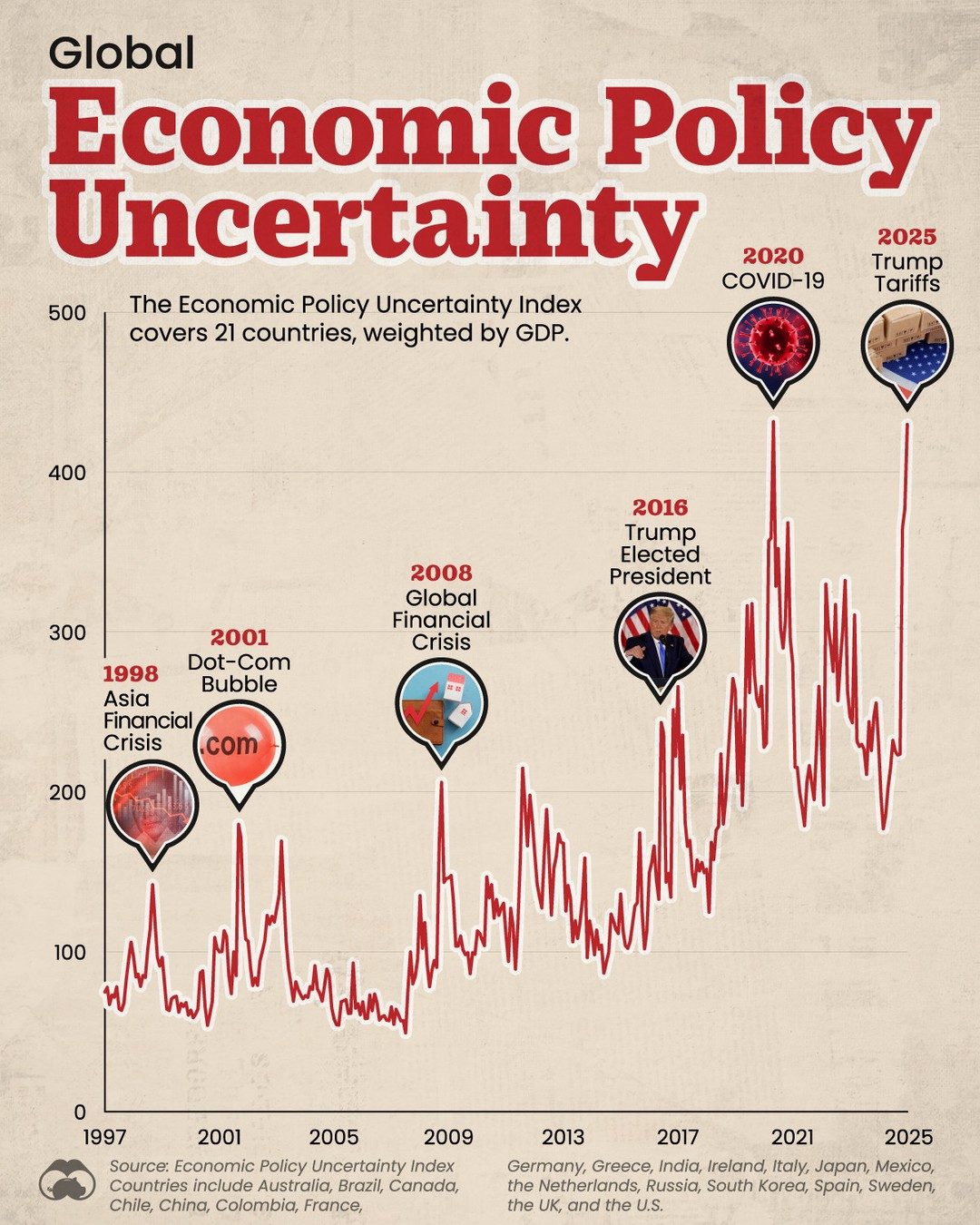
The Economic Policy Uncertainty Index (EPU) provides a comprehensive look at the fluctuations in economic policy uncertainty across 21 countries, including economic powerhouses like Germany, Japan, China, and the United States. This index, weighted by each country's GDP, offers a nuanced view of global economic trends and the significant events that have shaped them since 1997.
Why This Matters
Understanding the EPU Index is crucial for investors, policymakers, and businesses navigating the complexities of global trade and geopolitics. The index serves as a barometer for economic stability, highlighting periods of high uncertainty that can influence decision-making and strategic planning. By tracking key events such as financial crises, elections, and pandemics, the EPU Index helps to identify patterns and predict future economic trends.
The index is primarily driven by metrics such as media coverage of trade and economic forecast differences by the Federal Reserve. These indicators provide a real-time snapshot of the economic landscape, making the EPU Index a valuable tool for assessing the impact of global events on economic policy.
Key Events and Their Impact
The 1998 Asia Financial Crisis
The Asia Financial Crisis of 1998 marked a significant spike in the EPU Index. This crisis, which began in Thailand and quickly spread to other Asian economies, highlighted the vulnerabilities in the region's financial systems. The uncertainty that followed had a ripple effect on global markets, causing fluctuations in the EPU Index that lasted for several years.
The 2001 Dot-Com Bubble
The Dot-Com Bubble burst in 2001, leading to a sharp rise in economic policy uncertainty. This period was characterized by the collapse of many Internet-based companies, resulting in a significant loss of investor confidence and a downturn in the tech sector. The EPU Index captured this volatility, reflecting the market's reaction to the sudden shift in economic conditions.
The 2008 Financial Crisis
The 2008 Financial Crisis stands as one of the most impactful events in modern economic history. The collapse of major financial institutions, such as Lehman Brothers, and the ensuing global recession sent shockwaves through the EPU Index. This period of heightened uncertainty led to widespread economic policy changes and regulatory reforms, aimed at preventing future crises.
The 2016 Trump Election
The 2016 U.S. Presidential Election, culminating in the victory of Donald Trump, introduced a new wave of uncertainty into the global economy. Trump's policies, particularly his stance on trade and tariffs, had far-reaching implications for international markets. The EPU Index spiked during this period, reflecting the anticipation and reactions to potential changes in trade policies and economic regulations.
The 2020 COVID-19 Pandemic
The COVID-19 pandemic of 2020 brought unprecedented levels of uncertainty to the global economy. Lockdowns, supply chain disruptions, and widespread economic shutdowns sent the EPU Index to its highest point since 2020. The pandemic's impact on various sectors, from healthcare to hospitality, was profound, and the EPU Index captured the economic turbulence during this period.
Trump Tariffs
Trump's tariffs, enacted to protect domestic industries, further exacerbated economic uncertainty. These tariffs, particularly those imposed on China, led to retaliatory measures and disrupted global supply chains. The EPU Index reflects the ongoing negotiations and changes in trade policies, providing a continuous assessment of the economic landscape.
Practical Tips for Navigating Uncertainty
Stay Informed
Keeping up with the latest economic news and policy changes can help manage uncertainty. Following reputable financial news sources and economic reports can provide valuable insights into emerging trends and potential risks.
Diversify Investments
Diversifying your investment portfolio can help mitigate the impact of economic uncertainty. By spreading investments across various sectors and regions, you can reduce the risk of significant losses during periods of volatility.
Monitor Policy Changes
Staying informed about policy changes, such as those related to trade and tariffs, can help in making informed decisions. Understanding the implications of new policies on your industry or investments can provide a strategic advantage.
Engage in Scenario Planning
Engaging in scenario planning involves anticipating different economic outcomes and preparing contingency plans. This proactive approach can help businesses and investors navigate uncertain times more effectively.
Important Takeaways
The EPU Index provides a comprehensive view of global economic policy uncertainty, highlighting key events and their impact on the economic landscape. From financial crises to pandemics, the index captures the fluctuations in uncertainty levels, offering valuable insights for investors, policymakers, and businesses.
By staying informed, diversifying investments, monitoring policy changes, and engaging in scenario planning, individuals and organizations can better navigate the complexities of a volatile economic environment. Understanding the EPU Index and its implications can help in making informed decisions and preparing for future challenges.
Conclusion
The Economic Policy Uncertainty Index is a critical tool for understanding global economic trends and the significant events that shape them. By tracking key events and fluctuations in uncertainty levels, the index provides valuable insights into the economic landscape. Staying informed, diversifying investments, and preparing for different scenarios can help manage uncertainty and navigate the complexities of a volatile economic environment.
Watch the Reel
Questions readers ask
What is the Economic Policy Uncertainty (EPU) Index?
The EPU Index is a measure that tracks fluctuations in economic policy uncertainty across 21 countries, weighted by each country's GDP. It provides insights into how global economic trends and key events impact economic stability.
How does the EPU Index help investors and policymakers?
The EPU Index aids investors and policymakers by offering a real-time view of economic policy uncertainty. This helps in making informed decisions, managing risks, and strategically planning for future economic conditions.
What significant events since 1997 have influenced the EPU Index?
Key events like the Financial Crisis of 2008, the election of Donald Trump, the COVID-19 pandemic, and various tariff policies have significantly impacted the EPU Index, reflecting periods of high economic uncertainty.
Which countries are included in the EPU Index?
The EPU Index includes 21 countries, with a focus on major economic powerhouses such as Germany, Japan, China, and the United States. The index is weighted by each country's GDP to provide a balanced view of global economic trends.
How does the EPU Index measure economic policy uncertainty?
The EPU Index is based on real-time data and is weighted by country GDP. It analyzes news coverage and economic reports to quantify the level of uncertainty in economic policies, providing a clear picture of global economic stability.
What insights can be gained from the EPU Index regarding the economic impact of pandemics?
The EPU Index helps in understanding how pandemics, like COVID-19, affect economic policy uncertainty. It highlights the spikes in uncertainty during such events, aiding in assessing the economic fallout and recovery processes.
How can businesses use the EPU Index to inform their strategies?
Businesses can utilize the EPU Index to anticipate periods of high uncertainty, allowing them to adjust their strategies accordingly. It provides a visual representation of economic policy trends, helping in risk management and strategic planning.
Recent articles
Fresh deep dives from the latest Reels we unpacked.




Comments
Be the first to comment.