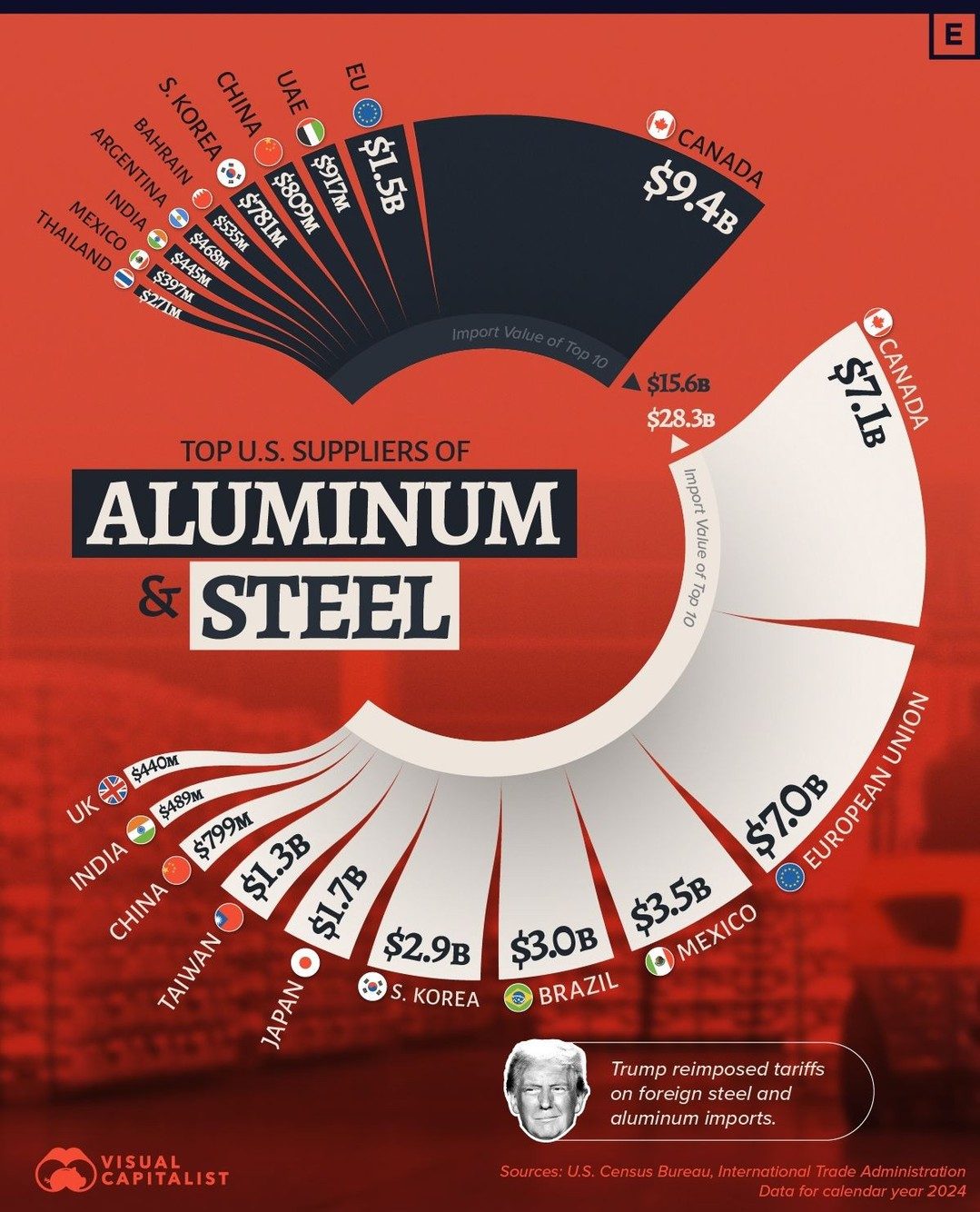
Aluminum and steel are critical components in various industries, and the United States relies heavily on imports to meet its demand. The trade landscape for these metals is dynamic, influenced by geopolitical factors and economic policies. Let's delve into the current state of aluminum and steel imports in the U.S., focusing on the top suppliers and the implications of recent tariff policies.
Context / Why this matters
The aluminum and steel industries are pivotal to the U.S. economy, supporting numerous sectors such as construction, automotive, and aerospace. Understanding the top suppliers and the impact of tariffs is essential for stakeholders, including manufacturers, policymakers, and consumers. With President Trump reimposing a 25% tariff on all foreign steel and aluminum imports, the economic and political dynamics shift significantly.
Main discussion
Top Suppliers of Aluminum and Steel
The United States imports significant quantities of aluminum and steel from various countries. According to the U.S. Census Bureau data for 2024, the top suppliers include:
Canada: Canada is the leading supplier of steel and aluminum to the U.S., with exports totaling $9.4 billion for aluminum and $7.1 billion for steel. This makes Canada a crucial trading partner for the U.S. in these metals.
European Union: The European Union ranks second with a total import value of $70 billion, including both aluminum and steel. This figure underscores the significant trade volume between the U.S. and European countries.
Other Major Suppliers: Brazil, Mexico, China, Taiwan, Japan, South Korea, Argentina, India, Thailand, UAE, and Bahrain are also notable suppliers. These countries contribute to the U.S. market with varying import values, ranging from $1.3 billion to $28.3 billion.
Impact of Tariffs
The reimposition of a 25% tariff on foreign steel and aluminum imports by President Trump has far-reaching implications. This policy aims to protect domestic industries, but it also affects global trade dynamics. Countries with substantial exports to the U.S. will face significant financial impacts. For example:
-
Canada: With $9.4 billion in aluminum exports and $7.1 billion in steel exports, Canada is particularly vulnerable to these tariffs. The financial burden could influence trade relations and prompt retaliatory measures.
-
European Union: The EU's substantial trade volume with the U.S. means that the tariffs will also have a notable impact on European economies.
-
Other Countries: Nations like Brazil, Mexico, and China, which are also significant suppliers, will experience varying degrees of economic strain due to the tariffs.
Trade Dynamics and Geopolitical Factors
The trade dynamics of aluminum and steel are influenced by various geopolitical factors. For instance, the U.S.-China trade relations play a significant role in global metal markets. Additionally, regional agreements and international trade policies shape the supply chain and pricing of these metals. The recent tariff decisions underscore the importance of understanding these geopolitical factors.
Practical tips
For businesses and consumers, staying informed about trade policies and market trends is crucial. Here are some practical tips:
-
Monitor Trade Policies: Keep an eye on any changes in trade policies that could impact the cost and availability of aluminum and steel. This includes tariffs, trade agreements, and international regulations.
-
Diversify Suppliers: Consider diversifying your supply chain to mitigate the risks associated with reliance on a single supplier. This can help in managing disruptions caused by tariffs or other trade-related issues.
-
Evaluate Costs: Assess the financial implications of tariffs on your business. This includes understanding the impact on raw material costs, production expenses, and pricing strategies. Consider alternative materials or manufacturing processes if necessary.
-
Engage with Industry Groups: Participate in industry associations and forums to stay updated on the latest developments and best practices in the aluminum and steel sectors.
Important takeaways
- Canada and the European Union are the leading suppliers of aluminum and steel to the U.S., with significant trade volumes.
- Tariffs imposed by President Trump will have a profound impact on global trade dynamics, particularly for countries like Canada, the EU, and other major suppliers.
- Understanding trade policies and geopolitical factors is essential for businesses and consumers to navigate the complexities of the aluminum and steel markets.
- Diversifying supply chains and monitoring trade policies can help mitigate risks and ensure business continuity.
Conclusion
The aluminum and steel trade landscape is complex, influenced by various economic and political factors. Staying informed about the top suppliers and the impact of tariffs is crucial for stakeholders in these industries. By adopting strategic approaches and staying updated on market trends, businesses can navigate the challenges posed by trade policies and maintain their competitive edge.
Watch the Reel
Questions readers ask
Which countries are the top suppliers of aluminum and steel to the U.S.?
The top suppliers of aluminum to the U.S. include Canada, the EU, and Brazil. For steel, the primary suppliers are Canada, Mexico, and the EU. These countries play a significant role in meeting the U.S. demand for these critical metals, given the high consumption rates across industries like construction, automotive, and aerospace.
What are the primary goals of the recent 25% tariffs on aluminum and steel imports?
The primary goals of the recent 25% tariffs on aluminum and steel imports are to protect and bolster the domestic industries. By imposing these tariffs, the U.S. aims to reduce reliance on foreign metals and stimulate domestic production, potentially creating jobs and bolstering the economy.
How do tariffs on steel and aluminum imports affect the U.S. economy?
Tariffs on steel and aluminum imports can have several economic impacts, such as placing a financial strain on manufacturers who rely on these metals. This can result in increased costs for consumers, and may lead to job losses in sectors that depend on these metals, while simultaneously promoting domestic production by making imports more expensive.
Why does the U.S. rely heavily on imports for aluminum and steel?
The U.S. relies heavily on imports for aluminum and steel due to high domestic demand and limited domestic production capacity. Many industries, such as construction, automotive, and aerospace, require large quantities of these metals, making imports essential to meet domestic needs.
How might U.S. tariffs on aluminum and steel affect the global trade landscape?
U.S. tariffs on aluminum and steel can significantly affect the global trade landscape, as countries affected may retaliate with their own tariffs, leading to trade disputes and potential shifts in global supply chains. This can impact the balance of trade and economic relations between the U.S. and other countries.
What are the implications of the recent tariff policies on U.S. aluminum and steel imports from China?
The recent tariff policies reimposed a 25% tariff on all foreign steel and aluminum imports. However, China currently does not fall into the top suppliers of these metals to the U.S. Thus, the immediate direct impact may be minimal, but the move highlights the policy's broader scope and potential for geopolitical influence.
How do tariffs on steel and aluminum imports from Canada and Mexico affect bilateral relations?
Tariffs on steel and aluminum imports from Canada and Mexico can strain bilateral relations, particularly since these countries are key trading partners of the U.S. and are part of the USMCA agreement. Such measures may lead to retaliatory actions from these countries, complicating trade dynamics and diplomatic ties.
Recent articles
Fresh deep dives from the latest Reels we unpacked.




Comments
Be the first to comment.