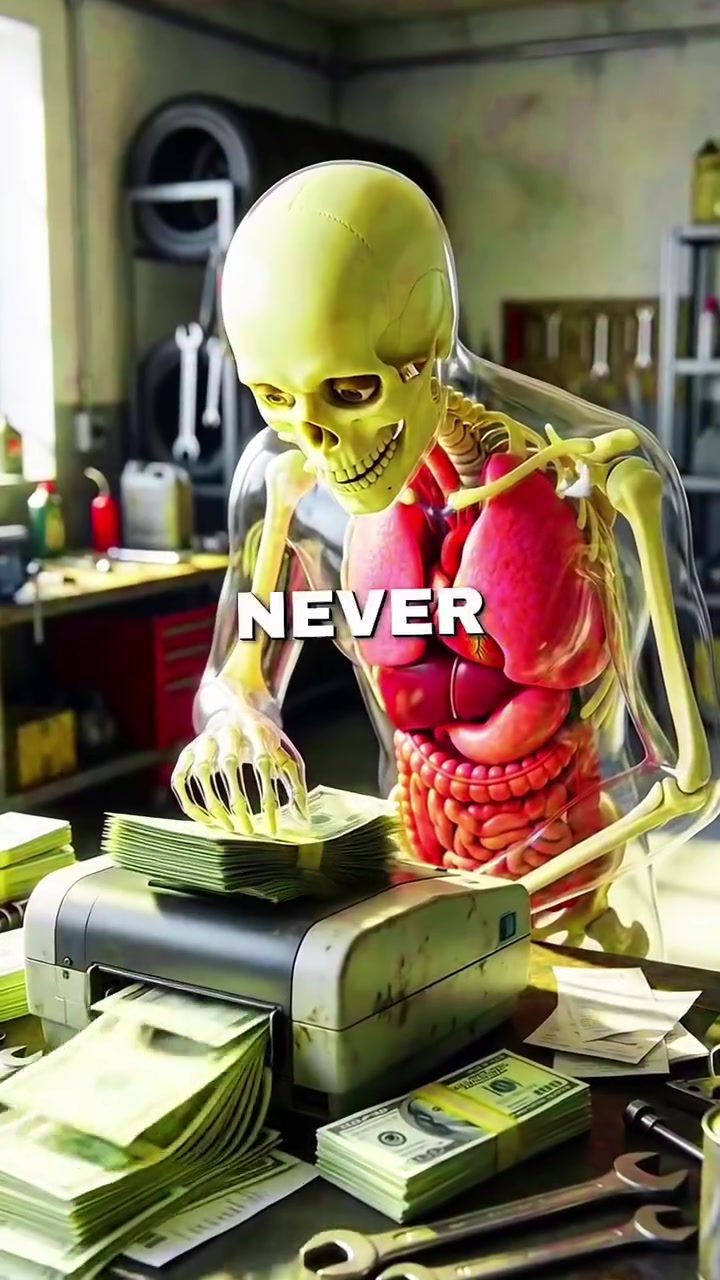
The Implications of Unchecked Money Printing
Printing money is a concept often confined to the realm of fiction or theoretical economics. But what if someone started printing money in real life? The narrative takes us through a hypothetical journey of escalating money printing, highlighting the economic and societal impacts of such actions. Let's break down the progression and understand the implications.
Context / Why this matters
Money printing, or more accurately, creating money that is not backed by real goods or productivity, has real-world implications. It can lead to inflation, devaluation of currency, and economic instability. Understanding this can provide insights into economic policies, financial systems, and the importance of maintaining a stable currency.
Main discussion
The Initial Phase
The journey begins in a bedroom, where a figure starts printing $10,000 at home. Initially, everything seems to go smoothly: no alarms, no police, and the printed money is accepted at stores. This phase is symbolic of a small-scale, localized economic experiment.
The figure then escalates to printing $100,000, buying a car the next day. Life feels normal, stores accept the cash, and there are no apparent repercussions. This suggests that on a small scale, the monetary system can absorb a limited amount of counterfeit currency without immediate detection or consequence.
Escalation to Mass Printing
As the figure progresses to level 2, they become a "garage tycoon," printing millions and acquiring significant assets like houses, cars, and apartment blocks. The acquisition of a boat, despite living nowhere near water, symbolizes the excess and extravagance that often accompany unchecked wealth.
However, this phase also introduces the first signs of trouble. Gas costs more, and everyday items like snacks become twice as expensive. Inflation, the general increase in prices and fall in the purchasing value of money, has entered the picture. This financial instability is a direct result of the increased money supply, which devalues the currency and drives up prices.
The Consequences
The final phase sees the figure upgrading to a warehouse for even larger-scale printing operations. But the economic strain becomes evident: inflation is rampant, and the market is disrupted. The government eventually intervenes, knocking on the door. The stark realization is that the figure did not get rich; instead, they made everyone else broke.
Symbolism and Interpretation
The skeletal figure in the narrative is a compelling symbol. It represents the hollow and ultimately destructive nature of unchecked money printing. The visible organs add a layer of depth, suggesting that the underlying economic and social systems are being eroded by this unnatural influx of currency.
The sequence of scenes—from the bedroom to the warehouse, from counting small stacks of money to piling up vast amounts—illustrates the escalating scale and impact of this financial experiment. The transition from a seemingly innocuous act to one that disrupts the entire economic fabric is a powerful commentary on the delicate balance of financial systems.
Practical tips
While this narrative is hypothetical, it offers practical insights into the real-world implications of unchecked money printing:
-
Understand the Value of Currency: Money derives its value from trust and productivity, not from simply creating more of it.
-
Recognize the Signs of Inflation: Keep an eye on price increases, especially for essential goods, as this can be an early indicator of inflation.
-
Monitor Economic Policies: Pay attention to government policies and central bank actions related to money supply. Unchecked money printing can lead to long-term economic instability.
-
Diversify Investments: To protect against currency devaluation, consider diversifying your investments into assets like real estate, commodities, or stable currencies.
-
Support Transparent Financial Systems: Advocate for transparency and accountability in financial systems to prevent misuse and corruption.
Important takeaways
Money printing, when unchecked, can lead to severe economic consequences, including inflation, currency devaluation, and market instability. The narrative underscores the importance of maintaining a stable and transparent financial system. It also highlights the delicate balance between economic growth and the risks of unchecked monetary expansion. The skeletal figure serves as a stark reminder of the hollow nature of wealth gained through such means, emphasizing the need for ethical and sustainable financial practices.
Conclusion
The hypothetical journey of unchecked money printing reveals the delicate balance of financial systems and the potential dangers of disrupting that balance. By understanding the implications and recognizing the signs, individuals and societies can work towards maintaining a stable and sustainable economic environment. The narrative serves as a reminder of the importance of ethical financial practices and the need for transparent and accountable financial systems.
Watch the Reel
Questions readers ask
What are the immediate economic impacts of uncontrolled money printing?
The immediate economic impacts of uncontrolled money printing include rapid inflation, as the increased money supply chases the same amount of goods and services, driving up prices. This can also lead to a decrease in the currency's purchasing power, making everyday items more expensive.
How does uncontrolled money printing affect economic stability?
Uncontrolled money printing can undermine economic stability by creating uncertainty and volatility. Businesses and consumers may struggle to plan for the future when prices are fluctuating wildly, leading to reduced investment and consumption, which can slow economic growth.
What are the risks of currency devaluation due to uncontrolled money printing?
Currency devaluation risks include a loss of confidence in the currency, both domestically and internationally. This can lead to increased import costs, reduced export competitiveness, and potential capital flight, as people seek to protect their assets in more stable currencies.
Why is responsible monetary policy crucial in preventing economic risks?
Responsible monetary policy is crucial because it helps manage the money supply in line with economic growth, preventing excessive inflation. It ensures that the currency maintains its value, fostering a stable environment for businesses and consumers to operate and make informed decisions.
How does uncontrolled money printing impact international trade?
Uncontrolled money printing can significantly impact international trade by making exports more expensive and imports cheaper, leading to a trade deficit. This can also disrupt global economic relations, as other countries may impose restrictions or penalties to protect their economies.
What are the societal consequences of uncontrolled money printing?
The societal consequences can include increased income inequality, as those with assets may benefit from inflated asset prices, while those relying on fixed incomes may struggle with rising costs of living. It can also lead to social unrest and political instability as people become dissatisfied with their economic conditions.
Can uncontrolled money printing lead to a hyperinflationary spiral, and what are the signs?
Yes, uncontrolled money printing can lead to a hyperinflationary spiral, where prices increase exponentially, and the currency becomes virtually worthless. Signs include rapid and uncontrollable price increases, a loss of faith in the currency, and the emergence of alternative currencies or barter systems.
Recent articles
Fresh deep dives from the latest Reels we unpacked.




Comments
Be the first to comment.