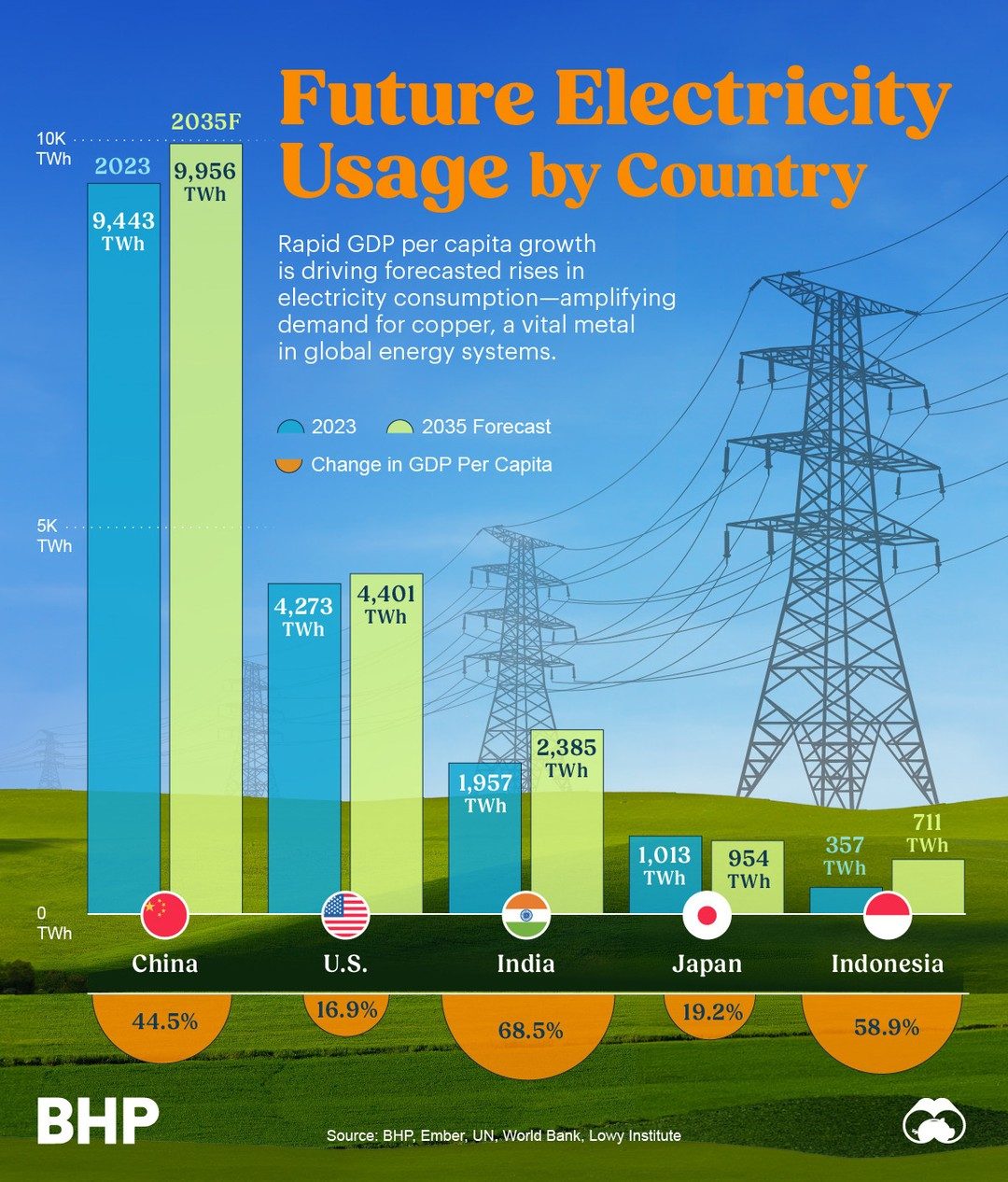
Projected Electricity Usage Growth in Major Economies
Electricity usage is set to rise significantly in major economies from 2023 to 2035. This growth, driven by increasing GDP per capita, has substantial implications for global copper demand. Let’s dive into the details of this projected growth and its impact on key economies and industries.
Why This Matters
Rapid GDP per capita growth is expected to amplify electricity consumption, which in turn will drive up global copper demand. Copper is a vital metal used extensively in electrical infrastructure, making it a critical resource for supporting rising energy needs. Understanding the projected increases in electricity usage and their implications can help policymakers, investors, and industries plan for the future more effectively.
Projected Electricity Usage Growth
China
China is projected to lead the way in electricity usage growth, with a significant increase from 2023 to 2035. The country's electricity consumption is expected to reach around 9,956 terawatt-hours (TWh) by 2035, up from 9,443 TWh in 2023. This growth is driven by rapid industrialization and urbanization, which require substantial electrical infrastructure.
United States
The United States is also expected to see a notable rise in electricity usage. By 2035, the U.S. is forecasted to consume approximately 4,273 TWh, up from 3,572 TWh in 2023. This increase is attributed to continued economic growth and advancements in technology, which demand more energy.
India
India's electricity consumption is projected to surge dramatically. From 2023 to 2035, India's electricity usage is expected to increase from 1,957 TWh to 4,273 TWh. This substantial growth is fueled by India's rapid economic development and the expansion of its middle class, leading to higher energy demands.
Japan
Japan, known for its advanced technology and high standard of living, is expected to see a moderate increase in electricity usage. By 2035, Japan's electricity consumption is forecasted to reach 1,013 TWh, up from 954 TWh in 2023. This growth is driven by ongoing technological advancements and the need for reliable energy sources.
Indonesia
Indonesia is also expected to experience significant growth in electricity consumption. By 2035, Indonesia's electricity usage is projected to reach 711 TWh, up from 357 TWh in 2023. This increase is driven by the country's rapid industrialization and urbanization, which require more energy to support economic growth.
Copper Demand: A Key Implication
Rapid economic growth and increased electricity usage in these major economies will drive up global demand for copper. Copper is essential for electrical wiring, power transmission, and various industrial applications. The projected increase in electricity usage will necessitate substantial investments in copper mining and production to meet the rising demand.
Copper and Electrical Infrastructure
Copper's excellent conductivity and durability make it an ideal material for electrical wiring and power transmission. As electricity usage grows, so does the need for new and upgraded electrical infrastructure, which requires significant amounts of copper. This increased demand for copper will support the growth of the mining and metallurgical industries, creating new economic opportunities and challenges.
Practical Tips for Policy Makers and Businesses
Investing in Renewable Energy
To meet the rising demand for electricity, policymakers and businesses should prioritize investments in renewable energy sources. This shift towards clean energy will not only help meet growing demand but also mitigate the environmental impacts of increased electricity usage.
Upgrading Electrical Infrastructure
As electricity usage grows, so does the need for robust and efficient electrical infrastructure. Investing in the upgrade and expansion of power grids will be crucial to support economic growth and ensure reliable energy supply.
Diversifying Copper Supply
To meet the increased demand for copper, it will be essential to diversify copper supply chains. This includes investing in new mining projects, recycling copper, and exploring alternative sources of this vital metal.
Important Takeaways
The projected growth in electricity usage in major economies from 2023 to 2035 will have significant implications for global copper demand. Key economies such as China, the United States, India, Japan, and Indonesia are expected to see substantial increases in electricity consumption, driven by rapid economic growth and industrialization. Understanding these trends can help policymakers and businesses plan for the future more effectively and ensure a reliable and sustainable energy supply.
Conclusion
The future of electricity usage in major economies is poised for significant growth, driven by increasing GDP per capita. This trend will amplify demand for copper, a vital metal in electrical infrastructure. By understanding these projections and their implications, policymakers, businesses, and industries can better prepare for the future and ensure a sustainable energy supply.
Watch the Reel
Questions readers ask
How does economic growth influence electricity consumption?
Economic growth, particularly increases in GDP per capita, directly correlates with rising electricity consumption. As economies develop, industries expand, and populations gain access to more electrical services, leading to higher overall electricity usage.
Which countries are expected to drive global copper demand through electricity consumption?
Major economies such as China, the United States, and India are anticipated to significantly boost global copper demand. This is due to their projected substantial increases in electricity consumption from 2023 to 2035, driven by economic development and infrastructure expansion.
What is the relationship between electricity consumption and copper demand?
Copper is essential for electrical infrastructure, including power lines and equipment. As electricity consumption increases, so does the need for copper to build and maintain the necessary infrastructure to support this growth.
How will the projected electricity usage growth impact future copper demand?
The anticipated surge in electricity usage from 2023 to 2035 will likely drive up global copper demand. This is because more electricity requires more infrastructure, and copper is a key component in the electrical systems needed to support this rising demand.
What role does technological progress play in electricity consumption growth?
Technological progress enhances energy efficiency and creates new electricity-intensive industries and services, thereby increasing overall electricity consumption. As technology advances, more devices and systems rely on electricity, further boosting demand.
How can understanding electricity consumption trends help industries and investors?
By analyzing electricity consumption trends, industries can anticipate future demands for electrical infrastructure and services. Investors can identify opportunities in sectors that will benefit from increased electricity usage and the associated infrastructure development.
What are the implications of rising electricity consumption for infrastructure development?
Rising electricity consumption necessitates substantial infrastructure development to meet growing demands. This includes the expansion and modernization of power grids, generation facilities, and transmission lines, all of which require significant amounts of copper.
Recent articles
Fresh deep dives from the latest Reels we unpacked.




Comments
Be the first to comment.