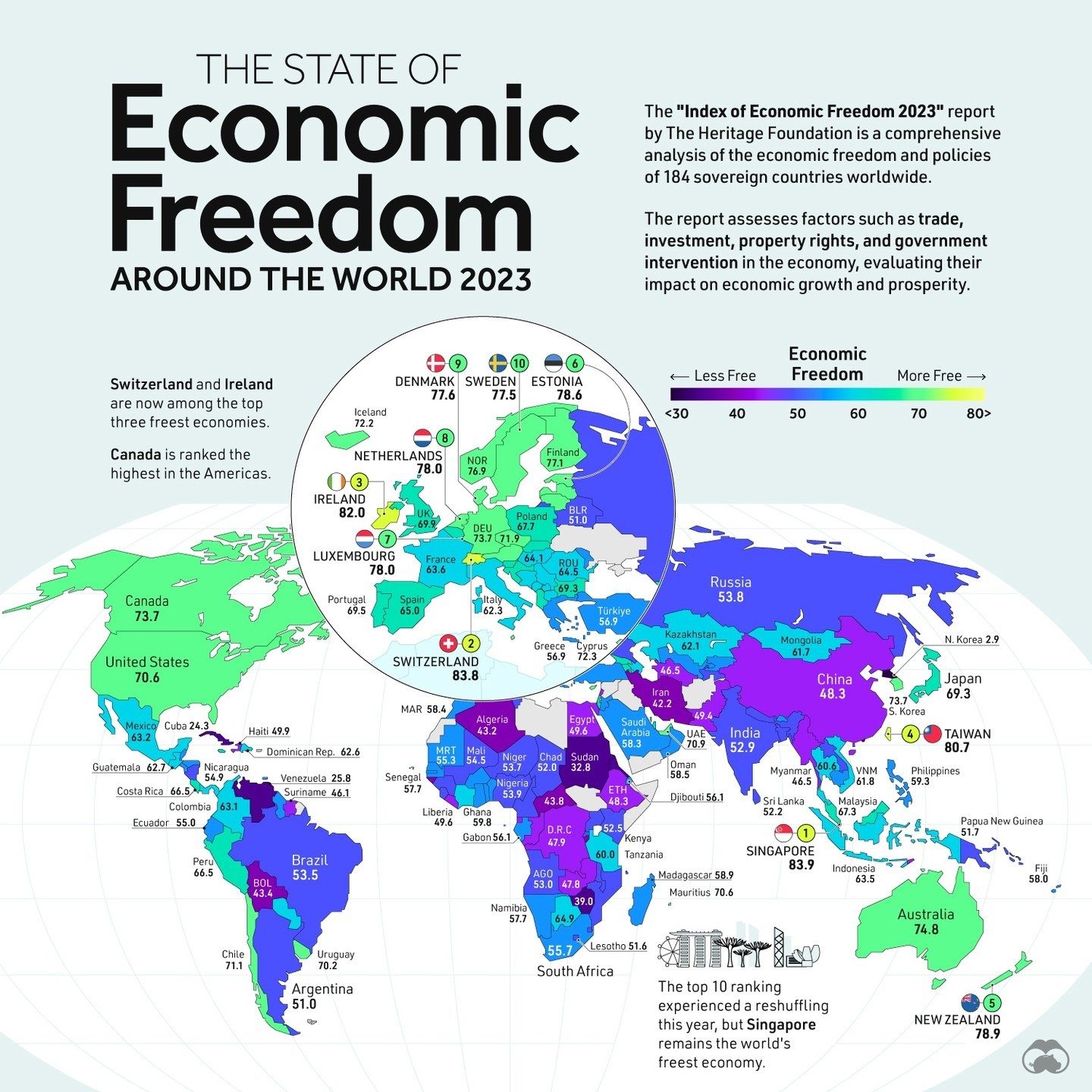
Economic freedom is a critical measure of how freely individuals and businesses can operate within an economy. It evaluates the extent to which economic decisions are unhampered by excessive regulations or government interventions. The Index of Economic Freedom, an annual report by The Heritage Foundation, provides a comprehensive analysis of economic freedom and policies across 184 sovereign countries worldwide.
Context / Why This Matters
Understanding economic freedom is essential for several reasons. It influences economic growth, prosperity, and the overall well-being of a nation. Countries with higher economic freedom tend to have more vibrant economies, better job opportunities, and higher standards of living. The Index of Economic Freedom not only highlights the strengths and weaknesses of various economic systems but also provides valuable insights into the policies that promote economic growth and prosperity.
Main Discussion
The Index of Economic Freedom 2023
The Index of Economic Freedom 2023 report by The Heritage Foundation is a comprehensive analysis of economic freedom and policies of 184 sovereign countries worldwide. It assesses various factors such as trade, investment, property rights, and government intervention in the economy. The report evaluates the impact of these factors on economic growth and prosperity, providing a detailed overview of the global economic landscape.
Key Factors and Indicators
The Index uses a scale of 0 to 100 to evaluate economic freedom, with higher scores indicating greater freedom. The assessment includes several key factors:
- Property Rights: The protection of property rights ensures that individuals and businesses can own, use, and dispose of their assets without fear of government interference. Strong property rights are crucial for economic development and investment.
- Tax Burden: The tax system significantly impacts economic freedom. Lower tax burdens generally encourage investment and economic activity, while high taxes can stifle growth.
- Labor Freedom: This factor evaluates the extent to which labor laws and regulations support a free and competitive labor market, allowing workers and businesses to make unfettered choices.
- Monetary Freedom: This reflects the stability of a country's currency and the absence of restrictions on monetary policies. Monetary stability is vital for economic growth and investment.
- Government Intervention: Lower levels of government intervention in the economy tend to foster economic freedom, allowing individuals and businesses to operate more freely.
- Trade Freedom: This factor assesses the openness of a country's trade policies, including tariffs, quotas, and other trade barriers. Open trade policies generally promote economic growth and prosperity.
Countries with the Highest Economic Freedom
The 2023 report highlights several countries that stand out for their high levels of economic freedom:
- Switzerland and Ireland: These countries are among the three freest economies in the world. Their strong property rights, low tax burdens, and minimal government intervention contribute to their high economic freedom scores.
- Canada: Ranked highest in the Americas, Canada benefits from a stable economic environment, strong property rights, and a relatively low tax burden.
Practical Tips
To understand and leverage the Index of Economic Freedom, consider the following practical tips:
For Individuals and Businesses
- Investment Opportunities: Look for countries with high economic freedom scores for potential investment opportunities. These countries generally offer more stable economic environments and better returns on investment.
- Property Rights: Prioritize countries with strong property rights for business ventures. This will ensure that your assets are protected and that you can operate with minimal legal interference.
- Labor Market: Understand the labor laws and regulations in countries you are considering for business. Countries with high labor freedom scores offer more flexibility for hiring and managing employees.
For Policy Makers
- Policy Reforms: Use the Index as a guide for policy reforms. Countries with higher economic freedom tend to have more prosperous economies. By implementing policies that promote economic freedom, policymakers can foster growth and development.
- Trade Policies: Focus on reducing trade barriers and promoting open trade policies. This can stimulate economic activity and attract foreign investment.
- Government Intervention: Minimize unnecessary government intervention in the economy. Allowing businesses to operate freely can lead to increased innovation, productivity, and economic growth.
Important Takeaways
The Index of Economic Freedom provides valuable insights into the economic policies and environments of various countries. Higher economic freedom generally leads to better economic outcomes, including higher growth rates, greater prosperity, and improved standards of living. By understanding the factors that contribute to economic freedom, individuals, businesses, and policymakers can make informed decisions that promote economic growth and development. Switzerland, Ireland, and Canada serve as excellent examples of countries that have implemented policies fostering a high level of economic freedom and reaped the benefits.
Conclusion
Economic freedom is a vital component of a thriving economy. It allows individuals and businesses to make economic decisions without undue interference, fostering innovation, growth, and prosperity. The Index of Economic Freedom 2023 by The Heritage Foundation provides a comprehensive assessment of economic freedom across the globe, highlighting the factors that contribute to economic success and identifying countries that excel in this regard. By understanding and leveraging the insights from this index, stakeholders can make informed decisions that promote economic freedom and prosperity.
Watch the Reel
Questions readers ask
How often is the Economic Freedom Index published, and who is the author?
The Economic Freedom Index is published annually by The Heritage Foundation, a non-profit think tank. It has been a useful resource for comparing economic freedom across countries since 1995.
What categories are evaluated to determine economic freedom?
The Index evaluates 12 categories, including property rights, government integrity, tax burden, government spending, fiscal health, business freedom, labor freedom, monetary freedom, trade freedom, investment freedom, financial freedom, and freedom from corruption.
Which country ranked highest in the 2023 Economic Freedom Index?
As of the 2023 Index, Singapore holds the top spot for the highest level of economic freedom. Countries like New Zealand and Switzerland follow closely in the rankings.
How can I access the Economic Freedom Index 2023?
The Economic Freedom Index 2023 can be accessed through The Heritage Foundation's website. The report is typically available as a downloadable PDF and includes detailed information, rankings, and an interactive map to visualize global economic freedom.
What is a property rights index, and why is it important?
The property rights index measures how well a country protects private property ownership and enforces contracts. Strong property rights are crucial for economic growth as they encourage investment and innovation by ensuring that individuals and businesses can benefit from their efforts.
What is the significance of the global economic ranking in the Economic Freedom Index 2023?
The global economic ranking provides a snapshot of how well countries perform in terms of economic freedom. It helps identify trends, benchmark policies, and understand how different countries foster economic growth and prosperity. It can be used by businesses and investors to gauge the potential of a country's economy.
How does government intervention affect economic freedom?
Excessive government intervention can hinder economic freedom by imposing regulations and restrictions on businesses and individuals. This can stifle innovation, reduce competitiveness, and limit economic growth. Conversely, minimal government intervention allows for greater freedom in economic decisions, fostering a more dynamic and prosperous economy.
Related deep dives
Similar reads based on topic and creator.


Recent articles
Fresh deep dives from the latest Reels we unpacked.




Comments
Be the first to comment.