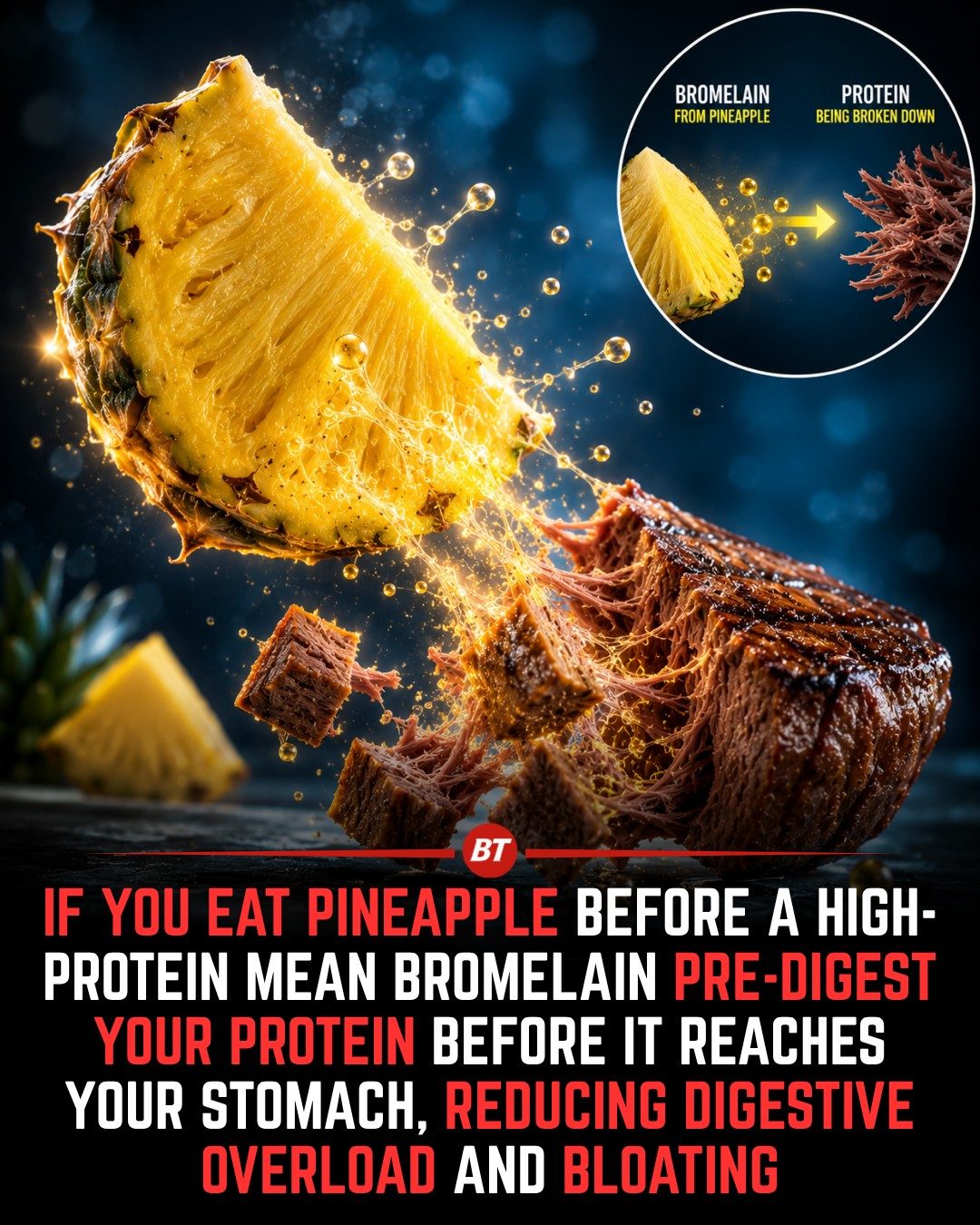
Pineapple and Protein Digestion
Pineapple is more than just a tropical fruit; it's a powerhouse of enzymes that can support protein digestion. Bromelain, a group of proteolytic enzymes found in pineapple, plays a significant role in breaking down proteins into smaller peptides and amino acids. This natural enzyme can assist in digesting protein-rich meals, potentially reducing digestive discomfort and bloating.
Why this matters
Digesting protein-rich meals can be challenging for some people, often leading to discomfort and bloating. Bromelain, found in pineapple, has been studied for its ability to pre-digest proteins, making meals easier to digest. This makes pineapple a valuable addition to any diet, particularly for those who consume large, protein-heavy meals.
Main discussion
Bromelain: The Enzyme in Pineapple
Bromelain is a mixture of enzymes that aid in protein digestion. Unlike most fruits, pineapple contains this group of proteolytic enzymes, making it unique. Researchers have been studying bromelain for decades due to its ability to break down complex proteins. This enzyme can help make meals easier to digest, particularly after large, protein-heavy meals. Bromelain has been shown to pre-digest proteins before they reach the stomach, reducing digestive overload and bloating.
Bromelain's Digestive and Anti-Inflammatory Properties
A 2023 review published in Nutrients highlighted bromelain's digestive and anti-inflammatory properties. The review noted that bromelain has been investigated for supporting protein digestion and gastrointestinal comfort. Scientists continue to study its potential role in reducing post-meal digestive discomfort, although responses can vary from person to person. Bromelain's anti-inflammatory properties can also help soothe the digestive tract, making it easier to process protein-rich meals.
The Benefits of Eating Pineapple Before a Protein-Rich Meal
Eating pineapple before a protein-rich meal can support normal digestion as part of an overall healthy diet. Enjoy ½ to 1 cup of fresh pineapple about 15–30 minutes before or alongside a protein-rich meal such as chicken, fish, Greek yogurt, or eggs. Fresh pineapple is best, since much of bromelain is reduced during canning and high-heat processing. So, if you're looking to improve your protein digestion, adding pineapple to your diet might be a simple and delicious solution.
Nutritional Benefits of Pineapple
Pineapple provides more than just bromelain. It also offers vitamin C, manganese, and antioxidants that support immune function and collagen production. Combined with bromelain, these nutrients make pineapple more than just a sweet dessert—it's one of the few fruits that naturally contains enzymes involved in digestion. This makes pineapple a valuable addition to any diet, particularly for those who consume large, protein-heavy meals.
Practical tips
- Timing Matters: Eat ½ to 1 cup of fresh pineapple about 15–30 minutes before or alongside a protein-rich meal. This allows the bromelain in pineapple to pre-digest the proteins, making them easier to digest.
- Fresh is Best: Choose fresh pineapple over canned or processed varieties. Canning and high-heat processing can reduce the amount of bromelain in pineapple, making it less effective in aiding digestion.
- Pair with Protein: Pair pineapple with a balanced, protein-rich meal. This can help support normal digestion as part of an overall healthy diet.
Important takeaways
- Pineapple contains bromelain, a natural enzyme that helps break down proteins into smaller peptides and amino acids.
- Eating pineapple before a protein-rich meal can support normal digestion, reducing digestive discomfort and bloating.
- Bromelain has been studied for its digestive and anti-inflammatory properties, making it a valuable addition to any diet.
- Pineapple provides more than just bromelain. It also offers vitamin C, manganese, and antioxidants that support immune function and collagen production.
- Pairing pineapple with a balanced, protein-rich meal can help support normal digestion as part of an overall healthy diet.
Combining pineapple with a balanced, protein-rich meal can help support normal digestion as part of an overall healthy diet. Just remember to choose fresh pineapple and time your meal appropriately for the best results.
Watch the Reel
Questions readers ask
What is bromelain and how does it aid in protein digestion?
Bromelain is a group of enzymes found in pineapple that help break down proteins into smaller peptides and amino acids. This process makes it easier for your body to absorb and digest proteins, which can reduce digestive discomfort and bloating.
Why should I consider adding pineapple to my protein-rich diet?
Including pineapple in your protein-rich diet can enhance protein absorption and improve overall digestion. The bromelain in pineapple pre-digests proteins, making your meals easier to digest and potentially reducing post-meal discomfort and bloating.
When is the best time to consume pineapple for optimal protein digestion?
While there is no definitive answer, it is often suggested to consume pineapple about 30-60 minutes before a protein-rich meal to allow the bromelain time to activate in your stomach and begin breaking down proteins.
Can pineapple help with other digestive issues?
Yes, pineapple's digestive enzymes can support overall gastrointestinal comfort. Beyond aiding in protein digestion, bromelain can help reduce inflammation and soothe the digestive tract, which may alleviate symptoms of various digestive issues.
What are some other benefits of bromelain besides protein digestion?
Bromelain has been shown to have anti-inflammatory properties, which can help reduce swelling and inflammation in the body. It may also support immune function, improving your body’s ability to fight off infections.
How much pineapple should I eat to experience these benefits?
The amount of pineapple needed to experience digestive benefits can vary. However, as a guideline you can start with about 1 to 2 cups of fresh pineapple or 1 to 2 cups of pineapple juice.
Can I take bromelain supplements instead of eating pineapple?
Yes, bromelain supplements are available and can provide similar benefits. However, consuming fresh pineapple offers additional nutrients and fiber. You should consult a healthcare provider before starting any new supplement regimen.
Related deep dives
Similar reads based on topic and creator.




Recent articles
Fresh deep dives from the latest Reels we unpacked.




Comments
Be the first to comment.