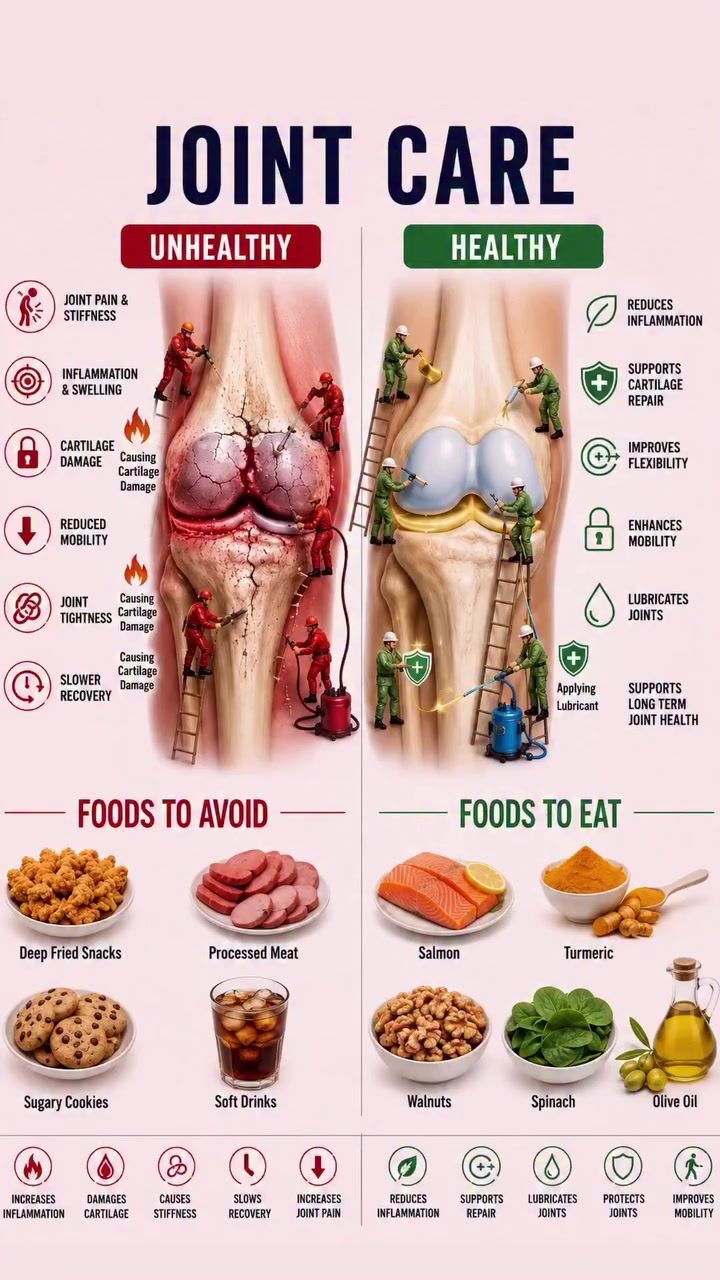
Joint Care and Diet: How Food Affects Joint Health
Joint health is critical for maintaining mobility and overall well-being. While movement and exercise are essential, a balanced and nutrient-rich diet also plays a significant role. The right foods can help reduce inflammation, support cartilage repair, and enhance joint lubrication. Conversely, unhealthy foods can exacerbate joint issues and contribute to long-term damage.
Why This Matters
Joint pain and stiffness are common complaints, affecting people of all ages. Chronic joint issues can significantly impair daily activities and quality of life. Proper joint care involves not only exercising regularly but also making informed dietary choices. By understanding how different foods impact joint health, individuals can take proactive steps to manage and potentially alleviate joint-related problems.
Main Discussion
The Role of a Balanced Diet in Joint Health
A balanced diet is pivotal for maintaining healthy joints. Certain nutrients can help reduce inflammation, which is a common factor in joint pain and stiffness. Foods rich in antioxidants, omega-3 fatty acids, and anti-inflammatory compounds can support overall joint health. Conversely, ultra-processed foods and sugary snacks can increase inflammation and worsen joint conditions.
Foods to Eat for Better Joint Health
- Salmon: Rich in omega-3 fatty acids, salmon is excellent for reducing inflammation and supporting joint health. Regular consumption of omega-3s can help alleviate joint pain and stiffness.
- Turmeric: This spice contains curcumin, a powerful anti-inflammatory compound. Turmeric can help reduce inflammation and support cartilage repair, making it a valuable addition to any diet aimed at improving joint health.
- Walnuts: These nuts are packed with omega-3 fatty acids and antioxidants. Walnuts can help lower inflammation and support joint mobility, making them a great snack choice.
- Spinach: Leafy greens like spinach are high in vitamins and minerals, including vitamin K, which is essential for bone health. Regular consumption of spinach can contribute to overall joint health.
- Olive Oil: Extra virgin olive oil is rich in monounsaturated fats and antioxidants. It can reduce inflammation and support joint lubrication, making it a healthier alternative to processed oils.
Foods to Limit or Avoid
- Deep-Fried Snacks: High in unhealthy fats and sodium, deep-fried snacks can increase inflammation and worsen joint pain. Opt for baked or air-fried alternatives to satisfy cravings without the negative effects.
- Processed Meat: Processed meats are often high in sodium and preservatives, which can contribute to inflammation. Reduce consumption of processed meats and choose lean proteins like chicken, fish, or plant-based options.
- Sugary Cookies and Snacks: Foods high in sugar can lead to weight gain and increased inflammation. Limit sugary snacks and opt for healthier alternatives like fruits and nuts.
- Soft Drinks: Carbonated soft drinks are high in sugar and artificial ingredients, which can increase inflammation and joint pain. Choose water or other low-sugar beverages to stay hydrated and support joint health.
Practical Tips
Incorporating Joint-Healthy Foods into Your Diet
- Meal Planning: Plan meals that include a variety of joint-friendly foods. Aim for a balanced diet that incorporates lean proteins, whole grains, and plenty of fruits and vegetables.
- Snack Wisely: Opt for nuts, seeds, and fresh fruits as snacks instead of processed snacks. These healthier options can provide essential nutrients and reduce inflammation.
- Cook with Olive Oil: Use extra virgin olive oil for cooking and dressing salads. Its anti-inflammatory properties can support joint health and add flavor to meals without the unhealthy fats.
- Stay Hydrated: Drink plenty of water to support joint lubrication and overall health. Adequate hydration is crucial for maintaining joint mobility and reducing stiffness.
- Regular Exercise: Pair a balanced diet with regular exercise, including strength training and flexibility exercises. This can help reduce joint pain and improve mobility.
Important Takeaways
The Impact of Diet on Joint Health
Joint health is influenced by a combination of factors, including diet, exercise, and overall lifestyle. Incorporating anti-inflammatory foods and limiting processed, high-sugar snacks can significantly improve joint function and reduce inflammation. By making conscious dietary choices, individuals can support long-term joint health and alleviate symptoms of joint pain and stiffness.
Benefits of a Joint-Friendly Diet
A diet rich in omega-3 fatty acids, antioxidants, and anti-inflammatory compounds can offer numerous benefits for joint health. The foods mentioned earlier can help reduce inflammation, support cartilage repair, and enhance joint mobility. Reducing the intake of processed foods and sugary snacks can further support overall joint health and reduce the risk of long-term damage.
Conclusion
Joint health is a multifaceted issue that involves more than just movement and exercise. A balanced, nutrient-rich diet plays a crucial role in maintaining healthy joints and reducing inflammation. By incorporating foods like salmon, turmeric, walnuts, spinach, and olive oil into your diet, and limiting processed and sugary foods, you can support overall joint health and alleviate symptoms of joint pain and stiffness.
Watch the Reel
Questions readers ask
What are some of the best foods for maintaining joint health?
Foods rich in anti-inflammatory compounds, such as omega-3 fatty acids, are highly beneficial. Fatty fish like salmon, walnuts, and olive oil are excellent sources. Additionally, foods high in antioxidants and compounds like turmeric can aid in reducing inflammation and supporting cartilage repair.
How do omega-3 fatty acids support joint health?
Omega-3 fatty acids help reduce inflammation in the body, which can alleviate joint pain and stiffness. They also contribute to the production of anti-inflammatory compounds, making them crucial for maintaining joint mobility and overall function.
Which foods should be avoided to prevent harming the joints?
Processed foods, especially those high in sugar and unhealthy fats, can exacerbate joint issues. These foods often promote inflammation and contribute to weight gain, which can put additional stress on the joints. It's best to limit or avoid foods like sugary snacks, fried foods, and processed meats.
Can turmeric really help with joint pain?
Yes, turmeric contains a compound called curcumin, which has strong anti-inflammatory properties. Regularly incorporating turmeric into your diet can help reduce joint inflammation and pain, making it a valuable addition to a joint-healthy diet.
What role do healthy fats play in joint health?
Healthy fats, particularly those rich in omega-3s, play a critical role in reducing inflammation and supporting joint lubrication. Foods like fatty fish, walnuts, and olive oil are excellent sources of these beneficial fats, which can help maintain joint flexibility and reduce discomfort.
How does diet impact joint repair and maintenance?
A balanced diet rich in nutrients like antioxidants and omega-3s can significantly aid in joint repair and maintenance. These nutrients help reduce inflammation, support cartilage health, and enhance the body's ability to heal and repair damaged joints, keeping them functioning optimally.
Can a diet high in processed foods worsen joint issues?
Yes, a diet high in processed foods can worsen joint issues by promoting inflammation and contributing to weight gain. This additional stress on the joints can exacerbate pain and stiffness, making it harder to maintain mobility and overall joint health.
Recent articles
Fresh deep dives from the latest Reels we unpacked.




Comments
Be the first to comment.