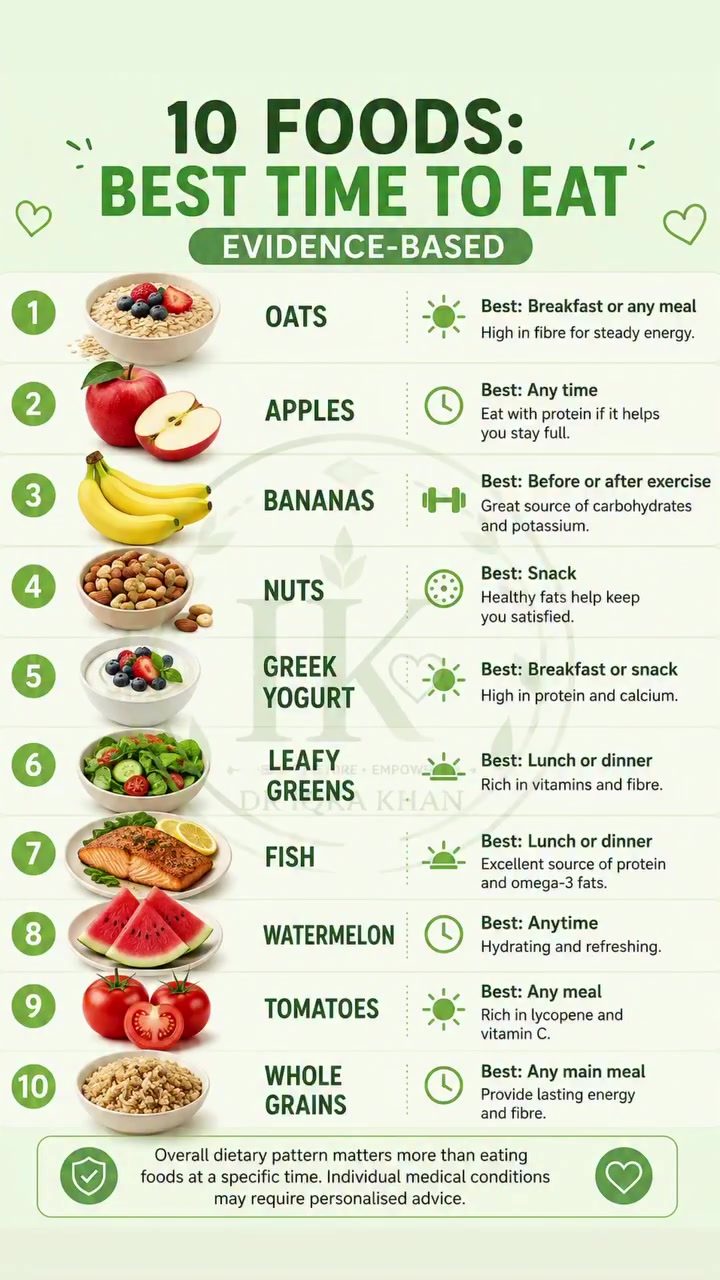
Eating for Optimal Health
Eating healthy is more important than sticking to a rigid eating schedule. While certain foods can be particularly beneficial at specific times of the day, the key to nutrition is consistency and variety. Let's explore the best times to eat a range of nutritious foods and understand why these timings can be beneficial.
Why this matters
The best time to eat certain foods can impact your energy levels, digestion, and overall nutrition. By understanding the optimal times to consume specific foods, you can maximize the health benefits they offer. However, it's important to remember that individual dietary needs can vary, and it's always a good idea to consult a healthcare professional or a registered dietitian for personalized advice.
Overview of Beneficial Foods
Oats
Oats are versatile and can be a great addition to any meal, but they are especially beneficial for breakfast. They are high in fiber, which provides a steady release of energy throughout the morning. This can help you feel fuller for longer and maintain stable blood sugar levels.
Apples
Apples are a nutritious snack that can be enjoyed at any time of day. Pairing an apple with a source of protein, such as nuts or yogurt, can enhance feelings of fullness. Additionally, apples are rich in fiber and vitamins, making them an excellent choice for a quick and healthy snack.
Bananas
Bananas are ideal for consumption before or after exercise. They are a great source of carbohydrates and potassium, which are essential for muscle recovery and electrolyte balance. The natural sugars in bananas can also provide a quick energy boost during workouts.
Nuts
Nuts are a satisfying and nutritious snack packed with healthy fats, protein, and fiber. They can be enjoyed at any time, but they are particularly useful when you need a quick energy boost or need to curb a hunger craving.
Greek Yogurt
Greek yogurt is perfect for breakfast or as a snack due to its high protein and calcium content. It can help you feel full and satisfied, making it an excellent option for managing hunger throughout the day.
Leafy Greens
Leafy greens are rich in vitamins, minerals, and fiber, making them an excellent addition to lunch or dinner. They can help improve overall nutrition and support digestive health. Incorporating leafy greens into your meals can also enhance the flavor and texture of your dishes.
Fish
Fish is an excellent source of high-quality protein and omega-3 fats, which are beneficial for heart health. Including fish in your lunch or dinner can help you meet your daily protein needs and reduce the risk of heart disease.
Watermelon
Watermelon is a hydrating and refreshing fruit that can be enjoyed at any time. Its high water content can help keep you hydrated, especially during hot summer months. Watermelon is also rich in vitamins and minerals, making it a healthy snack option.
Tomatoes
Tomatoes are rich in lycopene and vitamin C, making them a valuable addition to any meal. Consuming tomatoes with a little olive oil may improve lycopene absorption, which is beneficial for heart health and reducing the risk of certain cancers.
Whole Grains
Whole grains are a great source of lasting energy and fiber, making them ideal as part of your main meals. Including whole grains in your diet can help support digestive health and improve overall nutrition.
Practical Tips for Eating Healthy
Be Consistent
Consistency is key when it comes to eating healthy. Aim to include a variety of nutrient-dense foods in your diet on a regular basis. This will help you maintain balanced nutrition and avoid deficiencies.
Listen to Your Body
Pay attention to your body's hunger and fullness cues. Eating when you are hungry and stopping when you are full can help you maintain a healthy weight and prevent overeating.
Plan Ahead
Meal planning and preparation can help you stick to a healthy eating routine. Having nutritious meals and snacks readily available can prevent you from making unhealthy food choices when you are short on time.
Stay Hydrated
Drinking plenty of water throughout the day is essential for overall health. Proper hydration can support digestion, nutrient absorption, and energy levels.
Incorporate Variety
Eating a variety of nutrient-dense foods can help you meet your daily nutritional needs and prevent boredom. Aim to include a variety of fruits, vegetables, whole grains, lean proteins, and healthy fats in your diet.
Personalize Your Diet
Individual dietary needs can vary based on factors such as age, activity level, medical conditions, and medications. Consulting a healthcare professional or a registered dietitian can help you develop a personalized diet plan that meets your unique needs.
Important Takeaways
Eating healthily is about more than just choosing the right foods; it's also about understanding when to eat them. By incorporating a variety of nutrient-dense foods into your diet at optimal times, you can maximize the health benefits they offer.
Here are some key takeaways to remember:
- Oats are great for breakfast or any meal for steady energy.
- Apples are a nutritious snack that can be paired with protein for better fullness.
- Bananas are ideal before or after exercise for replenishing carbohydrates and potassium.
- Nuts are a satisfying snack packed with healthy fats, protein, and fiber.
- Greek yogurt is perfect for breakfast or as a snack due to its high protein and calcium content.
- Leafy greens are best included with lunch or dinner to boost vitamins, minerals, and fiber.
- Fish is excellent for lunch or dinner, providing high-quality protein and heart-healthy omega-3 fats.
- Watermelon is a refreshing, hydrating fruit that can be enjoyed at any time.
- Tomatoes are great with any meal and rich in lycopene and vitamin C.
- Whole grains are ideal as part of your main meals to provide lasting energy and support digestive health.
- There is no single "perfect" eating schedule for everyone. Your age, activity level, medical conditions, medications, and personal routine all influence what works best for you.
Conclusion
Incorporating a variety of nutritious foods into your diet at optimal times can help you maintain overall health and well-being. Whether you are looking to boost energy levels, support digestive health, or improve overall nutrition, understanding when to eat certain foods can make a significant difference. By focusing on consistency, variety, and personalization, you can develop a healthy eating routine that works for you.
Watch the Reel
Questions readers ask
What is the best time to eat protein for optimal health benefits?
The optimal time to eat protein is in the morning or after workouts. Protein helps to repair and build muscles, and consuming it in the morning can help to sustain energy levels throughout the day. Post-workout protein intake aids in muscle recovery and growth. Sustainable options for protein include eggs, chicken, and plant-based proteins like beans and lentils.
Why is it beneficial to eat yogurt in the morning?
Eating yogurt in the morning can help improve digestion and maintain gut health. Yogurt contains probiotics and live bacteria that support a healthy gut, especially when consumed in the morning. Including yogurt in your breakfast can also help sustain energy levels and promote a feeling of fullness until lunch.
What is the perfect breakfast for optimal health?
The perfect breakfast includes a mix of protein, healthy fats, and complex carbohydrates. Examples are whole grain toast with avocado and eggs, or oatmeal with nuts, seeds, and berries. This combination ensures sustained energy and improved digestion, setting the stage for a productive and energetic day.
Can eating high-fiber foods at lunch boost my health?
Yes, eating high-fiber foods at lunch can support digestive health and help maintain stable blood sugar levels. High-fiber foods like whole grains, vegetables, and legumes take longer to digest, keeping you satiated and energized throughout the afternoon. This can also prevent overeating during dinner.
What is the best time to eat dinner for good digestion?
The best time to eat dinner is typically around 2-3 hours before bedtime. This allows your body enough time to digest the food and prevents discomfort during sleep. Eating a balanced dinner rich in vegetables, lean proteins, and complex carbohydrates can also promote better sleep quality.
Is any time the best time to eat healthily?
While timing can enhance the benefits of certain foods, any time can be the best time to eat healthily. Consistency and variety in your diet are key. Ensuring you consume a balanced mix of nutrients throughout the day is more important than strict meal timing. Listen to your body's hunger and fullness cues to determine the best eating times for you.
How does meal timing affect the absorption of healthy fats?
Meal timing can influence the absorption of healthy fats. Consuming healthy fats, such as avocados, nuts, and olive oil, with meals that include fiber and proteins can enhance their absorption. Healthy fats are best consumed with meals rather than on an empty stomach, as this can slow down digestion and lead to discomfort. Additionally, healthy fats can help sustain energy levels, especially when consumed in the morning or as part of a midday snack.
Recent articles
Fresh deep dives from the latest Reels we unpacked.




Comments
Be the first to comment.