Knowing Your Protein and Fiber Needs
Most people struggle with nutrition not because they don't know what to eat, but because they don't know how much they actually need. Visualizing portion sizes can make healthy eating much more manageable. Let's delve into the specifics of protein and fiber intake, and how to incorporate them into your daily meals.
Why This Matters
Protein and fiber are two essential nutrients that play crucial roles in maintaining overall health. Protein is vital for muscle growth, recovery, and satiety, while fiber supports digestion, helps regulate blood sugar, and promotes heart health. Understanding how to incorporate these nutrients into your diet can lead to significant health benefits.
Protein: The Building Block
Protein is essential for building and repairing tissues, producing enzymes and hormones, and maintaining a healthy immune system. Consuming adequate amounts of protein helps in maintaining lean muscle mass, especially during weight loss. The recommended daily intake of protein varies depending on factors such as age, sex, and activity level, but a common guideline is 1.2 to 2 grams of protein per kilogram of body weight per day for active individuals.
Visualizing Protein Portions
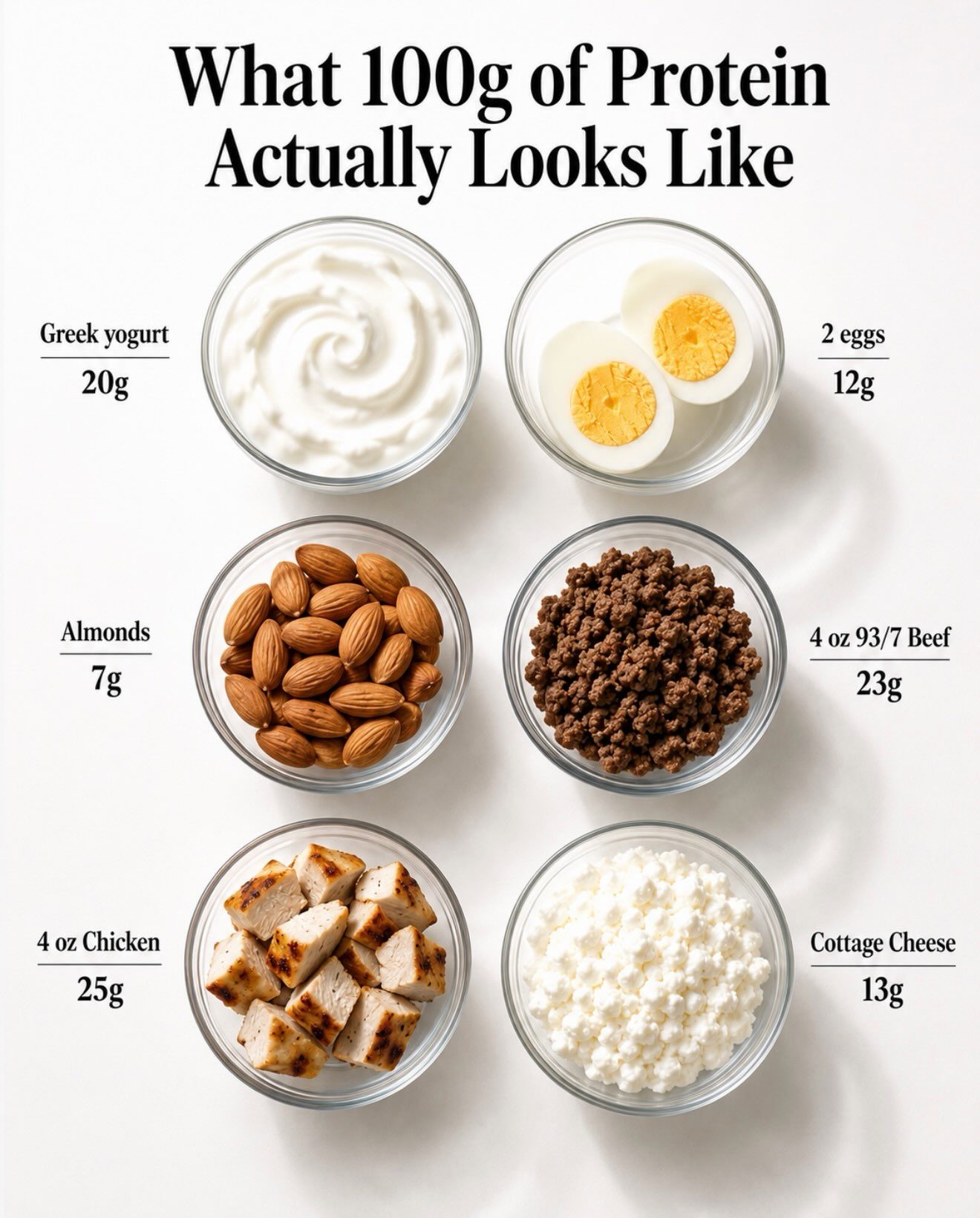
Visualizing protein portions can make it easier to understand how to meet your daily requirements. Here are some common foods and their protein content:
- Greek yogurt: 20g per 200g serving
- Eggs: 12g per two eggs
- Almonds: 7g per 28g serving
- Beef (93/7 lean): 23g per 4 oz serving
- Chicken breast: 25g per 4 oz serving
- Cottage cheese: 13g per 100g serving
These examples show that it's relatively easy to reach 100g of protein through a variety of food sources. By spreading your protein intake throughout the day, you can support muscle growth, recovery, and overall health.
Tips for Increasing Protein Intake
Incorporating more protein into your diet can be simple with a few practical tips:
- Include a quality protein source with every meal. This could be lean meats, poultry, fish, eggs, dairy, or plant-based proteins like tofu and legumes.
- Choose whole foods over processed protein sources. Whole foods provide additional nutrients and fiber, which can help with satiety and overall health.
- Experiment with high-protein recipes. There are countless recipes available that can help you discover new and exciting ways to enjoy protein-rich foods.
Fiber: The Unsung Hero
Fiber is an often-overlooked nutrient, but it plays a crucial role in maintaining digestive health, regulating blood sugar, and promoting heart health. The recommended daily intake of fiber is 25-35 grams for adults, but many people fall short of this goal. Fiber can be found in a variety of plant-based foods, including fruits, vegetables, whole grains, and legumes.
Visualizing Fiber Portions
Visualizing fiber portions can help you understand how to meet your daily needs. Here are some common foods and their fiber content:
- Oats: 5g per 1/2 cup serving
- Kiwis (with skin): 5g per two medium kiwis
- Blueberries: 4g per 1 cup serving
- Popcorn: 4g per 3 cups serving
- Edamame: 8g per 1 cup serving
- Sweet potato: 4g per medium sweet potato
Tips for Increasing Fiber Intake
Increasing your fiber intake can be as simple as making a few adjustments to your diet:
- Aim to eat fruits and vegetables throughout the day instead of all at once. This helps spread out your fiber intake and keeps you feeling full.
- Choose whole grains over refined grains when possible. Whole grains like brown rice, quinoa, and whole-wheat bread provide more fiber and nutrients than their refined counterparts.
- Add fiber-rich foods like beans, chia seeds, oats, berries, and vegetables regularly. These foods are not only high in fiber but also provide a variety of other essential nutrients.
- Increase your fiber intake gradually and drink plenty of water to avoid digestive discomfort. Sudden increases in fiber intake can lead to bloating and gas, so it's important to increase your intake gradually and stay hydrated.
The Workit App
The Workit app can simplify the process of tracking your nutrition and fitness goals. This app offers several features to help you stay on track:
- Personalized nutrition plans based on your specific goals and dietary needs.
- Tracking tools for daily protein, calories, and macros.
- High-protein recipes to help you discover new and exciting ways to enjoy protein-rich foods.
- Progress tracking to monitor your workouts and overall health.
The app also promotes a holistic approach to health and wellness, encouraging users to stay consistent with their workouts and nutrition goals.
Practical Tips for Healthy Eating
Incorporating these tips into your daily routine can make a significant difference in your overall health and well-being:
- Plan your meals in advance. Meal planning can help you stay organized and ensure that you're getting the nutrients you need.
- Cook at home as often as possible. Cooking at home allows you to control the ingredients and portion sizes, making it easier to meet your nutritional goals.
- Stay hydrated. Drinking plenty of water is essential for maintaining overall health and supporting digestive function.
- Listen to your body. Pay attention to how different foods make you feel, and adjust your diet accordingly.
Important Takeaways
Here are the key points to remember:
- Protein supports muscle growth, recovery, and satiety. Aim for 100g of protein per day through a variety of food sources.
- Fiber promotes digestive health, regulates blood sugar, and supports heart health. Aim for 30-35g of fiber per day through plant-based foods.
- Visualizing portion sizes can make it easier to understand how to meet your nutritional needs.
- The Workit app and similar tools can help you track your progress and stay consistent with your health and fitness goals.
Conclusion
Understanding your protein and fiber needs is essential for maintaining a balanced and healthy diet. By visualizing portion sizes, incorporating high-protein and fiber-rich foods into your meals, and using tools like the Workit app, you can achieve your nutritional goals and improve your overall health.
Watch the Reel
Questions readers ask
How much protein should I include in my daily diet?
The recommended daily protein intake varies based on factors such as age, sex, and activity level. For the average adult, a general guideline is to consume 0.8 grams of protein per kilogram of body weight per day. Athletes or very active individuals may need more. Using visual cues, such as a deck of cards (about 3 ounces), can help you estimate appropriate portion sizes.
What are some easy-to-find foods high in protein?
Protein-rich foods are abundant and include lean meats like chicken and turkey, fish, eggs, dairy products, legumes, nuts, and seeds. For a high-protein diet plan, incorporating these items into each meal can help you meet your daily protein intake without much hassle.
What is the recommended daily fiber intake and why is it important?
For a healthy adult, the recommended daily fiber intake is about 25-38 grams. Fiber is crucial for supporting digestion, helping to regulate blood sugar, and promoting heart health. Including a variety of fiber-rich foods, such as fruits, vegetables, whole grains, and legumes, in your meals can help you achieve this goal.
What are some high-fiber foods I can easily incorporate into my meals?
High-fiber foods include fruits like apples and berries, vegetables such as broccoli and carrots, whole grains like brown rice and quinoa, and legumes like lentils and chickpeas. Adding these fiber foods to your daily nutrition needs can enhance your overall health and make it easier to meet your fiber intake guide.
How can I ensure I'm getting enough protein and fiber in my diet?
To ensure you're meeting your daily protein and fiber needs, plan your meals to include a balance of both nutrients. For example, pair a protein source like grilled chicken with a fiber-rich side like a quinoa salad. Visualizing portion sizes and using a daily protein and fiber guide can simplify this process.
Recent articles
Fresh deep dives from the latest Reels we unpacked.




Comments
Be the first to comment.