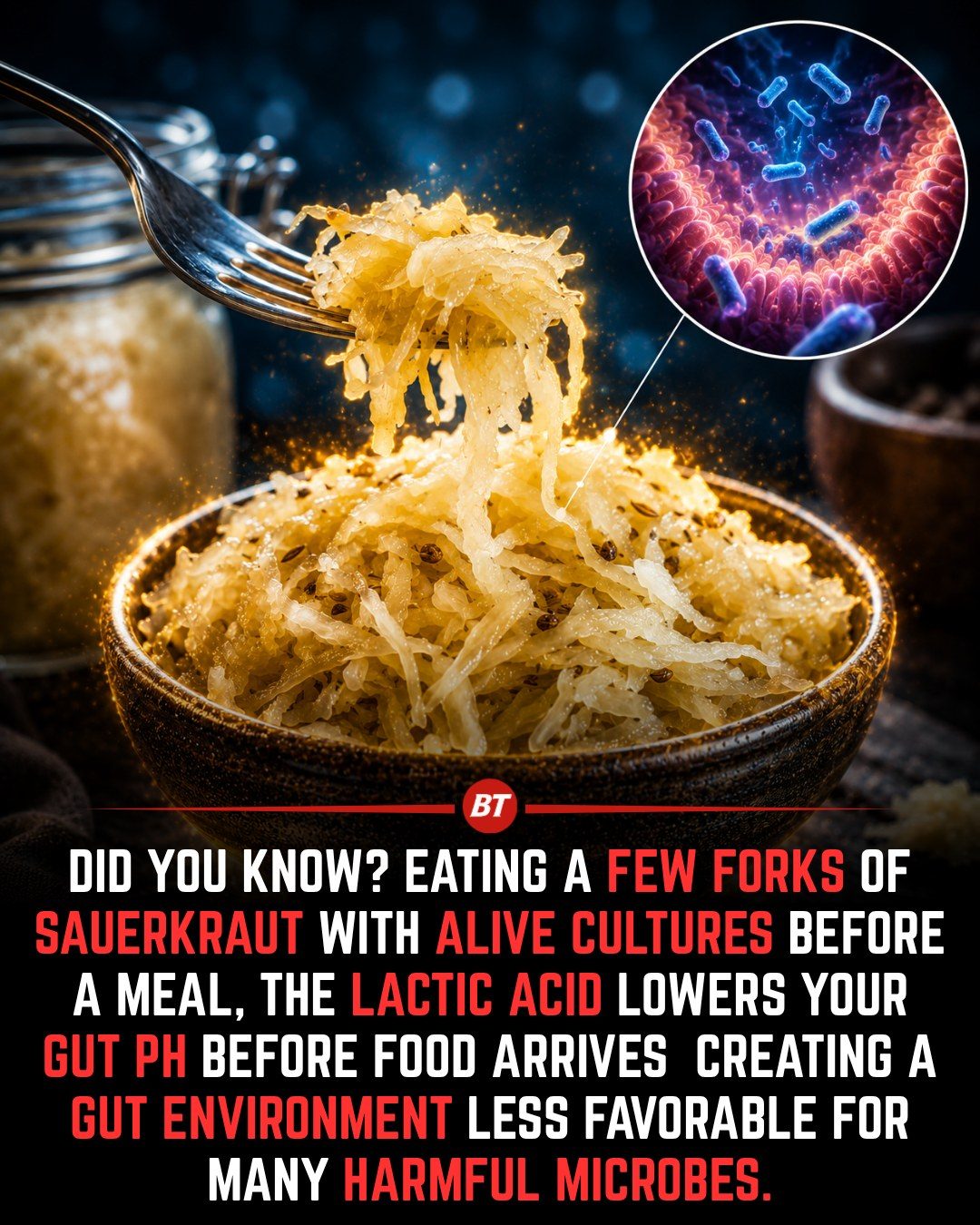
Sauerkraut is a traditional dish made from fermented cabbage and has long been a staple in many cultures. But did you know that eating a few forkfuls of raw sauerkraut with live cultures before a meal can do more than just add flavor to your dishes? It can significantly impact your digestive health.
Why This Matters
Sauerkraut is produced through a process called lactic acid fermentation. During this process, beneficial bacteria convert the natural sugars in cabbage into lactic acid. This not only gives sauerkraut its distinctive tangy taste but also naturally lowers its pH, making it slightly acidic. This acidic environment can have a profound effect on your gut health.
The Science Behind It
When you eat sauerkraut before a meal, the lactic acid it contains can help lower your gut pH. This means that the environment in your gut becomes less favorable for harmful microbes. Essentially, the lactic acid creates a barrier that supports the growth of beneficial bacteria while inhibiting the growth of potentially harmful ones. This is particularly important because a healthy balance of gut bacteria is crucial for digestion and overall well-being.
Main Discussion
The Role of Lactic Acid
Lactic acid, a byproduct of the fermentation process, is a key player in the benefits of sauerkraut. It helps to lower the pH level in your gut, creating an environment that is less hospitable to harmful bacteria. This effect is particularly noticeable when you consume sauerkraut before a meal, as it helps to prepare your digestive tract for breaking down the food you are about to eat.
Beneficial Bacteria
Sauerkraut is rich in live Lactobacillus bacteria, a type of probiotic that supports a healthy gut microbiome. Research published in Frontiers in Microbiology has shown that fermented vegetables, including sauerkraut, contain a diverse range of lactic acid bacteria. These bacteria, along with the organic acids they produce, can help create a gut environment that is more favorable for beneficial microbes and less so for harmful ones. This balance is essential for maintaining a healthy digestive system, as it helps in the efficient breakdown and absorption of nutrients, as well as the prevention of digestive issues.
Fiber and Short-Chain Fatty Acids
In addition to its probiotic benefits, sauerkraut is also a good source of fiber. This fiber serves as a food source for the beneficial bacteria already living in your colon. As these bacteria ferment the fiber, they produce short-chain fatty acids such as butyrate. Butyrate is an important fuel source for the cells lining your colon, and it helps to support a healthy intestinal barrier. This barrier is crucial for preventing harmful substances from entering your bloodstream, thereby supporting overall gut health.
Choosing the Right Sauerkraut
Not all sauerkraut products are created equal. Many shelf-stable varieties are pasteurized, a process that extends their shelf life but also destroys the live cultures. If you're looking for the probiotic benefits, it's essential to choose raw, refrigerated sauerkraut that is labeled as containing "live and active cultures." These are the types of sauerkraut that will provide the most benefits to your gut.
Practical Tips
Eating Sauerkraut Before a Meal
One of the simplest ways to incorporate sauerkraut into your diet is to eat 2-3 forkfuls of raw, unpasteurized sauerkraut about 10-15 minutes before a meal. This timing allows the lactic acid and beneficial bacteria in the sauerkraut to start working on your gut environment, preparing it for the incoming food. This practice can help improve digestion and support the growth of beneficial microbes in your gut.
Incorporating Sauerkraut into Meals
If you're not a fan of eating sauerkraut on its own, there are plenty of ways to incorporate it into your meals. You can add it to salads, sandwiches, or even use it as a topping for soups and stews. The possibilities are endless, and experimenting with different recipes can make it easier to include sauerkraut in your daily diet.
Important Takeaways
The benefits of eating sauerkraut before a meal are numerous. From supporting a healthy gut environment to aiding in digestion, sauerkraut can be a powerful addition to your diet. By choosing raw, unpasteurized sauerkraut with live cultures, you can ensure that you're getting the most out of this fermented cabbage dish.
Conclusion
Eating a few forkfuls of raw sauerkraut with live cultures before a meal can significantly enhance your digestive health. The lactic acid and beneficial bacteria in sauerkraut work together to create a gut environment that supports the growth of beneficial microbes while inhibiting harmful ones. By incorporating sauerkraut into your diet, you can enjoy not only its delightful taste but also its numerous health benefits.
Watch the Reel
Questions readers ask
Why is it important to consume sauerkraut before meals?
Eating sauerkraut before meals helps prepare your gut for the upcoming food intake. The lactic acid in sauerkraut lowers the pH of your gut, creating an optimal environment for beneficial bacteria to thrive. This can aid in digestion and overall gut health.
What makes sauerkraut a beneficial food for gut health?
Sauerkraut is rich in probiotics, which are live microorganisms that can support a healthy gut microbiota. The fermentation process that creates sauerkraut produces lactic acid, which enhances the growth of beneficial bacteria in the gut.
Can eating raw sauerkraut with live cultures improve digestion?
Raw sauerkraut contains live cultures of beneficial bacteria that can help break down food and absorb nutrients more effectively. The probiotics in raw sauerkraut can also help balance your gut microbiome, which supports healthy digestion.
What benefits do fermented foods like sauerkraut offer to gut health?
Fermented foods like sauerkraut are rich in probiotics and natural acids, which can promote a healthy gut. These foods support the growth of beneficial bacteria and create an environment that discourages harmful bacteria, leading to improved digestive function and overall gut health.
What role does lactic acid in sauerkraut play in improving gut health?
Lactic acid is a byproduct of the fermentation process in sauerkraut. It lowers the pH in your gut, making it more acidic and creating an environment where beneficial bacteria can flourish. This can help improve digestion and enhance overall gut health.
What is the difference between eating raw and cooked sauerkraut for gut health?
Raw sauerkraut retains live cultures of beneficial bacteria, which are crucial for supporting gut health. Cooking sauerkraut can kill these live cultures, reducing its potential benefits for your gut. For optimal gut health benefits, it's best to consume sauerkraut raw.
How can sauerkraut support a balanced gut microbiome?
Sauerkraut is a probiotic food, meaning it contains live bacteria that can colonize the gut. These bacteria can help balance your gut microbiome by competing with and inhibiting the growth of harmful bacteria, promoting a healthier and more diverse gut environment.
Related deep dives
Similar reads based on topic and creator.




Recent articles
Fresh deep dives from the latest Reels we unpacked.




Comments
Be the first to comment.