Earthquake in Japan
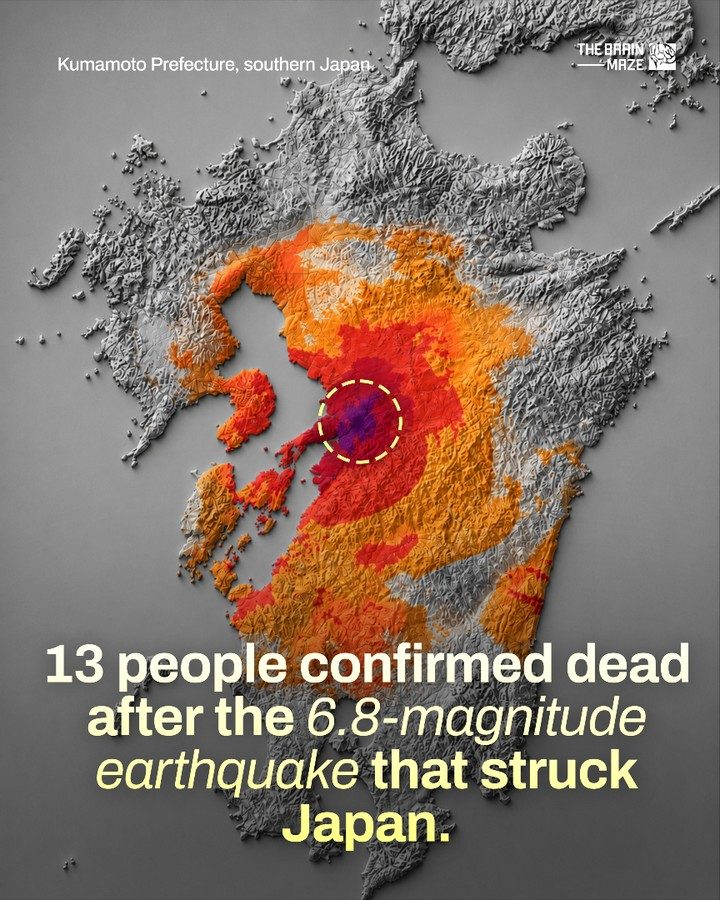
A powerful 6.8-magnitude earthquake struck Kumamoto Prefecture in southern Japan, leading to at least 13 confirmed fatalities. The earthquake, highlighted on a 3D map with color-coded intensity areas, has left numerous others missing or trapped beneath the rubble of damaged buildings. The affected areas include a shopping mall and a paper factory, where rescue operations are urgently underway.
Why This Matters
Earthquakes in Japan are not uncommon due to the country's location along the Pacific Ring of Fire, a region known for its high seismic and volcanic activity. Understanding the impact and response to such disasters is crucial for both residents and those interested in global emergency management.
Main Discussion
Geographical Impact
Kumamoto Prefecture, located on the island of Kyushu, is one of the regions most affected by the earthquake. The 3D map displayed in visuals shows the intensity of the earthquake, with the epicenter in this southern region. The prefecture is known for its diverse landscape, including mountains, forests, and coastal areas, which can complicate rescue and recovery efforts. The earthquake's impact has been felt not just in urban areas but also in more remote regions, affecting both residential and industrial zones.
Rescue Efforts
The aftermath of the earthquake has seen an immediate and substantial response from various teams. Rescue teams, firefighters, police, and thousands of military personnel are working tirelessly to search for survivors and provide aid. The operation involves not only local emergency services but also nationwide support, including military and medical units. The coordinated efforts are essential for addressing the immediate needs of those affected and managing the long-term recovery process. Specific rescue operations are focused on areas like the collapsed shopping mall and the damaged paper factory, where people remain trapped.
Immediate Response
The immediate response to the earthquake has been critical in saving lives and mitigating further damage. Emergency services were quickly deployed to the affected areas, with evacuations, medical aid, and structural assessments being top priorities. The coordination between different emergency departments and the military has been crucial. The rapid response is a testament to Japan's preparedness for such disasters, which includes well-established emergency protocols, advanced technology, and a robust infrastructure for handling natural disasters.
Practical Tips
If you find yourself in an earthquake-prone area, it is essential to be prepared and know what to do during and after an earthquake. Here are some practical tips:
During an Earthquake
- Drop, Cover, and Hold On: If you are indoors, drop to the ground, take cover under a sturdy piece of furniture, and hold on until the shaking stops. Stay away from windows, outside doors, and anything that might fall.
- Stay Indoors: If you are outdoors, stay away from buildings, power lines, and other hazardous structures. Find an open area and stay there.
- If in a Vehicle: Pull over to the side of the road and stay inside the vehicle until the shaking stops.
After an Earthquake
- Check for Injuries: Immediately check yourself and others for injuries. Provide first aid if necessary.
- Evaluate the Situation: Assess the damage to your surroundings. If it is safe to do so, move to a secure area away from damaged structures.
- Follow Emergency Instructions: Listen to local authorities and follow their instructions. They will provide guidance on evacuation, shelter, and other necessary actions.
- Prepare for Aftershocks: Be prepared for aftershocks, which can occur even after the main earthquake has subsided. Continue to follow safety protocols until officials declare the area safe.
Important Takeaways
- Preparedness is Key: Japan's response to the earthquake underscores the importance of preparedness. Having emergency plans, supplies, and drills in place can save lives and reduce damage.
- Community and National Support: The coordinated efforts of local and national authorities, along with community support, are vital in managing the crisis and aiding recovery.
- Global Perspective: Earthquakes are a global issue, and understanding how different countries respond can provide valuable insights for improving disaster management everywhere.
- Technological and Infrastructural Readiness: Advanced technology and robust infrastructure play a significant role in managing the aftermath of earthquakes, from rescue operations to communication and logistical support.
Conclusion
The 6.8-magnitude earthquake in Kumamoto Prefecture has had a profound impact on the region, resulting in significant loss of life and extensive damage. The response has been swift and coordinated, involving a variety of emergency services and military personnel. Understanding the geographical, logistical, and human aspects of such disasters is essential for effective emergency management and recovery. Staying prepared and knowing the right actions to take during and after an earthquake can make a crucial difference in safety and survival.
Watch the Reel
Questions readers ask
What is the significance of the Pacific Ring of Fire in the context of earthquakes in Japan?
The Pacific Ring of Fire is a region along the Pacific Ocean characterized by high seismic and volcanic activity. Japan's location within this region makes it particularly susceptible to earthquakes, including the recent 6.8-magnitude earthquake in Kumamoto.
What is the current status of rescue operations in Kumamoto Prefecture?
Rescue operations are underway in multiple locations in Kumamoto, including a shopping mall and a paper factory, where people are trapped beneath the rubble. Emergency response teams are actively working to locate and extract survivors.
What areas are affected by the Kumamoto earthquake?
The earthquake's impact extends to both urban and rural regions in Kumamoto Prefecture. Key affected locations include a shopping mall and a paper factory, and rescue efforts are ongoing in these areas.
What should residents and visitors do in the event of an earthquake in Japan?
During an earthquake, residents and visitors should follow safety procedures such as 'Drop, Cover, and Hold On.' After the shaking stops, check for injuries, and be prepared for aftershocks. Follow official guidelines and stay informed through reliable sources for the latest updates and instructions.
What are the latest updates on the search for survivors in Kumamoto Prefecture?
The search for survivors is ongoing, with rescue teams working diligently to locate and extract individuals trapped in collapsed buildings. The situation is dynamic, with updates being released regularly by local authorities and emergency services.
What is the latest information on the number of casualties in the Kumamoto earthquake?
As of the latest reports, at least 13 fatalities have been confirmed due to the earthquake in Kumamoto Prefecture. However, this number may change as rescue and recovery efforts continue, and more information becomes available.
What precautions should be taken in the aftermath of the Kumamoto earthquake?
After an earthquake, it is essential to remain vigilant for aftershocks and follow safety guidelines provided by local authorities. Ensure you have access to necessary supplies such as water, food, and medical kits. Stay informed through reliable sources for the latest updates and instructions.
Recent articles
Fresh deep dives from the latest Reels we unpacked.




Comments
Be the first to comment.