Body Signals: Warning Signs Your Body Gives Before a Serious Illness
There are various indicators that the body can give to warn you about an underlying medical condition. Some of these signals may seem mundane, but they can indicate serious health issues. Early detection and prompt medical attention can significantly impact the outcome. Here, we explore the key warning signs to look out for and what they might indicate.
Why This Matters
Understanding your body's signals is crucial for maintaining good health. Often, the body provides early warnings that something is amiss. Recognizing these signs can help you seek timely medical intervention, potentially preventing or mitigating serious health issues.
Main Discussion
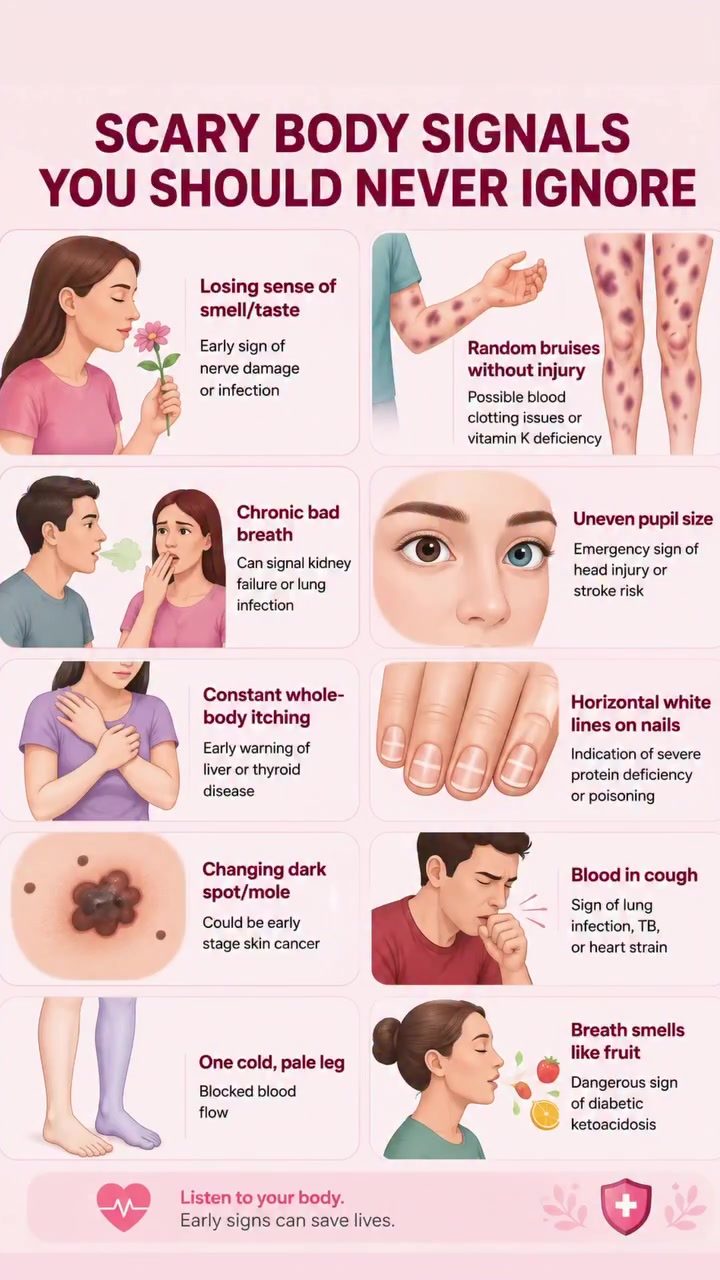
The body's signals can be diverse and sometimes subtle, but they are essential for identifying potential health problems. Here are some of the most critical signals to pay attention to:
Losing Sense of Smell or Taste
A sudden loss of smell or taste can be more than just a temporary inconvenience. It may indicate nerve damage or an infection. Conditions such as COVID-19, sinus infections, or neurological disorders can cause these symptoms. If you experience a loss of smell or taste without an apparent cause, it is advisable to consult a healthcare professional.
Random Bruises Without Injury
Unexplained bruises that appear without any injury can be a sign of underlying issues. These bruises might indicate clotting problems, vitamin K deficiency, or even more severe conditions like leukemia or other blood disorders. If you notice unexplained bruises frequently, it's important to get a medical evaluation.
Chronic Bad Breath
Persistent bad breath, known as halitosis, can be a sign of more than just poor oral hygiene. Chronic bad breath may indicate kidney failure, lung infections, or other serious health conditions. If regular dental care and hygiene practices do not improve your breath, consider a medical check-up.
Uneven Pupil Size
Uneven pupil size, also known as anisocoria, can be a medical emergency. This condition may signal a head injury, stroke, or other neurological issues. If you or someone else notices this symptom, seek immediate medical attention.
Constant Whole-Body Itching
Persistent itching all over the body can be a warning sign of various health issues. Conditions such as liver disease, thyroid problems, or even certain types of cancer can cause chronic itching. If you experience continuous itching, it is essential to consult a doctor for a thorough evaluation.
Other Important Signals
- Horizontal White Lines on Nails: These can indicate kidney problems or other nutritional deficiencies.
- Changing Dark Spot/Mole: A mole that changes in size, shape, or color can be a sign of skin cancer.
- Blood in Cough: Coughing up blood can indicate lung infections, tuberculosis, or even lung cancer.
- One Cold, Pale Leg: This can be a sign of peripheral artery disease, a condition that affects blood flow to the legs.
- Breath Smells Like Fruit: A fruity-smelling breath can be a sign of ketoacidosis, often associated with diabetes.
Practical Tips
When to Seek Medical Attention
If you notice any of the above symptoms, it is crucial to consult a qualified healthcare professional. Early detection and treatment can significantly improve the outcome. Do not rely on self-diagnosis; always seek professional medical advice.
Regular Check-Ups
Regular medical check-ups are essential for maintaining good health. These check-ups can help identify potential issues before they become serious. Schedule regular appointments with your healthcare provider to monitor your health.
Self-Care and Awareness
Paying attention to your body's signals is a vital part of self-care. Keep a record of any unusual symptoms and discuss them with your doctor during your next visit. Being proactive about your health can help you stay ahead of potential issues.
Important Takeaways
- Pay Attention to Your Body: The body often gives warning signs before a serious illness develops.
- Seek Medical Advice: If you notice any concerning symptoms, consult a healthcare professional promptly.
- Early Detection Matters: Early recognition and timely medical care can make a significant difference in the outcome of many health conditions.
- Regular Check-Ups Are Essential: Maintain regular medical check-ups to monitor your health and catch potential issues early.
Conclusion
Your body is a complex system that communicates through various signals. Recognizing and understanding these signals can help you stay healthy and seek timely medical intervention when needed. By paying attention to these warning signs and seeking professional help, you can take control of your health and well-being.
Watch the Reel
Questions readers ask
What are some early warning signs that my body might be showing that indicate a serious illness?
Early warning signs can vary, but some key indicators include unexplained bruises, persistent loss of smell or taste, and chronic bad breath. Other signs like persistent itching or blood in stool should also not be ignored and warrant medical attention.
Why should I be concerned if I notice unexplained bruises on my body?
Unexplained bruises can be a sign of underlying health conditions, such as blood clotting disorders or certain types of cancer. If you notice bruises that appear suddenly and without a clear cause, it's important to consult a healthcare professional.
What could it mean if I am experiencing a persistent loss of smell or taste?
A persistent loss of smell or taste can indicate a variety of issues, including neurological problems or even COVID-19. If this symptom persists for more than a few days, it's essential to get it checked out by a doctor.
Is chronic bad breath always related to poor oral hygiene?
While chronic bad breath can often be a sign of poor oral hygiene, it can also indicate more serious health issues, such as diabetes, liver disease, or even some types of cancer. If regular dental care doesn't resolve the issue, consult a healthcare provider.
When should I seek immediate medical care for body warning signs?
You should seek immediate medical care if you experience severe or persistent symptoms such as blood in stool, unexplained weight loss, or severe pain. These can be indicators of serious health issues that require prompt attention.
What are some underlying health conditions that can cause persistent itching all over the body?
Persistent itching can be a sign of various underlying health conditions, including liver disease, kidney failure, or certain types of cancer. Allergies and skin conditions can also cause itching, but if the itching is widespread and persistent, it's important to get it evaluated by a doctor.
How can recognizing body health indicators help in preventing serious illnesses?
Recognizing body health indicators can help you identify potential health issues early. By paying attention to these signs and seeking timely medical intervention, you can prevent or mitigate serious health issues, improving your overall well-being and quality of life.
Recent articles
Fresh deep dives from the latest Reels we unpacked.




Comments
Be the first to comment.