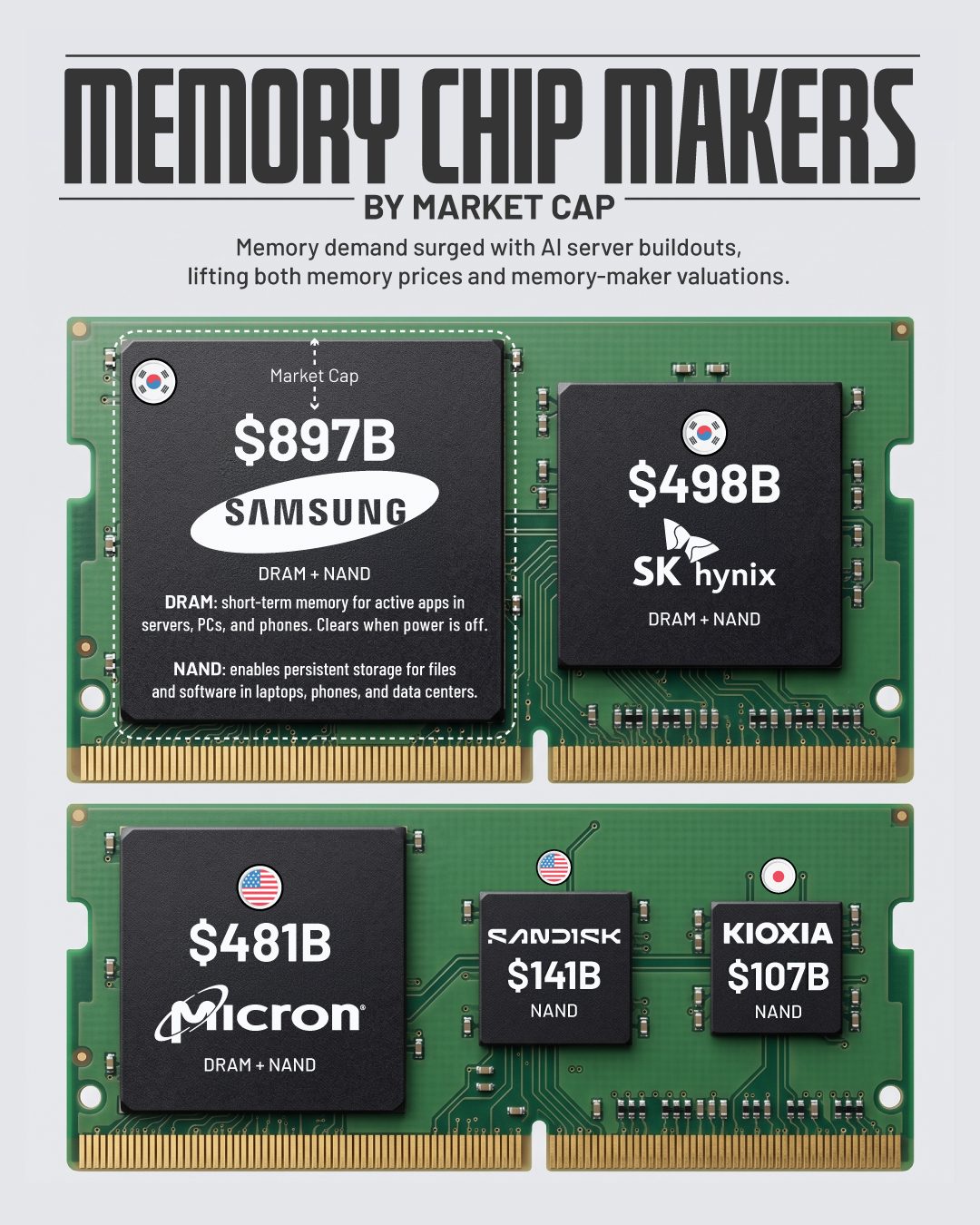
Memory chip valuations have skyrocketed in recent years, driven by an unprecedented surge in demand for AI servers. This trend has tightened supply and pushed up the market capitalization of publicly traded NAND and DRAM producers. The market dynamics are complex and influenced by several key factors.
Context / Why This Matters
The memory chip market is a critical component of the global technology ecosystem. Memory chips, including DRAM and NAND, are essential for a wide range of applications, from smartphones and computers to data centers and AI servers. As AI technologies advance, the demand for high-performance memory solutions has skyrocketed, creating a supply-demand imbalance that has significantly impacted stock values and valuations of memory chip manufacturers.
Main Discussion
The Role of AI in Memory Chip Demand
AI server buildouts have been a significant driver of memory chip demand. AI applications require vast amounts of data processing, which in turn demands high-capacity and high-speed memory solutions. This surge in demand has put pressure on the supply chain, leading to shortages and driving up the prices and valuations of memory chip producers.
Market Capitalization Trends
The financial analysis reveals that memory chip makers have seen substantial increases in their market capitalization. As of April 2026, Samsung leads the pack with a market capitalization of $897 billion, followed by SK Hynix at $498 billion, and Micron at $481 billion. Other notable players include Sandisk, Kioxia, Nanya, winbond, and MXIC, all of which have seen significant gains in their stock values.
Key Players in the Memory Chip Market
-
Samsung: With a market cap of $897 billion, Samsung is the clear leader in the memory chip market. The company's diversified product portfolio, including both DRAM and NAND, has positioned it as a dominant player.
-
SK Hynix: SK Hynix follows closely with a market cap of $498 billion, benefiting from its strong presence in both DRAM and NAND markets.
-
Micron: Micron's market cap stands at $481 billion. The company has been a significant player in the DRAM and NAND markets, known for its innovative technologies and robust manufacturing capabilities.
-
Sandisk and Kioxia: Both companies specialize in NAND memory solutions. Sandisk, with a market cap of $107 billion, and Kioxia have seen substantial growth driven by the demand for high-capacity storage solutions.
-
Nanya, winbond, PSMC, and MXIC: These companies are also notable players in the NAND and DRAM markets, with varying market caps ranging from $141 billion to under $100 billion. Their performance has been influenced by the broader market trends and specific product offerings.
Practical Tips
Investing in Memory Chip Stocks
For investors looking to capitalize on the memory chip market, it's crucial to stay informed about market trends and technological advancements. Key factors to consider include:
- Supply and Demand Dynamics: Keep an eye on the balance between supply and demand. Shortages and surpluses can significantly impact stock prices.
- Technological Innovations: Companies that invest in cutting-edge technologies are likely to maintain a competitive edge.
- Market Leadership: Focus on industry leaders like Samsung, SK Hynix, and Micron, which have a proven track record and robust market positions.
- Diversification: Consider diversifying your investments across different memory chip manufacturers to mitigate risk.
Important Takeaways
- AI Server Demand: The increasing demand for AI servers is a primary driver of memory chip market growth.
- Market Capitalization: Leading memory chip manufacturers like Samsung, SK Hynix, and Micron have seen significant increases in their market capitalization.
- Investment Opportunities: The memory chip market offers significant investment opportunities, but it requires careful analysis and a focus on key players and market trends.
- Supply-Demand Balance: The balance between supply and demand will continue to shape the market dynamics and valuations of memory chip producers.
Conclusion
The memory chip market is poised for continued growth, driven by the increasing demand for AI servers and other high-performance applications. Understanding the market dynamics, key players, and investment strategies can help stakeholders navigate this complex and rapidly evolving landscape. As AI technologies continue to advance, the memory chip market will remain a critical component of the global technology ecosystem, offering both challenges and opportunities for investors and industry participants alike.
Watch the Reel
Questions readers ask
Why are memory chip stocks experiencing a significant surge?
The surge in memory chip stocks is primarily due to the increasing demand for AI servers, which require extensive data processing capabilities. This heightened demand has led to a supply-demand imbalance, driving up the valuations of publicly traded memory chip companies.
Which types of memory chips are in high demand due to AI technologies?
Both NAND and DRAM chips are in high demand due to AI technologies. NAND flash memory is crucial for storage in AI servers, while DRAM chips are essential for the high-speed data processing required by these advanced systems.
How has the demand for AI servers influenced the market capitalization of chip producers?
The demand for AI servers has significantly tightened the supply of memory chips. This supply-demand imbalance has pushed up the market capitalization of publicly traded NAND and DRAM producers, making them more attractive to investors.
Which companies are among the key players in the memory chip market?
Key players in the memory chip market include Samsung, Hynix, Micron Technology, and Sandisk. These companies have seen their stock values and valuations soar due to the increasing demand for memory chips, particularly for AI server applications.
What role do memory chips play in the global technology ecosystem?
Memory chips, including DRAM and NAND, are vital components in various applications, from consumer electronics like smartphones and computers to large-scale operations like data centers and AI servers. They enable efficient data processing and storage, which are essential for modern technology functions.
How has the demand for AI servers affected publically traded chip companies?
The demand for AI servers has significantly boosted the valuations of publicly traded chip companies, especially those specializing in NAND and DRAM chips. This trend has made investing in these companies more appealing, as they are well-positioned to meet the growing demand for high-performance memory solutions.
What factors are influencing the market dynamics of memory chips?
The market dynamics of memory chips are influenced by several factors, including the rapid growth of AI technologies, the increasing demand for high-performance data processing, and the supply-demand imbalance in the memory chip market. These factors collectively contribute to the surge in memory chip stock values and market capitalization.
Related deep dives
Similar reads based on topic and creator.


Recent articles
Fresh deep dives from the latest Reels we unpacked.




Comments
Be the first to comment.