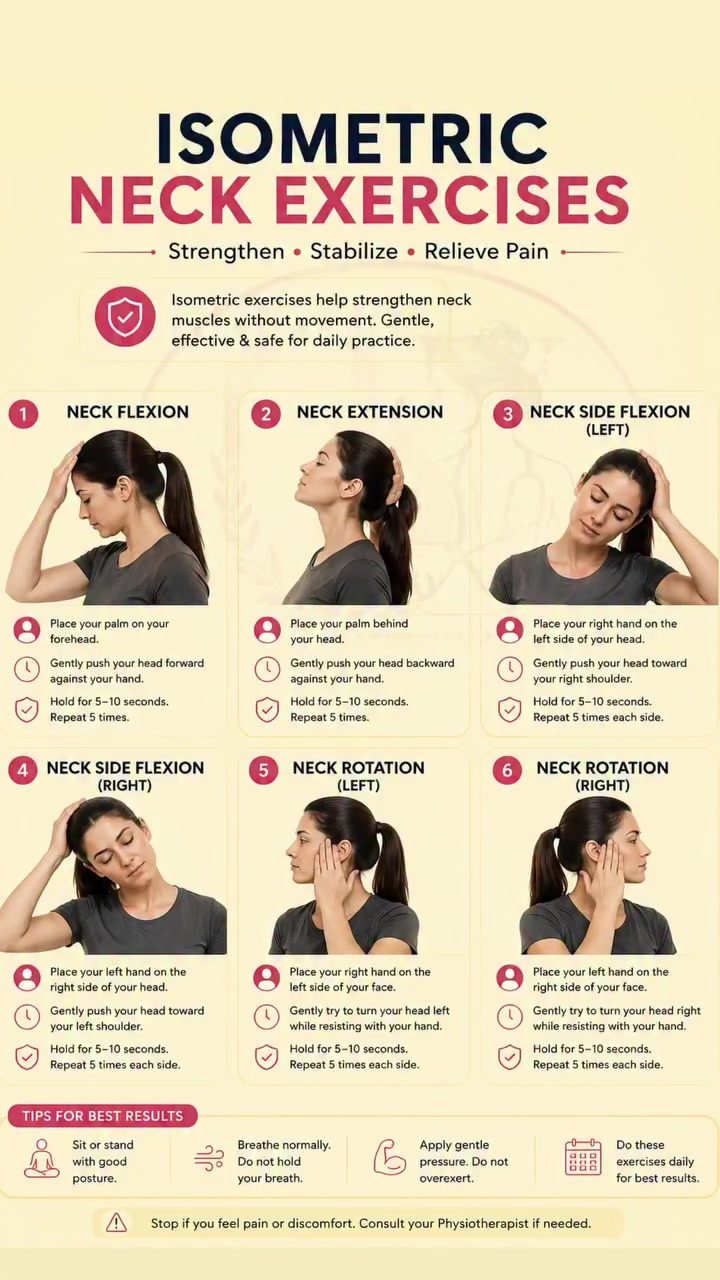
Isometric neck exercises are a powerful tool for strengthening the neck muscles, improving posture, and alleviating neck pain. These exercises involve applying gentle pressure to the neck in various directions while resisting the movement, which helps to activate and stabilize the cervical muscles. They are particularly useful for those with neck pain, poor posture, or those in the early stages of rehabilitation.
Context / Why this matters
Neck pain is a common issue that can significantly impact daily activities and quality of life. Whether caused by poor posture, prolonged sitting, or other factors, neck pain can be debilitating. Isometric neck exercises offer a non-invasive, effective way to address these issues by targeting the deep cervical muscles that support the neck and spine. These exercises are gentle yet effective, making them suitable for daily practice and for those new to neck strengthening routines.
Main discussion
Isometric neck exercises are designed to strengthen the neck muscles without moving the neck through a full range of motion. This makes them particularly useful for individuals who experience pain or discomfort with traditional neck exercises. The key to these exercises is applying gentle pressure to the neck and resisting that pressure, which engages the muscles in a static contraction. There are six main isometric neck exercises:
Neck Flexion
Neck flexion involves placing your palm on your forehead and gently pushing your head forward against your hand. Hold this position for 5-10 seconds and repeat 5 times. This exercise targets the muscles at the front of the neck, helping to strengthen and stabilize the cervical spine.
Neck Extension
For neck extension, place your palm behind your head and gently push your head backward against your hand. Hold for 5-10 seconds and repeat 5 times. This exercise works the muscles at the back of the neck, providing balance and support to the cervical spine.
Neck Side Flexion (Left and Right)
Neck side flexion targets the muscles on the sides of the neck. Place your right hand on the left side of your head and gently push your head toward your left shoulder. Hold for 5-10 seconds and repeat 5 times on each side. Repeat the same steps on the opposite side, using your left hand to push your head toward your right shoulder.
Neck Rotation (Left and Right)
Neck rotation involves placing your left hand on the left side of your face and gently turning your head left while resisting with your hand. Hold for 5-10 seconds and repeat 5 times on each side. Repeat the same steps on the opposite side, using your right hand to turn your head right.
Practical tips
To get the most out of your isometric neck exercises, follow these practical tips:
Maintain Good Posture
Sit up straight with good posture during the exercises. Proper alignment ensures that the right muscles are engaged and reduces the risk of strain or injury. Maintaining good posture also helps to reinforce correct alignment habits throughout the day.
Breathe Normally
It's important to breathe normally during the exercises. Avoid holding your breath, as this can cause unnecessary tension and may reduce the effectiveness of the exercises. Keep your breathing steady and relaxed.
Apply Gentle Pressure
Apply gentle pressure when performing the exercises. Do not overexert yourself, as this can lead to discomfort or pain. The goal is to engage the muscles gently and effectively, not to push to the point of strain.
Consistency is Key
Do these exercises daily for the best results. Consistency is crucial for building strength and endurance in the neck muscles. Incorporate these exercises into your daily routine to see gradual improvements in neck stability and posture.
Important takeaways
Isometric neck exercises are a valuable addition to any neck care routine. They offer a safe and effective way to strengthen the cervical muscles, improve posture, and alleviate neck pain. Key takeaways include:
- Isometric exercises involve resisting movement to activate and strengthen the neck muscles.
- There are six main isometric neck exercises: flexion, extension, side flexion (left and right), and rotation (left and right).
- Maintain good posture, breathe normally, and apply gentle pressure during the exercises.
- Consistency is crucial for achieving the best results.
- Avoid these exercises if they significantly increase pain or dizziness, and always seek professional guidance after a recent neck injury.
Conclusion
Isometric neck exercises are a gentle, effective, and safe method for strengthening the neck muscles and improving overall neck health. Whether you are dealing with chronic neck pain, poor posture, or recovering from an injury, incorporating these exercises into your daily routine can provide significant benefits. Always listen to your body and consult a physiotherapist if you experience any discomfort or pain. With consistent practice, you can achieve better cervical stability, improved posture, and reduced neck pain.
Watch the Reel
Questions readers ask
What are isometric neck exercises and how do they work?
Isometric neck exercises involve applying gentle pressure to the neck in various directions while resisting the movement. This static action helps to activate and strengthen the deep cervical muscles, which support the neck and spine. By performing these exercises regularly, you can improve neck strength and stability.
Who can benefit from isometric neck exercises?
Isometric neck exercises are beneficial for anyone dealing with neck pain, poor posture, or those in the early stages of rehabilitation. They are also useful for those who spend long hours sitting or have jobs that require prolonged neck flexion, such as looking at a computer screen.
How do isometric neck exercises help with posture?
These exercises target the muscles that support the neck and spine, helping to realign the neck and shoulders. By strengthening these muscles, you can improve your posture, reducing the strain on your neck and shoulders, and promoting a more balanced and upright position.
What are some examples of isometric neck exercises?
Some common isometric neck exercises include resisting movements such as neck flexion (chin tucks), extension (looking up), and lateral flexion (left and right tilts). Additionally, you can perform rotations by applying pressure to the sides of your head and resisting the movement.
How often should I perform isometric neck exercises for optimal results?
For optimal results, it is recommended to perform isometric neck exercises daily or at least 3-4 times a week. Each exercise should be held for 10-15 seconds, and you should complete 2-3 sets of each exercise, with a 1-minute rest between sets.
Can isometric neck exercises help alleviate neck pain?
Yes, isometric neck exercises can help alleviate neck pain by strengthening the deep cervical muscles and improving neck stability. By targeting the muscles that support the neck, these exercises can reduce strain and tension, providing relief from neck pain associated with poor posture or prolonged sitting.
Are isometric neck exercises suitable for beginners?
Yes, isometric neck exercises are suitable for beginners. They are gentle and low-impact, making them an accessible starting point for anyone looking to improve neck strength and posture. It's essential to start with light pressure and gradually increase as your strength improves.
Recent articles
Fresh deep dives from the latest Reels we unpacked.




Comments
Be the first to comment.