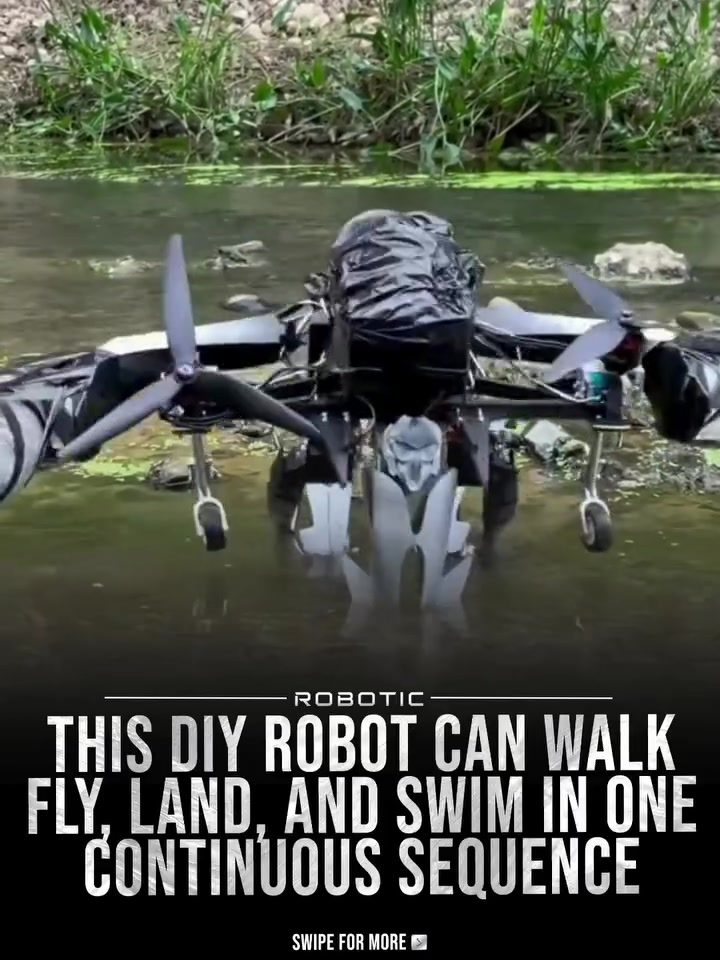
Multi-modal robots are a fascinating and innovative area of robotics. These machines are designed to seamlessly transition between different modes of locomotion, allowing them to adapt to various environments without the need for separate specialized machines.
Robots that can walk, fly, land, and swim in one continuous sequence bring a new level of versatility to robotics. They highlight the engineering capabilities and potential applications of these machines in real-world scenarios. Such prototypes demonstrate the feasibility of a single machine that can move across land, air, and water, making them highly adaptable to changing environments.
Why this Matters
Robots with multiple locomotion methods are crucial for advancing various fields, including search and rescue, environmental monitoring, infrastructure inspection, and exploration. These applications require adaptability and versatility, which are the hallmarks of multi-modal robots. By exploring the capabilities of these machines, researchers and engineers can develop more efficient and effective solutions for complex real-world environments.
Engineering Versatility
The engineering behind multi-modal robots is particularly impressive. These machines require sophisticated mechanisms to enable smooth transitions between different modes of locomotion. For example, transitioning from walking to flying or from swimming to landing involves intricate coordination of multiple systems, including propulsion, stabilization, and navigation.
Propulsion Systems: The propulsion systems in multi-modal robots are designed to handle different types of terrain and mediums. Whether walking on land, flying through the air, or swimming in water, the robot must have the right propulsion to move efficiently.
Stabilization and Navigation: Stabilization and navigation are critical for ensuring that the robot can safely transition between different modes of locomotion. Advanced sensors and control algorithms are essential for maintaining balance and direction, especially during transitions.
Material Selection: The materials used in constructing these robots are also critical. They must be lightweight yet durable, capable of withstanding the rigors of different environments and modes of locomotion.
Practical Applications
The versatility of multi-modal robots opens up a wide range of practical applications. Here are a few key areas where these robots could make a significant impact:
Search and Rescue
In search and rescue operations, time is of the essence. Multi-modal robots can quickly adapt to different terrains and environments, making them ideal for locating and assisting people in distress. For example, a robot could transition from flying over rugged terrain to walking through dense foliage or swimming across bodies of water to reach someone in need.
Environmental Monitoring
Environmental monitoring often requires robots to navigate diverse landscapes, from forests to bodies of water. Multi-modal robots can seamlessly transition between these environments, making them perfect for collecting data on air and water quality, wildlife, and more.
Infrastructure Inspection
Infrastructure inspection involves assessing the condition of buildings, bridges, and other structures. Multi-modal robots can navigate through tight spaces, climb steep surfaces, and even fly over large areas, making them invaluable for detecting structural issues and ensuring safety.
Exploration
Exploration in complex real-world environments, such as remote areas or hazardous zones, benefits greatly from the versatility of multi-modal robots. Whether exploring new territories, mapping underground caves, or surveying disaster areas, these robots can handle a wide range of challenges.
Practical Tips for Building a Multi-Modal Robot
If you're interested in building your own multi-modal robot, here are some practical tips to get you started:
Start with a Clear Objective
Define the specific objectives and applications for your robot. Understand the environments and tasks it will need to handle, as this will guide your design choices.
Choose the Right Propulsion Systems
Select propulsion systems that are suitable for all the environments your robot will encounter. Consider factors like speed, efficiency, and durability.
Invest in Advanced Sensors
Equip your robot with high-quality sensors for stabilization and navigation. This will ensure it can make smooth transitions between different modes of locomotion.
Focus on Material Selection
Choose lightweight and durable materials. This will enhance the robot's performance and longevity, especially in challenging environments.
Test Extensively
Conduct thorough testing in various environments to ensure your robot can handle all the challenges it will face. This will help identify any weaknesses and areas for improvement.
Iterate and Improve
Use the feedback from testing to make continuous improvements. Robotics is an iterative process, and each iteration will bring you closer to a more versatile and efficient machine.
Important Takeaways
Versatility and Adaptability: Multi-modal robots demonstrate the potential for versatility and adaptability in robotics. Their ability to transition between different modes of locomotion makes them suitable for a wide range of applications.
Engineering Innovation: The engineering behind these robots is a testament to the advancements in robotics. Combining multiple forms of locomotion into a single platform requires sophisticated design and control systems.
Real-World Impact: The practical applications of multi-modal robots are vast. From search and rescue to environmental monitoring, these machines have the potential to make a significant impact in various fields.
Continuous Improvement: Building a multi-modal robot is an iterative process. Each prototype and test provides valuable insights that can be used to improve the design and performance of the robot.
Conclusion
Multi-modal robots represent a significant advancement in the field of robotics. Their ability to seamlessly transition between walking, flying, landing, and swimming in one continuous sequence highlights the ingenuity and potential of this technology. As researchers and engineers continue to push the boundaries of robotics, the versatility and adaptability of multi-modal robots will play a crucial role in addressing the challenges of complex real-world environments. By understanding the engineering and practical applications of these machines, we can better appreciate their potential impact and work towards even more innovative solutions.
Watch the Reel
Recent articles
Fresh deep dives from the latest Reels we unpacked.




Comments
Be the first to comment.