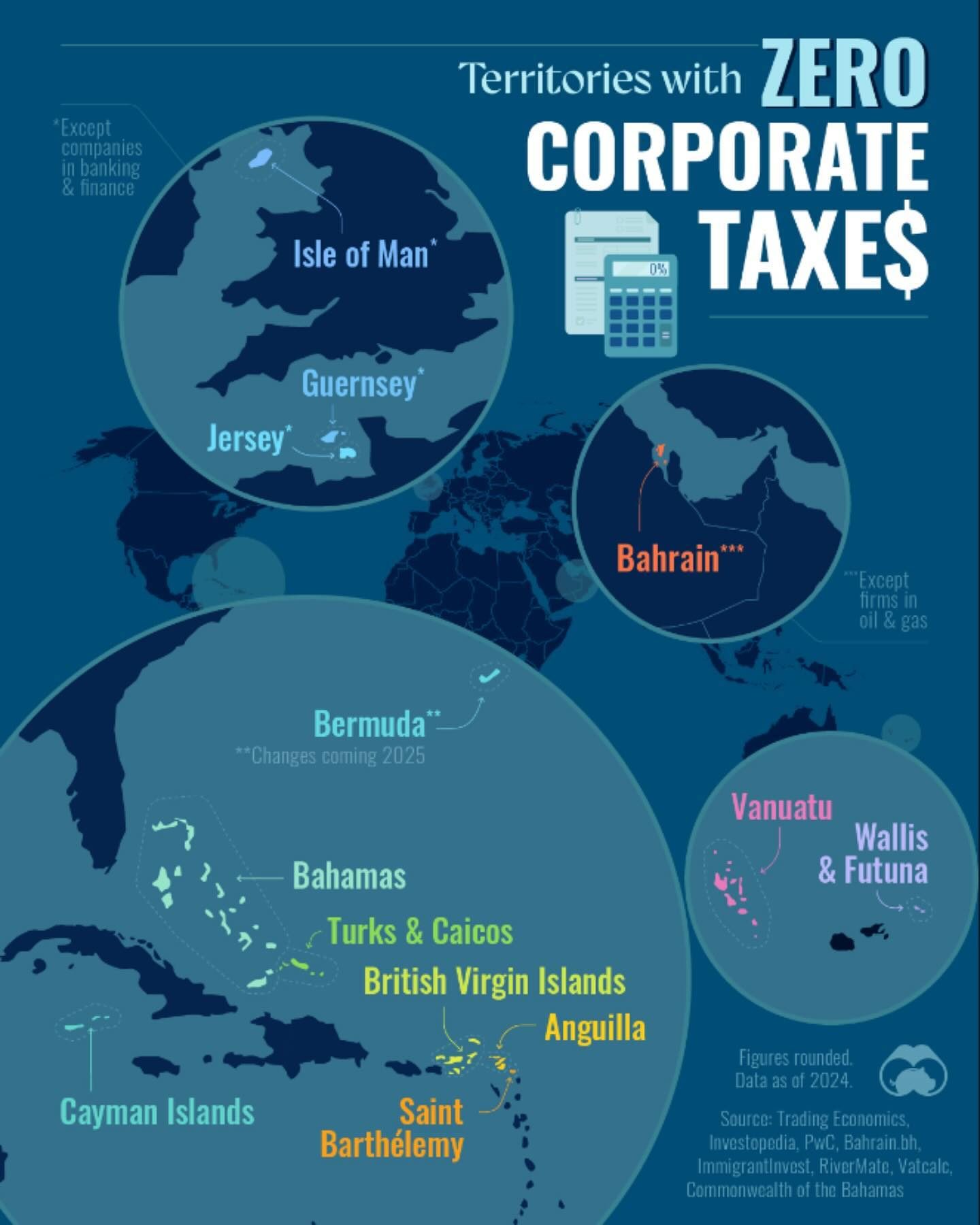
Tax Havens: A Global Map of Territories with Zero Corporate Taxes
Tax havens are territories that impose little to no corporate tax, attracting thousands of companies worldwide to establish their headquarters in these locations. These places are often small islands in the Caribbean, Pacific, and the British Isles, offering significant financial advantages. Here, we explore the key territories with zero corporate taxes, based on data from reliable sources like Trading Economics and PwC Tax Summaries.
Why this Matters
Understanding the global landscape of tax havens is crucial for businesses, investors, and policymakers. These territories not only influence corporate strategies but also shape global financial dynamics and regulations.
Main Discussion
The Geographic Spread of Tax Havens
Tax havens are geographically diverse, but they share a common trait: small island status. This is particularly evident in the Caribbean, where territories like the British Virgin Islands, Anguilla, and the Cayman Islands have long been recognized as premier tax havens. The Caribbean is a popular choice due to its favorable tax laws, political stability, and robust financial infrastructure, such as the Cayman Islands' regulatory framework.
For instance, the British Virgin Islands is renowned for its business-friendly environment, offering a range of corporate services. It has become a hub for international businesses, particularly those involved in finance, investment, and shipping. The Cayman Islands, on the other hand, is famous for its offshore banking sector and is a preferred destination for hedge funds and mutual funds.
Moving beyond the Caribbean, the Pacific is home to territories like Vanuatu and Wallis & Futuna. These islands offer similar tax benefits, attracting businesses seeking to minimize their tax liabilities. Vanuatu, in particular, has established itself as a key player in the offshore financial sector, providing various corporate services and a business-friendly environment. While Wallis & Futuna is less prominent, it still offers zero corporate tax, making it an attractive option for some businesses.
In the British Isles, territories such as the Isle of Man and Guernsey are notable tax havens. The Isle of Man is known for its favorable tax regime and strong regulatory framework, making it a popular choice for businesses in various sectors. Guernsey, while smaller, offers similar benefits and is particularly attractive for high-net-worth individuals seeking to manage their assets offshore.
Middle Eastern Tax Havens
Bermuda and Bahrain are Middle Eastern tax havens that have become popular due to their strategic location and favorable tax policies. Bahrain, known as the "Manhattan of the Middle East," is a hub for international businesses, offering a range of corporate services and a business-friendly environment. The country's regulatory framework is robust, making it an attractive option for businesses seeking to establish a presence in the Middle East. Bahrain is particularly known for its banking and financial services sectors, attracting businesses from around the world.
In the Pacific, Wallis & Futuna stands out. While it’s not as well-known as some other tax havens, its zero corporate tax policy makes it a viable option for businesses looking to reduce their tax burden. Meanwhile, Vanuatu has emerged as a significant player in the offshore financial sector, providing a range of corporate services and a business-friendly environment.
The British Isles
The British Isles also host several key tax havens. The Isle of Man and Guernsey are well-known for their favorable tax regimes and strong regulatory frameworks. The Isle of Man, in particular, is a hub for businesses in various sectors, including finance, insurance, and technology. Guernsey, while smaller, offers similar benefits and is particularly attractive for high-net-worth individuals seeking to manage their assets offshore.
Changes and Future Outlook
While many of these territories have maintained their zero corporate tax policies for decades, changes are on the horizon. In 2025, some jurisdictions may need to adjust their tax laws to comply with international regulations. This could impact the appeal of certain tax havens, forcing businesses to reevaluate their strategies. For example, the European Union's efforts to crack down on tax avoidance and evasion could lead to stricter regulations and higher taxes in some territories.
Practical Tips
Choosing the Right Tax Haven
Selecting the right tax haven depends on various factors, including the nature of your business, your long-term goals, and regulatory compliance. Conduct thorough research to understand the specific benefits and challenges of each territory. Consider consulting with a tax professional to navigate the complexities of international tax laws.
Staying Compliant
Tax havens offer significant financial advantages, but it’s essential to stay compliant with both local and international regulations. Non-compliance can result in severe penalties and legal issues. Regularly review your corporate structure and tax strategy to ensure adherence to the latest regulatory requirements.
Preparing for 2025 Changes
As international regulations evolve, it’s crucial to stay informed about upcoming changes. Start preparing for potential adjustments in 2025 by diversifying your tax strategies and exploring alternative jurisdictions. This proactive approach will help you maintain your financial advantages while complying with new regulations.
Important Takeaways
Territories like the Cayman Islands, British Virgin Islands, Isle of Man, and Guernsey offer significant financial advantages for businesses and investors. However, the landscape is evolving, with changes expected in 2025. Staying informed and proactive will be key to navigating these shifts successfully.
Conclusion
Tax havens play a critical role in global finance, offering businesses and investors significant tax advantages. However, the landscape is dynamic, with changes on the horizon. By understanding the key territories, staying compliant, and preparing for future adjustments, you can maximize the benefits of these tax-friendly locations while mitigating risks.
Watch the Reel
Questions readers ask
What are the key benefits of establishing a business in zero corporate tax territories?
Businesses in these territories enjoy significant financial advantages, including minimal corporate tax liabilities, which can lead to increased profitability. Additionally, these locations often provide regulatory benefits that facilitate business operations and growth.
Which territories are known for having zero corporate taxes?
Some of the most well-known territories with zero corporate taxes include the Cayman Islands, British Virgin Islands, Bermuda, and other small islands in the Caribbean, Pacific, and British Isles. These places attract many companies due to their favorable tax policies.
How do tax havens influence global financial dynamics?
Tax havens can shape global financial dynamics by influencing corporate strategies, investment flows, and economic policies. Companies may relocate to these territories to minimize their tax liabilities, which can impact the distribution of profits and economic growth across different regions.
Why are small islands often chosen as tax havens?
Small islands, especially in the Caribbean, Pacific, and British Isles, are often chosen as tax havens due to their political stability, legal frameworks that support business operations, and strategic locations that can facilitate international trade and finance. These factors make them attractive for corporations aiming to optimize their tax structures.
What role do tax havens play in corporate strategies?
Tax havens play a pivotal role in corporate strategies by providing opportunities for tax minimization and efficient management of financial resources. Many businesses use these territories to optimize their tax liabilities, which can result in increased profitability and competitive advantages in the global market.
How can a business determine the best tax haven for their needs?
To determine the best tax haven, a business should consider factors such as the specific tax laws, regulatory environment, ease of doing business, and the potential for future policy changes. Consulting with tax professionals and conducting thorough research using reliable sources like Trading Economics and PwC Tax Summaries can also provide valuable insights.
What are some of the challenges associated with operating in a tax haven?
While tax havens offer significant financial advantages, they also present challenges such as legal complexities, reputational risks, and potential changes in international tax regulations. Businesses must navigate these issues carefully to ensure compliance and maintain positive public perception.
Related deep dives
Similar reads based on topic and creator.

Recent articles
Fresh deep dives from the latest Reels we unpacked.




Comments
Be the first to comment.