Pig Breeds: A Comprehensive Guide
Pigs are fascinating creatures with a rich history of selective breeding, resulting in a wide array of breeds, each with its unique characteristics and purposes. Whether you are a farmer, a hobbyist, or simply a curious enthusiast, understanding the different pig breeds can provide valuable insights into their care, management, and culinary potential.
Context / Why this Matters
Pigs have been domesticated for thousands of years, and their diversity reflects the varied needs and preferences of humans across different cultures and regions. Some breeds are prized for their rapid growth and high meat yield, while others are valued for their hardiness, foraging abilities, or exceptional meat quality. Knowing the differences between these breeds can help you make informed decisions about which breed is best suited to your needs, whether it’s for meat production, conservation efforts, or as a beloved pet.
Main Discussion
Historical and Cultural Significance
Pigs have played a crucial role in human history, providing a reliable source of meat, lard, and other byproducts. Their domestication dates back to around 9000 BCE in the Fertile Crescent, where wild boars were selectively bred to create the modern-day pig. Over centuries, this selective breeding has led to a remarkable diversity of pig breeds, each adapted to specific environments and purposes.
Characteristics and Purposes
Meat Production Breeds
Some pig breeds are specifically bred for their meat production capabilities. These breeds typically grow rapidly and have a high feed-to-meat conversion ratio, making them economically efficient for commercial farming.
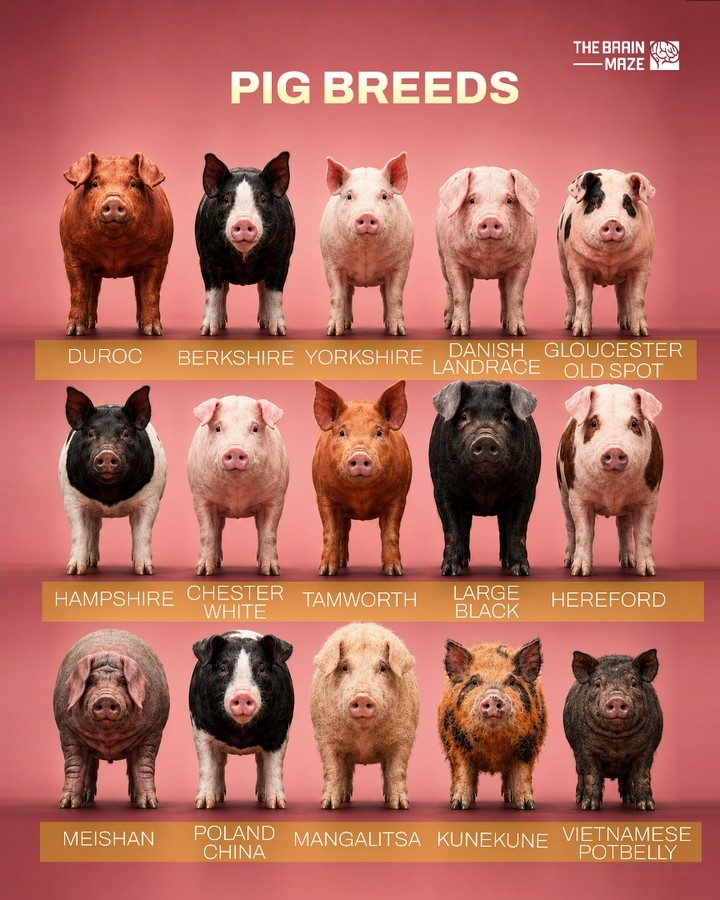
- Duroc: Known for their muscular build and excellent meat quality, Duroc pigs are popular in many parts of the world. They have a red or reddish-brown coat and are prized for their tenderness and juiciness.
- Berkshire: Originating from the United Kingdom, Berkshires have a black coat and white points on their feet, snout, and tail, and are known for their exceptional meat quality. They are valued for their marbling and flavor.
- Yorkshire: These pigs are large, white, and have erect ears. They are highly efficient in converting feed to meat, making them a favorite in commercial pork production.
- Hampshire: Recognizable by their black belt over the shoulders and white body, Hampshires are known for their leanness and rapid growth rate. They are valued for their efficient feed conversion and lean meat.
Heritage and Rare Breeds
Heritage and rare breeds are often valued for their unique characteristics and historical significance. These breeds may not be as efficient in meat production but are cherished for their hardiness, grazing ability, and conservation value.
- Goucester Old Spot: This breed is known for its distinctive spotted coat and docile temperament. They are excellent foragers and are valued for their high-quality meat and lard.
- Mangalitsa: Originating from Hungary, these pigs have a curly coat and are known for their exceptional fat quality. Their meat is highly marbled, resulting in a rich, flavorful pork that is highly sought after.
- Meishan: This Chinese breed is known for its large size, droopy ears, and high fat content. They produce tender and flavorful meat but are less commonly raised for commercial production due to their slower growth rate.
- Hereford: Named for their resemblance to Hereford cattle, these pigs have a red or red-and-white coat and are known for their hardiness and foraging abilities. They are valued for both their meat and their ability to thrive in extensive grazing systems.
- Tamworth: Tamworths have a ginger or reddish-brown coat and are known for their hardiness and foraging abilities. They are excellent mothers and are often used in conservation grazing programs.
- Large Black: This breed is characterized by its black coat and long, droopy ears. They are known for their foraging abilities and hardiness, making them suitable for extensive grazing systems.
- Danish Landrace: These pigs have a long, lean body and are valued for their efficient meat production and docile temperament. They are often used in crossbreeding programs to produce hybrid pigs.
- Poland China: Known for their large size and prominent black belt over the shoulders, Poland China pigs are valued for their meat production and are often used in crossbreeding programs.
- Chelter White: These pigs are known for their white coat and are valued for their meat production and docile temperament. They are often used for their crossbreeding.
Unique and Exotic Breeds
Some pig breeds stand out for their unique appearances and are often kept as pets or for conservation purposes.
- Kunekune: Originating from New Zealand, these miniature pigs are known for their short snouts and friendly demeanor. They make excellent pets and are valued for their small size and unique appearance.
- Vietnamese Potbelly: These compact pigs are often kept as pets due to their small size, friendly nature, and distinctive potbelly. They are valuable for their unique appearance and have a rich culinary tradition in Vietnam.
Practical Tips
Choosing the Right Breed
When selecting a pig breed, consider your specific needs and resources. If you are interested in meat production, breeds like Duroc, Berkshire, and Yorkshire are excellent choices. For conservation or foraging purposes, breeds like Gloucester Old Spot, Tamworth, and Large Black are ideal. If you are looking for a pet, Kunekune and Vietnamese Potbelly pigs make great companions.
Care and Management
Different pig breeds have varying care requirements. Ensure you provide adequate housing, feed, and veterinary care tailored to the specific needs of your chosen breed. Regular health check-ups and proper nutrition are essential for maintaining the health and productivity of your pigs.
Conservation Efforts
Some pig breeds are at risk of extinction due to the dominance of commercial breeds. Support conservation efforts by raising or supporting farms that focus on heritage and rare breeds. This helps preserve genetic diversity and maintains the rich history of pig breeding.
Important Takeaways
Pig breeds offer a diverse range of characteristics and purposes, each with its unique advantages. Understanding the different breeds can help you make informed decisions about which pig is best suited to your needs, whether for meat production, conservation, or as a pet. By appreciating the diversity of pig breeds, we can better preserve their rich history and ensure their continued existence.
Conclusion
Pigs come in a variety of breeds, each with its unique characteristics, appearances, and purposes. From the meaty Duroc to the hardy Gloucester Old Spot and the exotic Kunekune, these breeds showcase the remarkable diversity created through centuries of selective breeding. Whether you are a farmer, a hobbyist, or simply curious, exploring the world of pig breeds can be a rewarding experience.
Watch the Reel
Questions readers ask
What are the key characteristics of Berkshire pigs that make them popular?
Berkshire pigs are renowned for their robust build and excellent meat quality. They have a black coat with white points on their snout, tail and feet, known as the Berkshire points. These pigs are prized for their tenderness and flavor, making them a favorite among farmers and chefs alike. Additionally, they are known for their docile temperament, which makes them easier to handle and manage.
What are the key characteristics of Gloucester Old Spots, and why are they so adaptable?
Gloucester Old Spots are known for their distinctive white coat with black spots. They are hardy and adaptable, thriving in various climates and environments. These pigs are excellent foragers, which makes them well-suited to free-range systems. Their meat is lean and flavorful, making them a popular choice for artisanal meat production.
What makes Vietnamese Potbelly pigs unique and how do they differ from other pig breeds?
Vietnamese Potbelly pigs are unique due to their small size and compact, stocky build. They have a round belly that gives them their name, and a short, upturned snout. Unlike many other breeds, they have a more docile and friendly temperament, making them popular as pets. However, they still require ample space and mental stimulation to prevent boredom and behavior issues.
How do Mangalitsa pigs differ from other pig breeds in terms of meat quality?
Mangalitsa pigs are quite unique due to their dense, curly hair and exceptional meat quality. Their meat is highly prized for its rich, nutty flavor and marbling, which gives it a tender and juicy texture. This breed is often compared to the Iberian pig, a Spanish breed that produces flavorful cured meats. Mangalitsa pigs are also known for their excellent foraging abilities and hardiness.
How do pig breed traits reflect their historic and cultural significance?
The traits of different pig breeds reflect the varied needs and preferences of humans across different cultures and regions. For instance, breeds like the Berkshire have been selectively bred for meat quality and docility, reflecting the need for efficient and manageable livestock. In contrast, breeds like the Gloucester Old Spots are valued for their foraging abilities, which aligns with the cultural practices of some regions.
What makes the Gloucester Old Spots temperament unique and how does it benefit farmers?
Gloucester Old Spots are known for their calm and docile temperament, making them easier to handle and manage. This trait is beneficial for farmers as it reduces stress for the pigs and makes daily tasks, such as feeding and health checks, more manageable. Their adaptability and friendly nature also contribute to their popularity among small-scale and hobby farmers.
Recent articles
Fresh deep dives from the latest Reels we unpacked.




Comments
Be the first to comment.