Nutrient Sources: A Comparison of Plant and Animal Foods
Eating well involves more than just counting calories and protein. The type of nutrient and how well your body absorbs it are equally important. This guide explores key plant and animal sources of essential nutrients, highlighting the differences between various foods and their nutrient profiles.
Why This Matters
Understanding the sources of essential nutrients can help optimize your diet and overall health. While both plant and animal foods offer valuable nutrients, the body absorbs and utilizes them differently. Here, we'll dive into the specifics of omega-3s, vitamin A, and zinc, providing insights into how to best incorporate these nutrients into your diet.
Omega-3 Fatty Acids
Omega-3 fatty acids are crucial for heart health, brain function, and reducing inflammation. They come in different forms, and the body absorbs and uses them differently depending on their source.
Plant-Based Sources
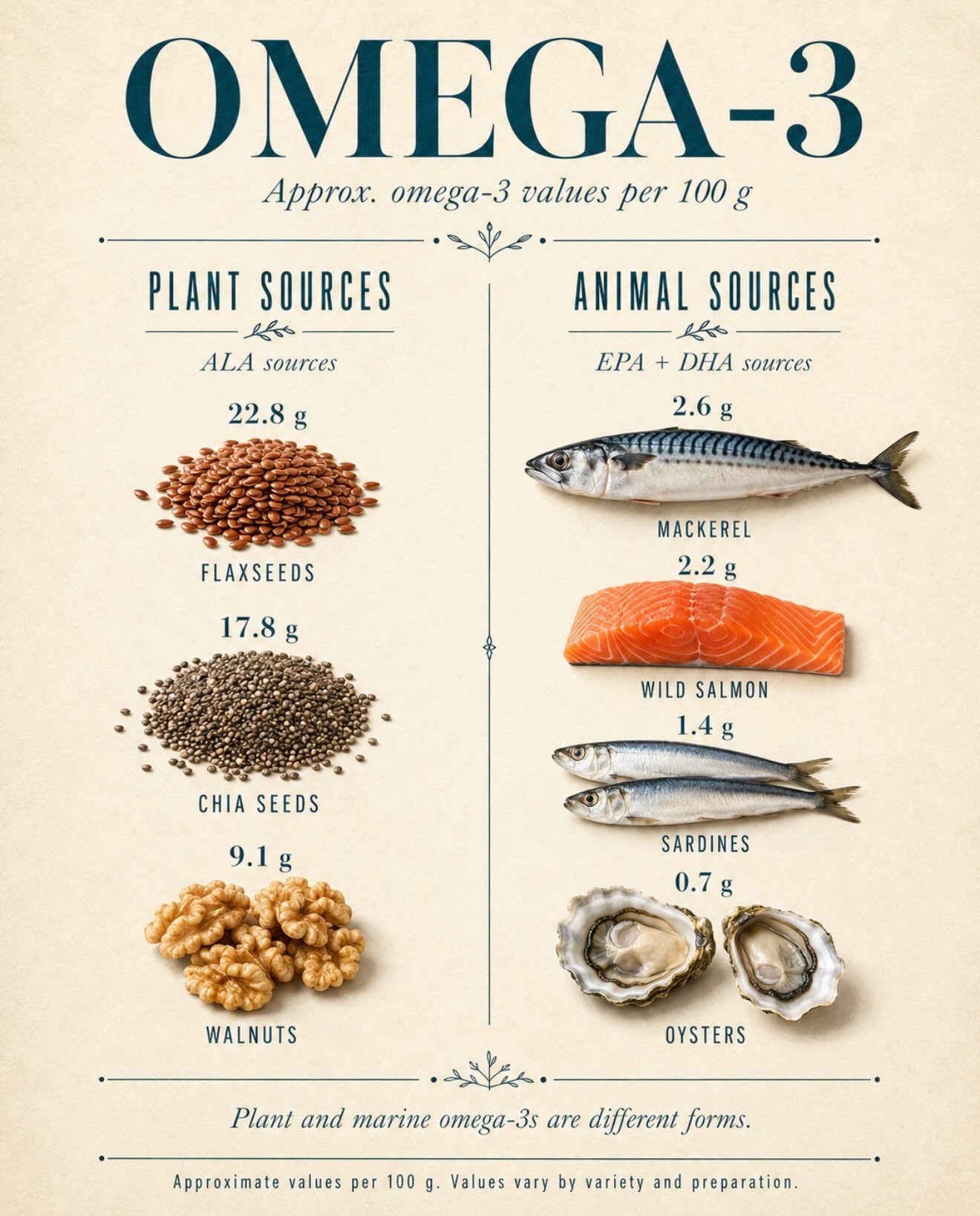
Plant-based foods provide alpha-linolenic acid (ALA), a type of omega-3 fatty acid. While ALA is essential, the body must convert it into eicosapentaenoic acid (EPA) and docosahexaenoic acid (DHA) to use it effectively. Some of the richest plant sources of ALA include:
- Flaxseeds: Contain approximately 22.8 grams of ALA per 100 grams.
- Chia Seeds: Offer around 17.8 grams of ALA per 100 grams.
- Walnuts: Provide about 9.1 grams of ALA per 100 grams.
Animal-Based Sources
Animal-based foods, particularly fatty fish, are rich in EPA and DHA, which the body can use directly. Some of the best animal sources of omega-3s include:
- Mackerel: Contains about 2.6 grams of EPA and DHA per 100 grams.
- Wild Salmon: Offers approximately 2.2 grams of EPA and DHA per 100 grams.
- Sardines and Oysters: Provide around 1.4 grams and 0.7 grams of EPA and DHA per 100 grams, respectively.
Vitamin A
Vitamin A is essential for vision, immune function, and cell growth. It comes in two main forms: beta-carotene from plant sources and preformed vitamin A from animal sources.
Plant-Based Sources
Plant-based foods provide beta-carotene, which the body converts into vitamin A. Some of the best plant sources include:
- Sweet Potato: Contains approximately 961 micrograms of retinol activity equivalents (RAE) per 100 grams.
- Carrots: Offer around 532 micrograms RAE per 100 grams.
- Butternut Squash: Provides about 532 micrograms RAE per 100 grams.
Animal-Based Sources
Animal-based foods provide preformed vitamin A, which the body can use directly. Some of the richest animal sources include:
- Beef Liver: Contains a staggering 9,400 micrograms RAE per 100 grams.
- Grass-Fed Butter: Offers around 265 micrograms RAE per 100 grams.
- Cheddar Cheese and Eggs: Provide about 140 and 140 micrograms RAE per 100 grams, respectively.
Zinc
Zinc is vital for immune function, protein synthesis, and cell division. It is found in both plant and animal foods, but the body absorbs it more efficiently from animal sources.
Plant-Based Sources
Plant-based foods contain zinc, but absorption can be hindered by the presence of phytates. Some of the best plant sources include:
- Pumpkin Seeds: Contain approximately 10.3 milligrams of zinc per 100 grams.
- Hemp Seeds: Offer around 9.9 milligrams of zinc per 100 grams.
- Chickpeas: Provide about 2.0 milligrams of zinc per 100 grams.
Animal-Based Sources
Animal-based foods provide zinc in a more bioavailable form. Some of the best animal sources include:
- Oysters: Contain a high 78 milligrams of zinc per 100 grams.
- Grass-Fed Beef: Offers around 6.0 milligrams of zinc per 100 grams.
- Lamb: Provides about 5.0 milligrams of zinc per 100 grams.
- Eggs: Offer approximately 1.3 milligrams of zinc per 100 grams.
Practical Tips
Eating a balanced diet that includes a variety of nutrients from both plant and animal sources is key to optimal health. Here are some practical tips to help you incorporate these nutrients into your diet:
Omega-3 Fatty Acids
- Include fatty fish in your diet at least twice a week. Opt for wild-caught fish like salmon, mackerel, and sardines.
- Sprinkle flaxseeds and chia seeds on your oatmeal, smoothies, or salads for a boost of plant-based omega-3s.
- Consider taking a fish oil supplement if you struggle to get enough omega-3s from your diet.
Vitamin A
- Eat a variety of colorful fruits and vegetables. These are rich in beta-carotene, which the body converts into vitamin A.
- Opt for grass-fed dairy products and pastured eggs to get more bioavailable vitamin A.
- Include organ meats like beef liver in your diet occasionally, as they are exceptionally high in vitamin A.
Zinc
- Snack on pumpkin and hemp seeds for a plant-based zinc boost.
- Include lean meats like grass-fed beef and lamb in your meals for better zinc absorption.
- Pair plant-based zinc sources with vitamin C to enhance absorption.
Important Takeaways
- Variety is key. No single nutrient source is superior; a balanced diet includes a mix of plant and animal foods.
- Absorption matters. The body absorbs nutrients from different sources in varying degrees of efficiency.
- Portion and preparation affect nutrient intake. Pay attention to how you cook and combine foods to maximize nutrient absorption.
Conclusion
Understanding the sources of essential nutrients and how the body absorbs them can help you make informed dietary choices. Incorporating a variety of plant and animal foods into your diet ensures you get a broad range of nutrients, supporting overall health and well-being.
Watch the Reel
Questions readers ask
What are the main differences between plant-based and animal-based omega-3 fatty acids?
Plant-based omega-3s primarily come in the form of alpha-linolenic acid (ALA), found in foods like flaxseeds and walnuts. However, animal-based sources, including fatty fish and fish oil, contain eicosapentaenoic acid (EPA) and docosahexaenoic acid (DHA), which are more readily absorbed and utilized by the body. This is due to the fact that the body must convert ALA into EPA and DHA, a process that is not entirely efficient.
How can I get vitamin A from plant-based sources?
Plant-based sources of vitamin A include dark leafy greens, carrots, sweet potatoes, and colorful fruits. These foods contain beta-carotene, which the body can convert into vitamin A. However, since the conversion process is not 100% efficient, it is essential to consume a variety of these foods to ensure optimal intake.
What are the best animal-based sources of vitamin A?
The best animal-based sources of vitamin A include beef liver, fish oils, and eggs. These foods are rich in preformed vitamin A, also known as retinol, which the body can directly absorb and utilize. It is important to note that while animal-based sources can provide a rich supply of ready-to-use vitamin A, it is also crucial to consume these foods in moderation as they can be high in saturated fats and cholesterol.
What are some plant-based sources of omega-3 fatty acids?
Some of the most common plant-based sources of omega-3 fatty acids include chia seeds, flaxseeds, and walnuts. These foods contain alpha-linolenic acid (ALA). In addition, some plant-based foods, such as algae and seaweed, contain EPA and DHA, which are more readily usable forms of omega-3 fatty acids.
Which nutrient comparison chart should I use to compare plant and animal nutrient profiles?
When comparing plant and animal nutrient profiles, it is helpful to use nutrient comparison charts from trusted sources. These charts should list key nutrients, such as omega-3s, vitamin A, and zinc, per 100 grams of the food. Look for charts that specify the type of nutrients (e.g., ALA, EPA, DHA for omega-3s, and beta-carotene or retinol for vitamin A). This will help you understand the differences in nutrient content and absorption.
What are the essential nutrients in plants and how do they compare to those in animals?
Plants are rich in essential nutrients, including vitamins, minerals, and phytochemicals. They provide a wide range of vitamins, such as vitamins C, E, and K, as well as minerals like potassium, magnesium, and iron. In contrast, animal products are high in complete proteins, vitamins B12 and D, and minerals such as iron and zinc. However, plant and animal foods offer different types of essential nutrients, so it is beneficial to incorporate a variety of both into your diet.
What is the importance of considering nutrient sources when planning a diet?
Considering nutrient sources when planning a diet is crucial for ensuring that you get a wide range of essential nutrients. Both plant and animal foods offer unique benefits, and the body absorbs and utilizes these nutrients differently. By understanding the nutrient profiles of various foods, you can make informed choices to optimize your diet and overall health. For instance, incorporating both plant and animal sources can help you achieve a balanced intake of omega-3s, vitamin A, and other essential nutrients.
Related deep dives
Similar reads based on topic and creator.


Recent articles
Fresh deep dives from the latest Reels we unpacked.




Comments
Be the first to comment.