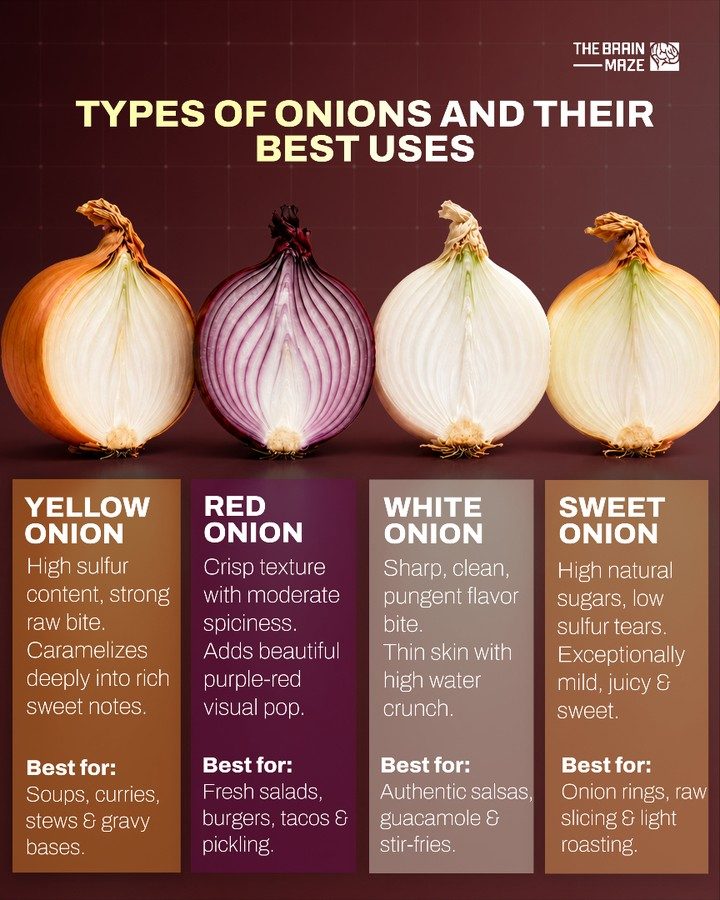
Onions: Types and Culinary Uses
Onions are a staple ingredient in kitchens around the world, each type offering unique flavors, textures, and culinary uses. Whether you're cooking a hearty stew or a fresh salad, understanding the different types of onions can elevate your dishes. Let’s dive into the four most common types: yellow, red, white, and sweet onions.
Why Onion Types Matter
Choosing the right type of onion for a recipe can significantly impact the final dish. Each variety brings distinct flavors and textures that complement different cooking methods and dishes. Knowing when to use each type can enhance the overall taste and presentation of your meals.
Main Discussion
Yellow Onions
Yellow onions are the most versatile and widely used type of onion. They have a high sulfur content, which gives them a strong, pungent raw bite. This makes them ideal for dishes where the onion flavor needs to be cooked down and mellowed out.
Key Characteristics:
- Sulfur Content: High, which contributes to their strong flavor.
- Texture: Firm and dense.
- Flavor: Pungent and strong.
- Best For: Soups, curries, stews, and gravy bases.
Yellow onions are perfect for dishes that require slow cooking, as this process helps to release their natural sugars and deepen their flavor. They are commonly used in sauces, soups, and stews, where their bold flavor can enhance the overall richness of the dish.
Red Onions
Red onions offer a milder flavor compared to yellow onions. They have a vibrant purple-red color that adds a visual pop to salads, sandwiches, and other raw preparations.
Key Characteristics:
- Texture: Crisp and firm.
- Flavor: Mild and slightly sweet.
- Best For: Fresh salads, authentic salsas, guacamole, and stir-fries.
Red onions are excellent for raw or lightly cooked preparations. Their mild flavor and crisp texture make them a versatile addition to salads, salsas, and sandwiches. They also add a beautiful visual contrast to many dishes, making them a popular choice for plated presentations.
White Onions
White onions have a sharp, clean bite and are often used in Latin American and Mexican cuisines. Their thinner skin and high water content give them a crisp texture that holds up well in raw preparations.
Key Characteristics:
- Texture: Thin skin with high water content, providing a crisp texture.
- Flavor: Sharp and pungent.
- Best For: Salsa, guacamole, and stir-fries.
White onions are commonly used in salsa and guacamole, where their clean, sharp flavor adds depth and brightness. They are also a staple in Mexican and Latin American dishes, where their strong flavor pairs well with other ingredients.
Sweet Onions
Sweet onions are known for their exceptionally mild, juicy, and sweet flavor. They are perfect for dishes where a milder onion flavor is desired, such as in raw preparations or light roasting.
Key Characteristics:
- Texture: Juicy and sweet.
- Flavor: Exceptionally mild and sweet.
- Best For: Onion rings, raw slicing, and light roasting.
Sweet onions caramelize deeply, adding a rich, sweet flavor to dishes. They are ideal for onion rings, raw slicing, and light roasting, where their natural sweetness can be enhanced. They are also a great choice for everyday cooking, as their mild flavor complements a wide range of dishes.
Practical Tips
-
Storage: Store onions in a cool, dry, and dark place. Avoid storing them in the refrigerator, as the cold temperature can cause them to spoil more quickly. Keep them in a well-ventilated area to prevent mold.
-
Preparation: To reduce the tear-inducing effects of chopping onions, try refrigerating them for about 30 minutes before cutting. This can help to minimize the release of the enzymes that cause tearing.
-
Cooking: For a more uniform flavor, chop onions into evenly sized pieces. This ensures that they cook at the same rate and helps to prevent overcooking or undercooking.
-
Substitution: If a recipe calls for a specific type of onion and you don’t have it, you can often substitute with another type. Here’s a quick guide:
- Yellow Onions: Can be substituted with white or red onions, but keep in mind that the flavor profile will be slightly different.
- Red Onions: Can be substituted with yellow or sweet onions, but the color and texture may vary.
- White Onions: Can be substituted with yellow or red onions, but the flavor will be milder.
- Sweet Onions: Can be substituted with yellow onions, but the sweetness will be less pronounced.
Important Takeaways
- Yellow onions are versatile and ideal for slow-cooked dishes.
- Red onions add a mild flavor and vibrant color to raw preparations.
- White onions offer a sharp bite and are great for salsa and guacamole.
- Sweet onions are exceptionally mild and perfect for raw slicing and light roasting.
Understanding the unique characteristics and best uses of each onion type can help you make the most of this versatile ingredient in your cooking.
Conclusion
Onions are a cornerstone of many culinary traditions, and learning to use the different types effectively can greatly enhance your cooking. Whether you're making a hearty stew, a fresh salad, or a crispy onion ring, choosing the right onion can make all the difference. Experiment with different varieties and discover the flavors and textures that best complement your favorite dishes.
Watch the Reel
Questions readers ask
What are the four most common types of onions discussed in the article?
The four most common types of onions discussed are: yellow, red, white, and sweet onions. Each of these onions offers a unique flavor and texture, making them suitable for different culinary uses.
Which onion variety is best for sautéing and cooking?
Yellow onions are often the go-to choice for sautéing and cooking due to their versatility and robust flavor. They hold up well in high heat and are great for a variety of dishes, including soups, stews, and stir-fries.
When should I use red onions in my recipes?
Red onions are ideal for both raw and cooked dishes. They are particularly good for salads, salsas, and guacamole because of their mild, slightly sweet flavor and crisp texture. They can also be used in cooked dishes, but they may retain a slight crunch and their vibrant color.
What makes sweet onions different from other onion varieties?
Sweet onions, like Vidalia or Walla Walla, are known for their exceptionally mild and sweet flavor. They are perfect for eating raw in salads or sandwiches. They also caramelize beautifully when cooked, adding a subtle sweetness and depth of flavor to dishes.
Which onion is recommended for making stews or soups?
Yellow onions are typically the best choice for stews and soups. Their robust flavor and ability to break down during cooking make them ideal for long-simmering dishes, adding depth and complexity to the overall flavor profile.
What is the best onion to use in a stir-fry?
For stir-fries, yellow onions are often preferred due to their firm texture and balanced flavor. They can withstand high heat and quick cooking times, making them a versatile ingredient for stir-fries and other high-heat cooking methods.
Can I substitute one type of onion for another in a recipe?
While you can substitute one type of onion for another, it's essential to consider the flavor and texture differences. For example, substituting a sweet onion for a yellow onion in a stew might result in a sweeter, milder flavor, while using a red onion in place of a yellow onion in a stir-fry could add more crunch and a slightly different flavor profile.
Related deep dives
Similar reads based on topic and creator.




Recent articles
Fresh deep dives from the latest Reels we unpacked.




Comments
Be the first to comment.