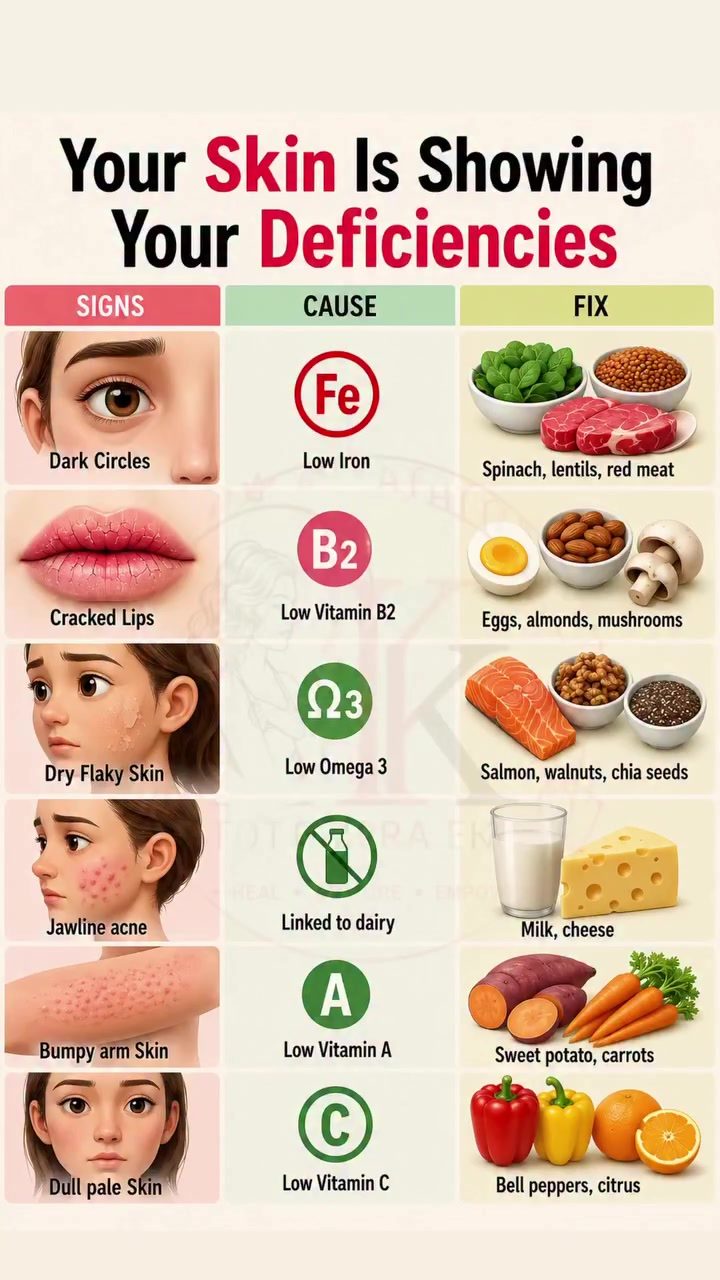
Skin Deficiency Signs and Fixes
Skin changes can often signal underlying health issues, including nutrient deficiencies. While not every skin condition is a direct result of a lack of vitamins or minerals, certain symptoms can indeed reflect what's going on inside the body. Understanding these signs can help in maintaining overall health and addressing specific issues through diet and lifestyle adjustments.
Why this matters
By paying attention to changes in the skin, individuals can gain insights into their nutritional status and make informed decisions about their diet and health. This proactive approach can help prevent or ameliorate nutrient deficiencies, promoting better overall well-being.
Main discussion
Dark Circles
Dark circles under the eyes are often attributed to genetics, allergies, or lack of sleep. While these are common causes, persistent dark circles might also indicate low iron levels. Iron is essential for carrying oxygen to the body's tissues, and a deficiency can lead to various health issues, including fatigue and pale skin. Incorporating iron-rich foods like spinach, lentils, and red meat into the diet can help address this deficiency and potentially improve the appearance of dark circles.
Cracked Lips
Cracked lips can be a sign of dryness or low levels of vitamin B2 (riboflavin) and iron. Vitamin B2 plays a crucial role in breaking down proteins, fats, and carbohydrates, and a deficiency can lead to skin disorders, including cracked lips. Foods rich in vitamin B2, such as eggs, almonds, and mushrooms, can help alleviate this issue.
Dry, Flaky Skin
Dry, flaky skin is often caused by environmental factors like dry weather or skin conditions such as eczema. However, it can also be a sign of low omega-3 fatty acids. Omega-3s are essential for maintaining skin health and hydration. Including foods rich in omega-3s, like salmon, walnuts, and chia seeds, in the diet can help improve skin condition and reduce flakiness.
Jawline Acne
Jawline acne is frequently influenced by hormonal fluctuations, but dairy consumption can exacerbate the condition in some individuals. Hormones, particularly androgens, can stimulate oil production, leading to clogged pores and acne. Limiting dairy intake, especially in those prone to hormonal acne, can help reduce breakouts. Opting for dairy-free alternatives or carefully managing dairy consumption might be beneficial.
Bumpy Arm Skin
Bumpy arm skin, often referred to as keratosis pilaris, is typically not a sign of vitamin deficiency. This condition is characterized by small, rough bumps on the skin, usually on the upper arms and thighs. It is often genetic and can be managed by exfoliation and moisturizing. While not usually linked to nutrient deficiencies, maintaining a balanced diet can support overall skin health.
Dull, Pale Skin
Dull, pale skin can be a sign of iron deficiency anemia or vitamin B12 deficiency. Iron is essential for producing hemoglobin, which carries oxygen in the blood. Vitamin B12 is crucial for the production of red blood cells and DNA synthesis. Both deficiencies can lead to fatigue, weakness, and pale skin. Consuming foods rich in vitamin B12, such as meat, eggs, and fortified cereals, along with iron-rich foods, can help address these deficiencies and improve skin health.
Practical tips
Incorporate a Balanced Diet
A balanced diet is key to maintaining healthy skin. Ensure that your meals include a variety of nutrient-rich foods, such as fruits, vegetables, lean proteins, and whole grains. This will help provide the necessary vitamins and minerals for optimal skin health.
Stay Hydrated
Hydration is crucial for skin health. Drinking plenty of water can help keep the skin hydrated, reduce dryness, and improve overall appearance. Aim for at least 8 glasses of water a day, and increase intake based on activity level and environmental factors.
Use Skincare Products Wisely
While diet plays a significant role in skin health, skincare products can also make a difference. Choose products that are gentle and suitable for your skin type. Regular exfoliation and moisturizing can help maintain smooth, healthy skin.
Monitor Skin Changes
Pay attention to any persistent changes in your skin. If you notice unusual symptoms, such as persistent dryness, flakiness, or acne, consult a healthcare provider. Early detection and appropriate treatment can prevent more significant health issues.
Address Underlying Conditions
If you suspect that a skin condition is linked to an underlying health issue, such as a vitamin deficiency, it's essential to address it promptly. Consult a healthcare provider for proper diagnosis and treatment. This may involve dietary changes, supplementation, or other medical interventions.
Important takeaways
- Dark circles, cracked lips, and dry, flaky skin can indicate nutrient deficiencies.
- Jawline acne may be worsened by dairy consumption, especially in those with hormonal imbalances.
- Bumpy arm skin is usually genetic and not linked to vitamin deficiencies.
- Dull, pale skin can suggest iron deficiency anemia or vitamin B12 deficiency.
- A balanced diet, hydration, and appropriate skincare can support healthy skin.
- Persistent skin changes should be evaluated by a healthcare provider.
Conclusion
While not every skin change is caused by a vitamin deficiency, certain signs can reflect underlying health issues. By understanding these signs and making appropriate dietary and lifestyle adjustments, individuals can support overall skin health. Regular monitoring, a balanced diet, and proper skincare can help maintain healthy skin and address any potential deficiencies. If you notice persistent skin changes, it's essential to consult a healthcare provider for proper evaluation and treatment.
Watch the Reel
Questions readers ask
What are some common signs of vitamin deficiency that show up on the skin?
Some common signs of vitamin deficiency that manifest on the skin include dry, flaky skin, which can indicate a lack of vitamins A, C, or E; cracked lips, which may suggest a deficiency in vitamins A, B2, B3, B6, or B12; and dark circles under the eyes, which can sometimes be a sign of low iron or vitamin B12 levels.
Can skin conditions like acne be related to nutrient deficiencies?
Acne can sometimes be linked to nutrient deficiencies. For instance, a deficiency in vitamin A or zinc can affect skin health and potentially lead to acne. Additionally, dairy products have been shown to exacerbate acne in some individuals, which can affect skin health.
How does iron deficiency affect the skin?
Iron deficiency can lead to several skin issues, including pale skin, brittle nails, and dark circles under the eyes. In more severe cases, iron deficiency can also cause hair loss and koilonychia, which is a condition where the nails become thin and concave.
What are the potential causes of dry, flaky skin?
Dry, flaky skin can be caused by a variety of factors, including a lack of vitamins A, C, or E, as well as zinc. Additionally, environmental factors such as cold weather, low humidity, and excessive sun exposure can contribute to dry, flaky skin.
How can I address skin changes caused by nutrient deficiencies?
To address skin changes caused by nutrient deficiencies, it is important to first identify the specific deficiency. This can be done through blood tests or by consulting with a healthcare professional. Once the deficiency is identified, a balanced diet with foods that are rich in the missing nutrients can help improve skin health. In some cases, dietary supplements may also be recommended.
Do dark circles under the eyes always indicate a nutrient deficiency?
While dark circles can sometimes indicate a nutrient deficiency, such as low iron or vitamin B12, they can also be caused by other factors. These include lack of sleep, stress, allergies, or even genetics. It is important to consider all possible causes before assuming a nutrient deficiency is the culprit.
What is the role of vitamins in maintaining healthy skin?
Vitamins are crucial for maintaining healthy skin. Vitamin A helps with skin cell production and can help prevent premature aging. Vitamin C is essential for collagen production and can help protect the skin from UV damage. Vitamin E acts as an antioxidant and can help fight free radicals that damage the skin, while B vitamins play a role in maintaining skin health and preventing conditions like acne.
Recent articles
Fresh deep dives from the latest Reels we unpacked.




Comments
Be the first to comment.