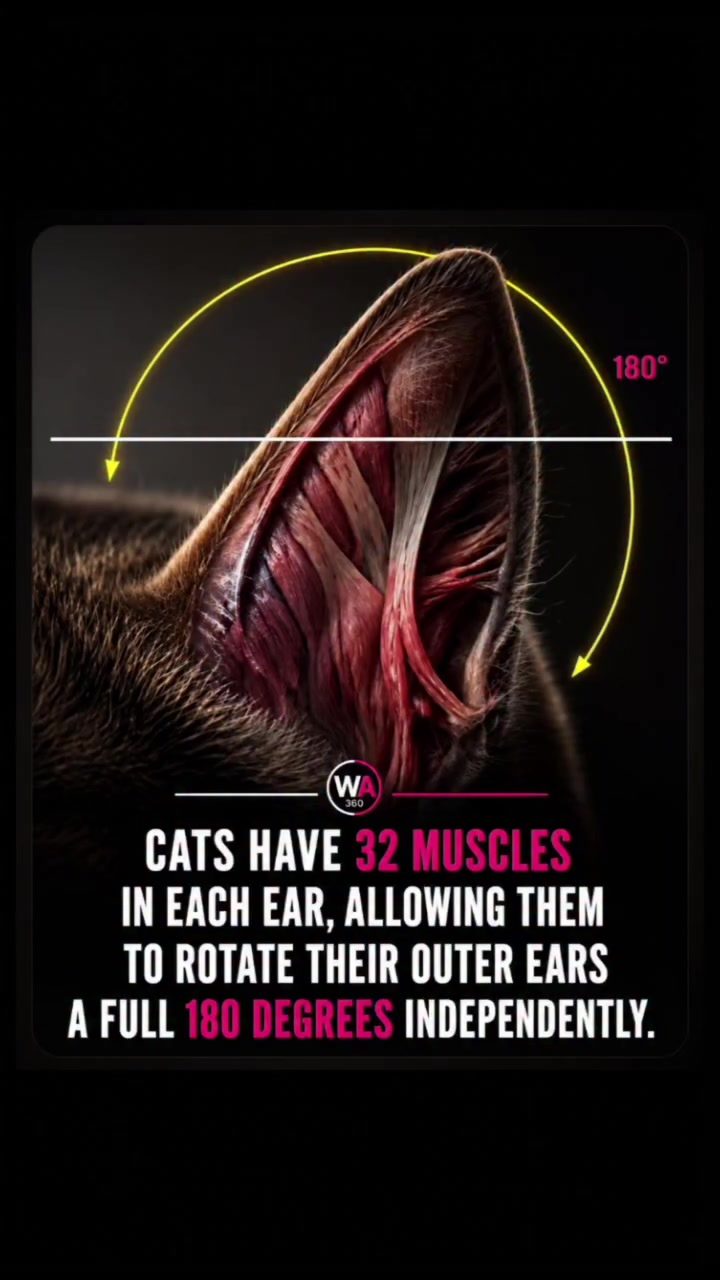
Cat Ear Anatomy
Cats are known for their exceptional hearing, and much of this ability is due to their unique ear anatomy. One of the most striking features of a cat's ear is the presence of 32 muscles in each ear, which allow for an incredible range of movement. These muscles enable cats to rotate their outer ears up to 180 degrees independently, a capability that is crucial for their hunting skills and overall awareness.
Context / Why this Matters
Understanding the intricacies of a cat's ear anatomy offers insight into their exceptional sensory capabilities. This knowledge can be especially valuable for pet owners, veterinarians, and anyone with an interest in animal behavior. By delving into the details of a cat's ear muscles and their functions, we can better appreciate the natural adaptations that contribute to a cat's agility and efficiency as predators.
Main Discussion
The 32 Muscles in a Cat's Ear
The 32 muscles in each of a cat's ears are specialized for precise control and movement. This muscle structure allows cats to move their ears independently of each other and in multiple directions. The primary muscles involved in this movement include:
- Vertical Muscles: These muscles enable the ear to rotate up and down, helping cats to track sounds from above or below.
- Horizontal Muscles: These muscles allow the ear to swivel left and right, aiding in locating sounds from different horizontal directions.
- Rotational Muscles: These muscles facilitate the 180-degree rotation, enabling the ear to rotate and face any direction without the cat needing to move its head.
Enhancing Hunting Skills
A cat's ability to pinpoint the exact location of sounds is a significant advantage in hunting. By rotating their ears independently, cats can:
- Detect Prey: The precise control over their ear movements helps cats identify the exact location of their prey, even in dense vegetation or low-light conditions.
- Avoid Predators: This sensory acuity also helps cats detect potential threats from different directions, allowing them to react swiftly and avoid danger.
Improving Awareness of Surroundings
Cats are highly aware of their surroundings, and their ear muscles play a crucial role in this awareness. The ability to rotate their ears independently allows cats to:
- Monitor Environment: Cats can continuously monitor their environment without turning their heads, reducing the risk of being caught off guard.
- Communicate Through Ear Movements: Subtle movements of the ears can also convey a cat's emotions and intentions to other cats, aiding in social interactions and communication.
Subtle Ear Movements for Communication
Cats use their ears not only for hearing but also for communicating with other cats. The precise control over their ear movements allows them to:
- Express Emotions: Different ear positions can indicate various emotions, such as alertness, curiosity, or aggression. For example, ears pointing forward can indicate curiosity, while ears flattened against the head can signal fear or aggression.
- Signal Intentions: Cats can use their ear movements to signal their intentions to other cats, helping to avoid conflicts and establish social hierarchies.
The Intricate Muscle Structure
The intricate muscle structure in a cat's ear is a testament to nature's design. Each muscle is finely tuned to perform specific functions, contributing to the cat's overall sensory capability. Understanding this structure helps us appreciate the complexity and efficiency of a cat's auditory system.
Practical Tips
While cats rely heavily on their ear muscles for survival, there are some practical tips for pet owners to help maintain their cat's hearing health:
- Regular Veterinary Check-ups: Regular visits to the vet can help detect any ear issues early, ensuring that your cat's hearing remains sharp.
- Clean Ears Regularly: Regularly cleaning your cat's ears can prevent infections and other issues that might affect their hearing.
- Provide a Stimulating Environment: Providing a stimulating environment with various sounds and textures can help keep your cat's auditory skills sharp.
- Monitor for Signs of Ear Problems: Be aware of signs such as excessive head shaking, ear scratching, or discharge from the ears, which could indicate an ear problem.
Important Takeaways
- Cats have 32 muscles in each ear, which allow for independent rotation up to 180 degrees.
- This remarkable ability enhances their hunting skills, improves awareness of their surroundings, and facilitates communication through subtle ear movements.
- The intricate muscle structure in a cat's ear is a testament to nature's design, supporting their agility and efficiency as predators.
- Regular veterinary check-ups and ear cleaning are essential for maintaining a cat's hearing health.
Conclusion
The anatomy of a cat's ear is a fascinating example of nature's design, showcasing how specialized structures support survival and behavior. By understanding the 32 muscles in each ear and their functions, we can better appreciate the incredible sensory capabilities of these agile and efficient predators. This knowledge is not just interesting but also practical for pet owners, helping them to care for their cats' hearing health and overall well-being.
Watch the Reel
Questions readers ask
How many muscles are in a cat's ear and why is this significant?
A cat's ear contains 32 muscles, which is remarkable compared to human ears which only have 6. This high number allows cats to have extraordinary control over their ears' movement, which is crucial for their hearing and hunting skills.
Can cat ears rotate 360 degrees?
No, cat ears cannot rotate a full 360 degrees. While they can rotate up to 180 degrees independently, this extensive range already allows them to pinpoint sounds and movements with great precision.
What is the structure of the 32 muscles in a cat's ear?
The 32 muscles in a cat's ear work in coordination to facilitate the incredible range of movement. These muscles are attached to the outer ear (pinna) and control its rotation, tilting, and folding, enabling cats to respond to various auditory stimuli effectively.
Why do cats need to rotate their ears so much?
Cats rotate their ears to enhance their hearing. By moving their ears, they can better locate the source of a sound, which is essential for hunting and navigating their environment. This ability helps them track prey and stay alert to potential threats.
What would happen if a cat's ear muscles were damaged?
Damage to a cat's ear muscles could significantly impair their hearing and spatial awareness. Cats rely on their exceptional hearing and ear movement to hunt, communicate, and navigate their surroundings. Thus, any injury to these muscles could affect their overall quality of life and safety.
Recent articles
Fresh deep dives from the latest Reels we unpacked.




Comments
Be the first to comment.