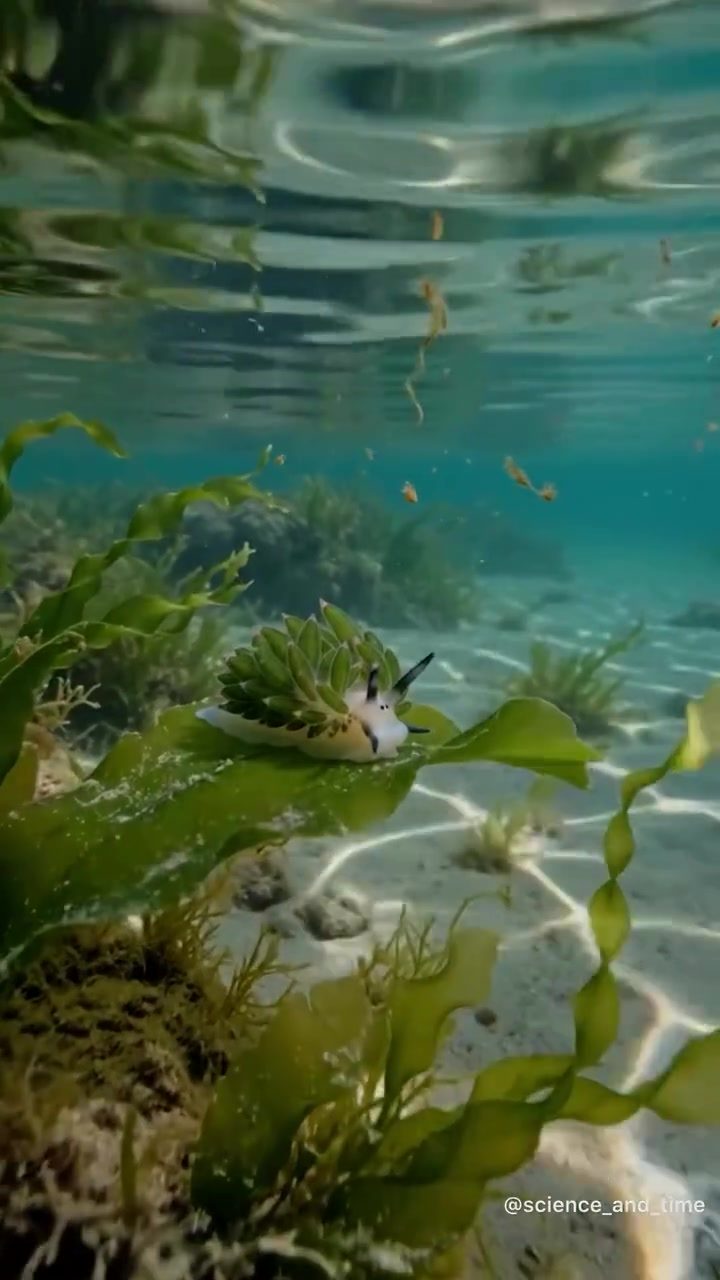
Sea Slug Biology: The Leaf Sheep, Nature's Solar-Powered Creature
The Leaf Sheep, formally known as Costasiella kuroshimae, is a remarkable sea slug that captures attention with its unique characteristics. This tiny creature, measuring only around 5 to 10 millimeters in length, thrives in the shallow tropical waters of Japan, Indonesia, and the Philippines, blending seamlessly with its surroundings.
Why this matters
The Leaf Sheep is more than just a fascinating marine creature; it is a living example of how nature can innovate in surprising ways. By incorporating chloroplasts from the algae it consumes, this sea slug possesses a plant-like ability to harness solar energy. This adaptation, known as kleptoplasty, allows the Leaf Sheep to produce energy from sunlight, making it one of the few animals capable of such a feat. Understanding this unique biological mechanism provides insights into the complex and adaptable nature of marine life. Additionally, the Leaf Sheep’s reproductive and larval stages add to the richness of its biological profile, making it a subject of interest for marine biologists and enthusiasts alike.
The Life Cycle of the Leaf Sheep
Reproduction and Early Development
The Leaf Sheep exhibits a unique reproductive strategy. Both male and female reproductive organs are present in each individual, a characteristic known as hermaphroditism. During reproduction, two adults exchange sperm. Following fertilization, one of the adults lays a spiral ribbon of fertilized eggs, which are safely attached to green algae. Inside each egg, an embryo develops and eventually hatches as a tiny velliger larva. These larvae drift with ocean currents before settling onto algae.
Larval Stage and Settlement
Upon settling, the young Leaf Sheep begins to steal chloroplasts from its food. This process, called kleptoplasty, involves the sea slug absorbing and storing the chloroplasts inside its body. These chloroplasts continue to produce energy from sunlight, allowing the Leaf Sheep to sustain itself for extended periods. The stolen chloroplasts are stored in the sea slug’s serrata, where they keep producing energy from sunlight for days. This remarkable adaptation gives the Leaf Sheep a unique advantage in its environment, enabling it to survive longer between meals.
Anatomical Features
One of the key adaptations of the Leaf Sheep is its ability to utilize chloroplasts. This adaptation is highlighted by two critical anatomical features:
Digestive Gland
The digestive gland is responsible for breaking down the algae that the Leaf Sheep consumes. The gland also plays a crucial role in storing the stolen chloroplasts, ensuring that the energy produced from sunlight is efficiently utilized.
Radula
The radula is a toothed, tongue-like organ used for feeding. In the Leaf Sheep, it is adapted to scrape algae and effectively collect the chloroplasts, enabling the slug to perform kleptoplasty.
Kleptoplasty: The Art of Stealing Energy from the Sun
Kleptoplasty is a fascinating process where certain animals, like the Leaf Sheep, incorporate chloroplasts from algae into their own cells. These chloroplasts, which are typically found in plants and algae, are responsible for photosynthesis. By stealing and storing chloroplasts, the Leaf Sheep can produce energy from sunlight, much like a plant. This process is not a permanent solution, as the stolen chloroplasts eventually degrade and lose their ability to photosynthesize. However, it does provide a significant advantage, allowing the Leaf Sheep to survive longer between meals.
How the Leaf Sheep Uses Sunlight for Energy
The Leaf Sheep's ability to produce energy from sunlight is a remarkable adaptation. After eating algae, the sea slug stores the stolen chloroplasts inside its serrata. These chloroplasts continue to produce energy from sunlight for days, providing the Leaf Sheep with additional energy that it would not otherwise have. While the Leaf Sheep cannot live on sunlight alone, this plant-like ability helps it survive longer between meals, making it a unique and adaptive creature.
Practical Tips for Observing the Leaf Sheep
Observing the Leaf Sheep in its natural habitat can be a rewarding experience. Here are some practical tips to help you spot and appreciate this fascinating creature:
When and Where to Look
The Leaf Sheep is found in shallow tropical waters, particularly in the regions of Japan, Indonesia, and the Philippines. The best time to observe these creatures is during the day, when they are actively feeding and can be seen on algae. It is essential to approach the sea gently, avoiding disturbing the delicate marine environment.
Equipment and Techniques
A good pair of snorkeling gear or a diving mask is essential for observing the Leaf Sheep. A magnifying glass or a macro lens on a camera can help you see the details of these tiny creatures. Patience is key, as the Leaf Sheep can be elusive and blend well with its surroundings.
Conservation and Responsibility
When observing marine life, it is crucial to follow ethical guidelines to ensure the well-being of the creatures and their habitat. Avoid touching or disturbing the Leaf Sheep and other marine organisms. Keep a safe distance and minimize your impact on the environment. By doing so, you can help preserve the delicate ecosystems where these fascinating creatures thrive.
Important Takeaways
The Leaf Sheep is a remarkable sea slug that demonstrates the incredible adaptability of marine life. Its ability to perform kleptoplasty, incorporating chloroplasts from algae to produce energy from sunlight, is a unique and fascinating adaptation. Understanding the life cycle, reproductive strategies, and anatomical features of the Leaf Sheep provides valuable insights into the complex and adaptive nature of marine organisms. By appreciating and learning about these creatures, we can deepen our connection to the natural world and work towards preserving its wonders.
Conclusion
The Leaf Sheep, Costasiella kuroshimae, is a testament to the ingenuity and adaptability of marine life. Its ability to harness solar energy through kleptoplasty makes it one of the most intriguing sea creatures on Earth. By understanding its unique biological features and observing it in its natural habitat, we can gain a deeper appreciation for the complexities of marine ecosystems and the incredible adaptations that allow these creatures to thrive.
Watch the Reel
Questions readers ask
What is the Leaf Sheep and where can it be found?
The Leaf Sheep, or Costa siella kuroshimae, is a small sea slug, measuring 5 to 10 mm, found in the shallow, tropical waters of Japan, Indonesia, and the Philippines. It is known for its ability to blend in with its surroundings.
How does the Leaf Sheep harness solar energy?
The Leaf Sheep uses a process called kleptoplasty, where it incorporates chloroplasts from the algae it eats. These chloroplasts allow the sea slug to produce energy from sunlight, similar to how plants perform photosynthesis.
What is kleptoplasty and how does it work in the Leaf Sheep?
Kleptoplasty is the process by which the Leaf Sheep integrates chloroplasts from algae into its own cells. This allows the sea slug to convert sunlight into energy, making it one of the few animals capable of photosynthesis.
What role do algae play in the Leaf Sheep's energy production?
Algae are crucial for the Leaf Sheep's energy production. When the Leaf Sheep consumes algae, it absorbs the algae's chloroplasts, which then enable the sea slug to photosynthesize and produce energy from sunlight.
Are there other marine animals that can harness solar energy like the Leaf Sheep?
While the Leaf Sheep is one of the most well-known, there are a few other marine creatures, such as certain species of sea squirts and sea anemones, that also exhibit the ability to incorporate chloroplasts and use sunlight for energy.
Related deep dives
Similar reads based on topic and creator.


Recent articles
Fresh deep dives from the latest Reels we unpacked.



Comments
Be the first to comment.