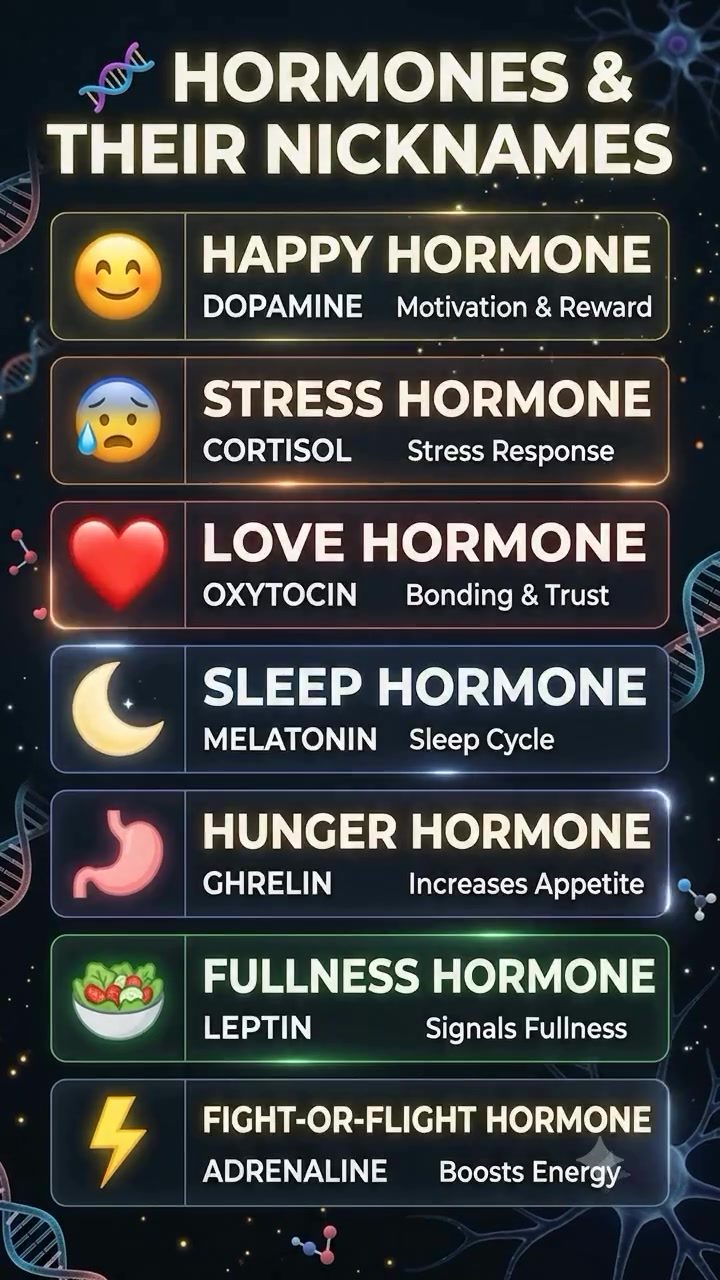
Hormones and Their Nicknames
Hormones are the body’s chemical messengers, traveling through the bloodstream to regulate mood, sleep, appetite, stress, energy, and many other essential functions. They play a crucial role in maintaining the body's balance and overall health.
Why This Matters
Understanding hormones and their roles can provide valuable insights into how the body functions and responds to various stimuli. Each hormone has a unique set of responsibilities and works in conjunction with others to ensure the body operates smoothly. These nicknames, such as the "happy hormone" or the "stress hormone," are shorthand for the primary functions of these chemical messengers.
Main Discussion
Dopamine: The Happy Hormone
Dopamine is often referred to as the "happy hormone" because it plays a significant role in motivation, reward, and pleasure. This neurotransmitter is released when the brain anticipates or experiences rewarding events. It motivates us to seek out rewarding experiences and helps regulate motor control, executive functions, and the brain’s reward and pleasure centers.
Functions of Dopamine
- Motivation: Dopamine drives us to achieve goals and seek out rewards.
- Reward: It reinforces behaviors that are pleasurable or beneficial.
- Pleasure: Dopamine is involved in the brain’s reward system, contributing to feelings of happiness and satisfaction.
Cortisol: The Stress Hormone
Cortisol is known as the "stress hormone" because it helps the body respond to physical and emotional stress. Produced by the adrenal glands, cortisol regulates metabolism, reduces inflammation, and helps control blood sugar levels. It plays a crucial role in the body's "fight or flight" response, preparing the body to deal with stressful situations.
Functions of Cortisol
- Stress Response: Cortisol helps the body respond to stress by increasing heart rate, blood pressure, and blood sugar levels.
- Metabolism: It regulates metabolism, helping the body convert food into energy.
- Inflammation Control: Cortisol helps control inflammation, which is the body's natural response to injury or infection.
Oxytocin: The Love Hormone
Oxytocin is often called the "love hormone" because it is important for bonding, trust, childbirth, and breastfeeding. This hormone is released during social bonding activities, such as hugging, kissing, and sexual activity. It promotes feelings of trust, empathy, and social connection.
Functions of Oxytocin
- Bonding: Oxytocin strengthens social bonds and promotes feelings of trust and connection.
- Childbirth and Breastfeeding: It plays a key role in labor, delivery, and lactation.
- Social Interaction: Oxytocin enhances feelings of empathy and social connection.
Melatonin: The Sleep Hormone
Melatonin is the "sleep hormone" responsible for regulating the body’s natural sleep-wake cycle. Produced by the pineal gland in the brain, melatonin levels rise in the evening and fall in the morning, helping to control the body’s circadian rhythm.
Functions of Melatonin
- Sleep Cycle: It regulates the body's natural sleep-wake cycle, promoting sleep at night and alertness during the day.
- Jet Lag: Melatonin can help reduce the effects of jet lag by resetting the body’s internal clock.
- Seasonal Affective Disorder (SAD): It may help alleviate symptoms of SAD by regulating mood and sleep patterns.
Ghrelin: The Hunger Hormone
Ghrelin is known as the "hunger hormone" because it signals the brain when it’s time to eat. Produced by the stomach, ghrelin levels rise before meals and fall after eating, helping to regulate appetite and food intake.
Functions of Ghrelin
- Appetite Regulation: Ghrelin stimulates appetite and increases food intake.
- Energy Balance: It helps maintain energy balance by signaling the body to eat when energy levels are low.
- Gastric Motility: Ghrelin also promotes gastric motility, helping to move food through the digestive system.
Leptin: The Fullness Hormone
Leptin is the "fullness hormone" that tells the brain when you’ve had enough food. Produced by fat cells, leptin levels rise after eating and fall when energy levels are low, helping to regulate appetite and energy balance.
Functions of Leptin
- Satiety: Leptin signals the brain to stop eating when energy levels are sufficient.
- Metabolism: It helps regulate metabolism by controlling energy intake and expenditure.
- Energy Balance: Leptin plays a crucial role in maintaining energy balance by regulating appetite and metabolism.
Adrenaline: The Fight-or-Flight Hormone
Adrenaline, also known as epinephrine, is the "fight-or-flight hormone" that prepares the body for emergencies by increasing heart rate, alertness, and energy. Produced by the adrenal glands, adrenaline is released in response to stressful or exciting situations, helping the body to react quickly.
Functions of Adrenaline
- Emergency Response: Adrenaline prepares the body for "fight or flight" by increasing heart rate, blood pressure, and energy levels.
- Alertness: It enhances alertness and cognitive function, helping the body respond quickly to threats or challenges.
- Energy Boost: Adrenaline provides a burst of energy, improving physical performance and endurance.
Practical Tips
To maintain hormonal balance, consider the following tips:
- Mental Well-Being: Engage in activities that promote mental well-being, such as mindfulness, meditation, and exercise, to manage stress and maintain healthy cortisol levels.
- Sleep Hygiene: Maintain good sleep hygiene by establishing a regular sleep schedule, creating a relaxing bedtime routine, and avoiding screens before bed to support healthy melatonin levels.
- Balanced Diet: Consume a balanced diet rich in fruits, vegetables, lean proteins, and whole grains to support healthy ghrelin and leptin levels and regulate appetite.
- Social Connections: Foster strong social connections through meaningful relationships, physical touch, and social activities to promote oxytocin release and enhance feelings of trust and connection.
- Stay Active: Engage in regular physical activity to boost dopamine levels, improve mood, and enhance overall well-being.
Important Takeaways
- Hormones are essential for regulating various bodily functions.
- Each hormone has unique functions and works in conjunction with others to maintain balance.
- Understanding hormone nicknames can provide insights into their primary roles.
- Maintaining hormonal balance through lifestyle choices can support overall health and well-being.
Conclusion
Hormones play a vital role in regulating the body’s functions, from mood and sleep to appetite and stress. By understanding their nicknames and primary functions, you can gain valuable insights into how these chemical messengers help maintain balance and support overall health. Incorporating practical tips into your daily routine can help maintain hormonal balance and enhance well-being.
Watch the Reel
Questions readers ask
What is the role of dopamine in the body?
Dopamine, known as the 'happy hormone,' plays a significant role in the body's reward and pleasure systems. It drives motivation, helps regulate movement, and influences mood. When dopamine levels are balanced, individuals often experience a sense of well-being and increased motivation to seek reward and pleasure.
How does cortisol function as the 'stress hormone'?
Cortisol, the 'stress hormone,' helps the body manage physical and emotional stress. It is released in response to stress and regulates various functions like immune response, metabolism, and blood sugar levels. Chronically high cortisol levels can lead to issues like weight gain, fatigue, and weakened immune function.
Which hormones are primarily responsible for regulating sleep patterns?
Several hormones play a role in regulating sleep. Melatonin is crucial for maintaining the body's circadian rhythm, while growth hormone is released during deep sleep to promote growth and cell repair. Additionally, cortisol levels naturally decrease at night to promote sleep and rise in the morning to help you wake up.
What are the functions of the hormones that control hunger?
Leptin and ghrelin are two key hormones that control hunger and appetite. Leptin, produced by fat cells, signals to the brain when the body has enough energy stored, while ghrelin, produced by the stomach, stimulates appetite. When these hormones are imbalanced, you might experience excessive hunger or reduced appetite.
How do hormones influence motivation and energy levels?
Hormones like dopamine and adrenaline significantly impact motivation and energy levels. Dopamine drives the brain's reward and pleasure centers, motivating individuals to seek rewarding experiences. Adrenaline, on the other hand, is released in response to stress or excitement, providing a quick burst of energy and alertness.
What role does oxytocin play in the body?
Oxytocin is often referred to as the 'bonding hormone' due to its role in fostering social connections and trust. It is released during physical affection, childbirth, and breastfeeding. Oxytocin also promotes relaxation and stress reduction, contributing to overall well-being.
Which hormones are considered reward hormones and why?
Dopamine, serotonin, and endorphins are often considered reward hormones. They are released in response to pleasurable activities and contribute to feelings of satisfaction and happiness. These hormones reinforce behaviors that are beneficial for survival and well-being, such as eating, socializing, and exercising.
Related deep dives
Similar reads based on topic and creator.

Recent articles
Fresh deep dives from the latest Reels we unpacked.




Comments
Be the first to comment.