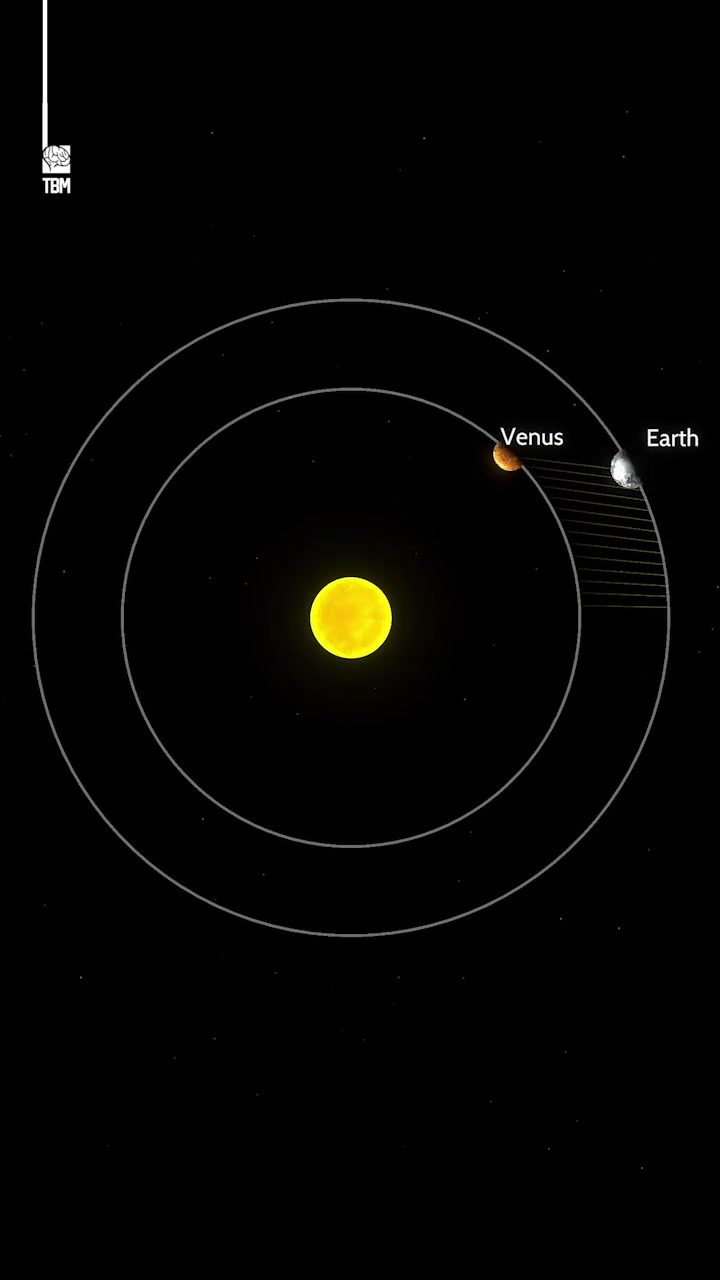
The Enchanting Science Behind the Earth-Venus Flower
The Earth-Venus Flower is a mesmerizing visual representation of the intricate dance between Earth and Venus as they orbit the sun. This cosmic pattern is not just a sight to behold but also a testament to the hidden geometry and celestial mechanics at play in our solar system. Created by TBM, the Earth-Venus Flower showcases the natural and beautiful patterns that emerge from the differences in orbital speeds between these two planets.
Why This Matters
Understanding the Earth-Venus Flower isn't just about appreciating its beauty; it's about grasping the fundamental principles of planetary motion and celestial geometry. By examining the patterns formed by these two planets, we can gain insights into the broader dynamics of our solar system. This visualization can inspire curiosity and a deeper appreciation for the natural world, encouraging further exploration into astronomy and related fields.
The Science Behind the Patterns
Orbital Dynamics
The Earth-Venus Flower is a direct result of the differences in orbital speeds between Earth and Venus. Venus orbits the sun at approximately 35 km/s, while Earth orbits at about 30 km/s. This slight difference creates a unique interplay where Venus appears to move faster, forming intricate and hypnotic patterns as seen from Earth.
The orbital period of Venus is approximately 225 Earth days, while Earth's is 365 days. This mismatch in orbital periods is a key factor in the formation of these patterns. Over time, the relative positions of the planets change, creating the cosmic bloom effect.
Celestial Geometry
The geometry of the solar system plays a crucial role in the formation of the Earth-Venus Flower. The planets' orbits are elliptical, but for simplicity, they can be approximated as circular. The key to understanding the pattern lies in the concept of synodic periods, which is the time it takes for one planet to return to the same position relative to another planet and the sun.
For Earth and Venus, the synodic period is about 584 days. This means that every 584 days, Venus and Earth return to roughly the same positions relative to each other. This periodic alignment contributes to the repetitive and mesmerizing patterns seen in the Earth-Venus Flower.
Simulating the Motion
TBM's custom-made orbital pattern generator is a powerful tool for simulating planetary motion and revealing the hidden geometry of our solar system. While the tool itself isn't available for sale or direct public use, the principles and visualizations that it generates are accessible for everyone to explore and create.
The generator allows users to input the orbital parameters of up to 9 planets, simulating their movements and interactions. This not only helps in understanding the Earth-Venus Flower but also in exploring more complex solar system formations and their underlying patterns.
Practical Tips for Exploring Orbital Patterns
Creating and exploring your own orbital art can be a deeply rewarding experience. Here are some practical tips to get you started:
-
Start with Basic Patterns: Begin by simulating the orbits of just two planets, such as Earth and Venus. Observe the patterns that emerge and note the differences in orbital speeds and periods.
-
Experiment with Multiple Planets: Gradually add more planets to your simulation. Seeing how three or more planets interact can reveal even more complex and beautiful patterns.
-
Adjust Orbital Parameters: Play around with different orbital speeds, periods, and eccentricities. This can lead to a wide variety of visual effects, each with its own unique aesthetic and scientific significance.
-
Use Real Data: Whenever possible, use real celestial data for your simulations. This ensures that the patterns you observe are grounded in reality and can be verified through astronomical observations.
-
Share Your Discoveries: Engage with the community by sharing your findings. Whether through social media, forums, or personal blogs, sharing your discoveries can inspire others and foster a deeper appreciation for celestial mechanics.
Important Takeaways
-
The Earth-Venus Flower is a real phenomenon: The patterns you see are not just artistic creations but real results of planetary motion. Understanding these patterns can provide deeper insights into the solar system.
-
Orbital speed and period matter: The differences in orbital speeds and periods between planets are crucial in forming these intricate patterns. Exploring these elements can help you create your own orbital art.
-
Simulations are a powerful tool: Using simulations to explore celestial mechanics can be both educational and enjoyable. Tools like TBM's orbital pattern generator make it easier to visualize and understand these patterns.
-
Explore and create: The beauty of celestial mechanics lies in its accessibility. Anyone can explore and create their own orbital art by understanding the basic principles and experimenting with different parameters.
Conclusion
The Earth-Venus Flower is a captivating visual representation of the celestial dance between Earth and Venus. By understanding the science behind these patterns, we can appreciate the beauty and complexity of our solar system. Whether you're a casual stargazer or a seasoned astronomer, exploring orbital patterns can provide endless hours of fascination and discovery. The tools and resources available today make it easier than ever to dive into the world of celestial mechanics and create your own orbital art. So, why not start your journey today and see where the stars take you?
Watch the Reel
Questions readers ask
What is the Earth-Venus Flower and how is it formed?
The Earth-Venus Flower is a visual pattern created by the orbital paths of Earth and Venus as they orbit the Sun. It is formed due to the differing speeds of the two planets, with Venus completing its orbit in about 225 Earth days. This difference in speed creates a mesmerizing, flower-like pattern when their positions are plotted over time.
What causes the Earth-Venus Flower to form?
The Earth-Venus Flower is a result of the differing orbital speeds of Earth and Venus. Venus orbits the Sun faster than Earth, completing about 1.6 orbits for every one orbit of Earth. This difference in speed causes the two planets to align in a repeating pattern, forming the distinct petals of the flower.
How does the Earth-Venus Flower demonstrate celestial mechanics?
The Earth-Venus Flower provides a clear visual representation of celestial mechanics, specifically Kepler's laws of planetary motion. It demonstrates how the planets' elliptical orbits and varying speeds result in predictable patterns. By studying this pattern, we can better comprehend the underlying principles of planetary motion.
Who created the Earth-Venus Flower pattern?
The Earth-Venus Flower pattern was created by TBM, who visualized the orbital paths of Earth and Venus to create the stunning flower-like pattern. This visualization helps to illustrate the complex dynamics of orbital motion in our solar system.
How often does the Earth-Venus Flower pattern repeat?
The Earth-Venus Flower pattern completes a full cycle approximately every 8 years. This is because Earth and Venus return to the same relative positions in their orbits approximately every 8 years, although the exact timing can vary slightly due to the planets' elliptical orbits.
Related deep dives
Similar reads based on topic and creator.

Recent articles
Fresh deep dives from the latest Reels we unpacked.




Comments
Be the first to comment.