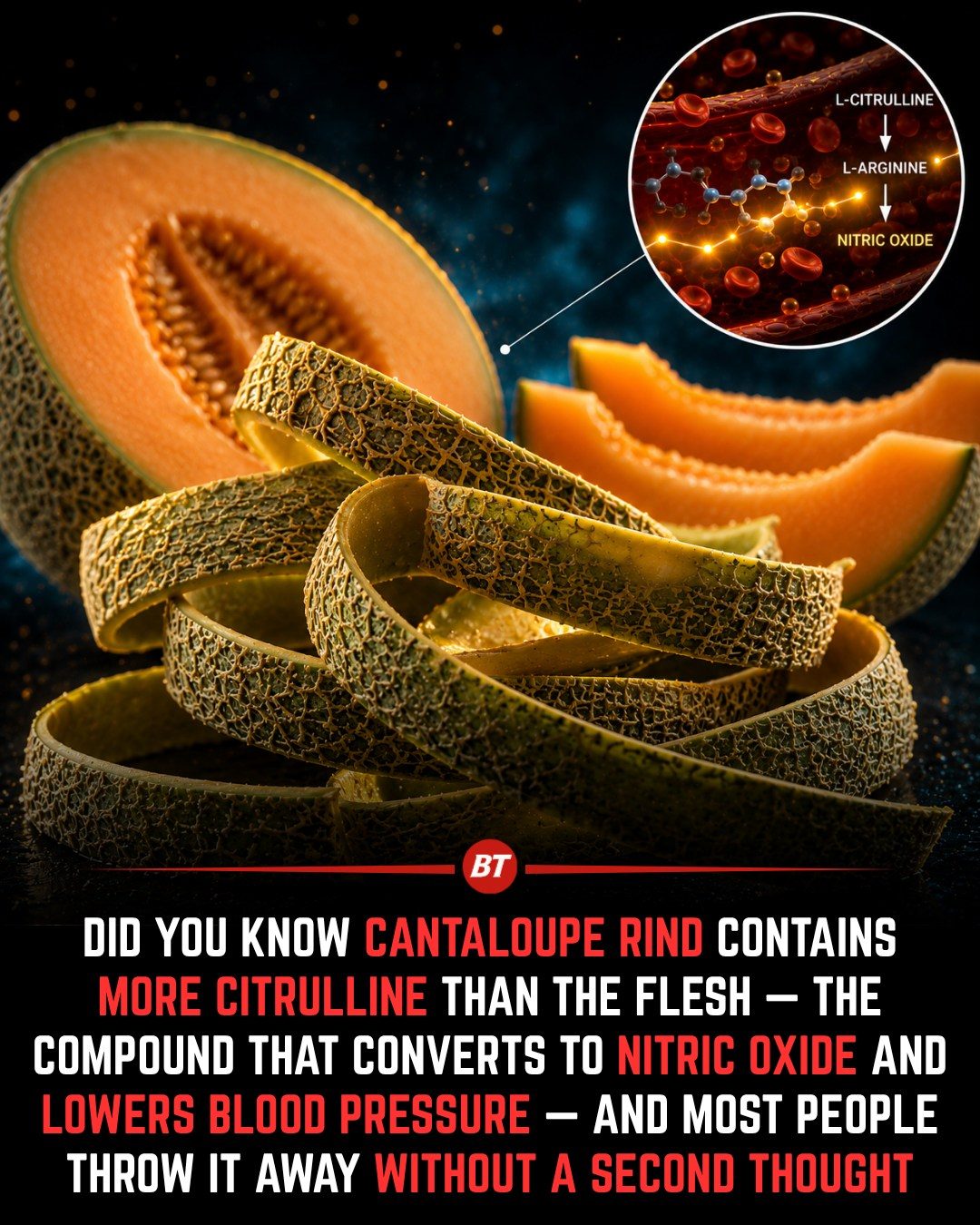
Cantaloupe Rind: A Nutritious Powerhouse Often Discarded
Cantaloupe, a popular summer melon, is often enjoyed for its sweet, juicy flesh. However, many people overlook the nutritional benefits hidden in the rind, which is typically discarded as food waste. The rind of a cantaloupe contains more citrulline than the flesh, an important amino acid with significant health benefits.
The Nutritional Value of Cantaloupe Rind
Citrulline is a naturally occurring amino acid found in various foods, including watermelon and cucumbers. In cantaloupe, the highest concentration of citrulline is found in the white layer just beneath the tough green skin. This layer is often discarded without realizing its nutritional value.
The kidneys convert citrulline into arginine, which the body then uses to produce nitric oxide. Nitric oxide plays a crucial role in relaxing and widening blood vessels, supporting healthy circulation, efficient blood flow, and normal cardiovascular function. This process is why citrulline has become a widely studied nutrient in sports nutrition and heart health.
Why Citrulline Matters
Citrulline's ability to convert into nitric oxide makes it a valuable compound for heart health. Nitric oxide helps lower blood pressure by relaxing and widening blood vessels, promoting better blood flow. This is particularly important for maintaining cardiovascular health and supporting overall well-being. Additionally, citrulline has been shown to improve exercise performance by enhancing muscle endurance and reducing fatigue.
Beyond Citrulline: Other Benefits of Cantaloupe Rind
The cantaloupe rind is not just a source of citrulline. It also contains fiber and beneficial plant compounds. Fiber is essential for digestive health, promoting regular bowel movements, and supporting a healthy gut microbiome. The plant compounds in the rind, such as antioxidants and phytochemicals, contribute to overall health by reducing inflammation and supporting the immune system.
Practical Tips for Incorporating Cantaloupe Rind
While the tough green outer skin of the cantaloupe is typically not eaten, the tender white portion can be safely used if the melon has been thoroughly washed. Here are some practical tips for incorporating cantaloupe rind into your diet:
-
Smoothies: Trim away the tough green skin and blend the white rind into your favorite smoothies. The rind can add a subtle sweetness and a nutritional boost to your drink.
-
Juicing: Juice the white rind along with other fruits and vegetables, such as cucumber and lime, for a refreshing and nutritious beverage.
-
Pickling: Pickle the white rind for a crisp, refreshing snack or garnish. This can be a flavorful way to incorporate more nutrients into your diet.
-
Soups and Stews: Add the white rind to soups and stews for added fiber and flavor. The rind can be chopped and cooked along with other vegetables for a hearty, nutritious meal.
Important Takeaways
- Nutritional Power: The white layer just beneath the cantaloupe rind contains more citrulline than the flesh, making it a valuable source of this important amino acid.
- Health Benefits: Citrulline converts into nitric oxide, which supports healthy circulation, efficient blood flow, and normal cardiovascular function.
- Reducing Waste: By incorporating the cantaloupe rind into your diet, you can reduce food waste and enhance the nutritional value of your meals.
- Versatility: The white rind can be used in various culinary applications, from smoothies and juices to pickles and soups.
Conclusion
Cantaloupe rind is often overlooked and discarded, but it contains valuable nutrients that support heart health and overall well-being. By incorporating the rind into your diet, you can reduce food waste and enjoy the nutritional benefits of citrulline, fiber, and beneficial plant compounds. Whether blended into smoothies, juiced, pickled, or added to soups, cantaloupe rind is a versatile and nutritious ingredient worth reconsidering.
Watch the Reel
Questions readers ask
Why should I consider consuming cantaloupe rind instead of just the flesh?
The rind of a cantaloupe contains higher levels of citrulline, an amino acid that is beneficial for heart health. The white layer just beneath the tough green skin is particularly rich in citrulline, making it a valuable part of the fruit to consume.
What is citrulline and how does it benefit heart health?
Citrulline is an amino acid found in cantaloupe rind that supports heart health by aiding in the production of nitric oxide. Nitric oxide helps to dilate blood vessels and promote healthy blood flow, which is crucial for maintaining cardiovascular health.
Can I consume the entire cantaloupe rind, or are there parts I should avoid?
While the tough green skin is not typically consumed, the white layer just beneath it is safe to eat and contains most of the beneficial citrulline. It's best to remove the green skin before consuming the rind to ensure a pleasant eating experience.
How can incorporating cantaloupe rind into my diet help reduce food waste?
By consuming the rind, you are reducing food waste since it is often discarded without being utilized. This not only benefits your health but also contributes to a more sustainable lifestyle.
What are some ways to prepare and consume cantaloupe rind?
Cantaloupe rind can be prepared in various ways, such as blending it into smoothies, juicing it, or adding it to salads. You can also pickle the rind or use it in soups and stews to incorporate its beneficial nutrients into your meals.
Is there a difference in citrulline content between cantaloupe rind and flesh?
Yes, the citrulline content is higher in the rind compared to the flesh. The white layer of the rind, in particular, contains a significant amount of citrulline, making it a more concentrated source of this beneficial amino acid.
What are the potential health benefits of consuming cantaloupe rind regularly?
Regular consumption of cantaloupe rind can contribute to better heart health and improved blood flow. Additionally, it helps you take advantage of the fruit's full nutritional content rather than discarding a significant portion of it.
Related deep dives
Similar reads based on topic and creator.




Recent articles
Fresh deep dives from the latest Reels we unpacked.




Comments
Be the first to comment.