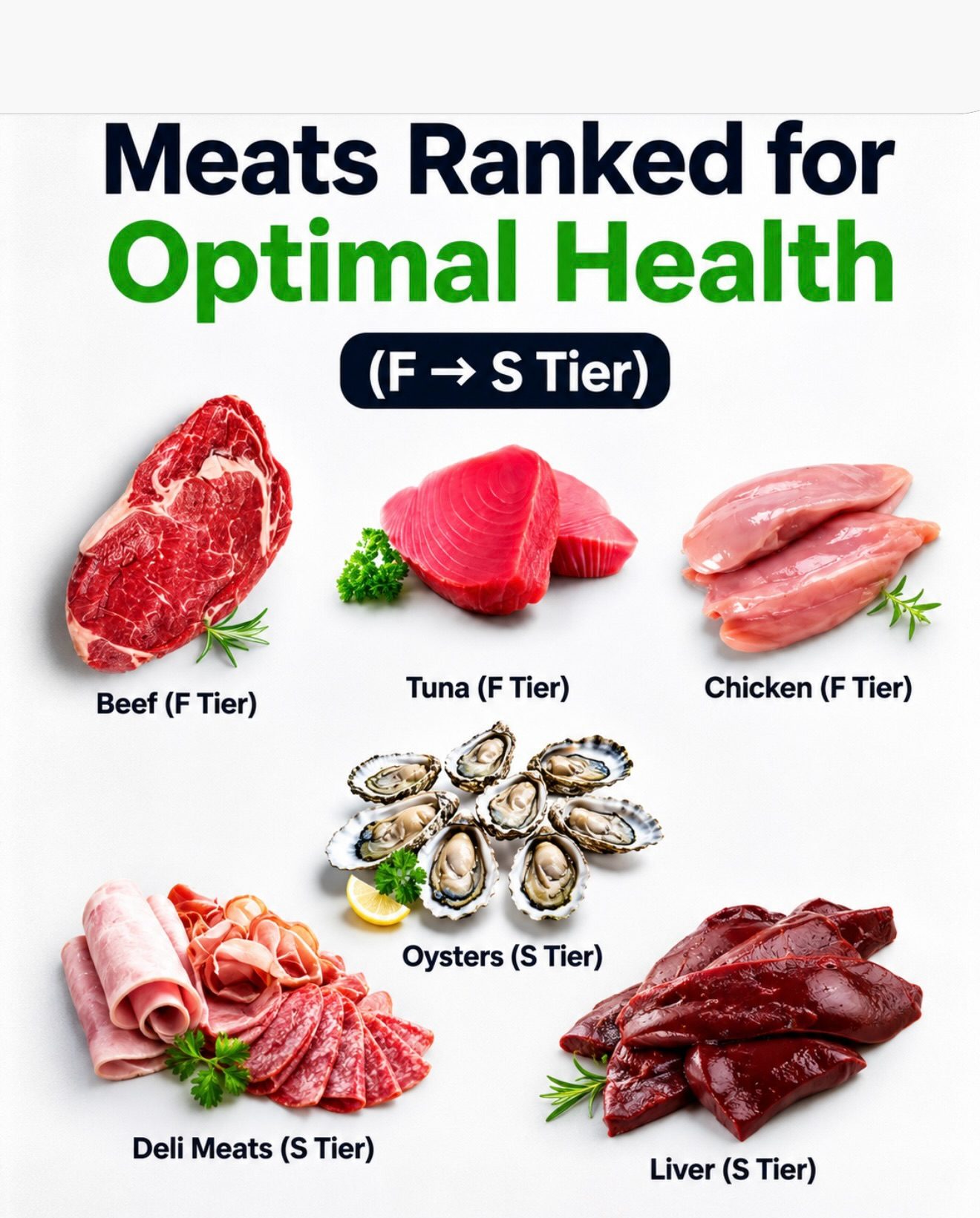
Meat Ranking for Health
Meat isn't just a staple in many diets; it's a powerhouse of nutrients that can significantly impact health. Understanding which meats offer the best nutritional benefits can help optimize your diet. Let's dive into a ranking of meats based on their health advantages, from nutrient density to overall health impact.
Why This Matters
Choosing the right meat can make a significant difference in your nutritional intake. While many people prioritize taste, considering the nutritional profile, bioavailability, omega-3 content, minerals, and overall health impact can lead to better dietary choices. This guide will help you understand which meats are the most beneficial and why.
Main Discussion
The S+ Tier: Nature's Multivitamins
At the top of the ranking are the S+ Tier meats, often referred to as nature's multivitamins. These include fatty grass-fed ruminant meat and ruminant liver. These meats are packed with highly bioavailable protein, heme iron, B12, zinc, and fat-soluble vitamins. They provide stable energy and incredible nutrient density, making them an excellent choice for those seeking a nutrient-dense diet.
Fatty grass-fed ruminant meat, such as beef, is rich in conjugated linoleic acid (CLA), which has been linked to various health benefits, including improved immune function and reduced inflammation. Grass-fed ruminant liver is another powerhouse, offering a concentrated dose of vitamins A, D, E, and K, as well as essential minerals like iron and copper.
The A+ Tier: Rich in Omega-3s
Next up are the A+ Tier meats, including wild-caught fatty fish and wild game meat. These meats are rich in omega-3 fatty acids, which are essential for brain and heart health. Wild-caught fatty fish, such as salmon and mackerel, are known for their high content of EPA and DHA, two types of omega-3s that support cognitive function and reduce the risk of heart disease.
Wild game meat, such as venison, elk, and deer, is also a standout choice. These meats are lean but nutrient-dense, with a cleaner fat profile and lower toxin load compared to conventionally raised meat. They are rich in iron, zinc, and B vitamins, making them an excellent source of essential nutrients.
The A Tier: Affordable and Underrated
The A Tier includes sardines and lean grass-fed ruminant meat. While not as nutrient-dense as the S+ and A+ Tiers, they are still highly beneficial. Sardines are a great source of omega-3 fatty acids and are more affordable than many other fatty fish. They are also a good source of calcium, thanks to their edible bones. Lean grass-fed ruminant meat, such as lean beef, is another affordable option that offers a good balance of protein and essential nutrients.
The S Tier: Nutrient Powerhouses
The S Tier includes oysters and ruminant heart. Oysters are one of the best sources of zinc on the planet, a mineral essential for immune function, wound healing, and protein synthesis. They are also rich in selenium, copper, iodine, and vitamin B12. Ruminant heart is another nutrient powerhouse, loaded with CoQ10, taurine, iron, and B vitamins. These meats are not only nutritious but also delicious, making them a great addition to any diet.
The F Tier: Lower Nutritional Value
The F Tier includes beef, tuna, and chicken. While these meats are still a good source of protein, they are lower in nutritional value compared to the higher tiers. Beef, for example, can be high in saturated fat, especially if it's not grass-fed. Tuna, while a good source of protein and omega-3s, can also be high in mercury, especially if it's not wild-caught. Chicken is a lean protein source but lacks the nutrient density of the higher-tier meats.
Practical Tips
Incorporating Nutrient-Dense Meats into Your Diet
- Choose Grass-Fed and Wild-Caught: Whenever possible, opt for grass-fed ruminant meat and wild-caught fish. These are generally more nutrient-dense and have a cleaner fat profile.
- Vary Your Protein Sources: Incorporate a variety of meats into your diet to ensure you're getting a broad range of nutrients.
- Cooking Methods Matter: Choose healthy cooking methods like grilling, baking, or slow cooking to preserve the nutritional content of your meats.
- Consider Organ Meats: Organ meats like liver and heart are incredibly nutrient-dense and can be a great addition to your diet.
Using the Workit App
The Workit app is a valuable tool for tracking your nutrient intake and ensuring you're meeting your daily goals. With features like calorie and macro tracking, as well as data-driven nutrition insights, it can help you optimize your diet for better health.
Important Takeaways
- Different meats offer varying levels of nutritional benefits.
- Grass-fed ruminant meat and wild game meat are among the most nutrient-dense options.
- Wild-caught fatty fish and sardines are excellent sources of omega-3 fatty acids.
- Oysters and ruminant heart are packed with essential minerals and vitamins.
- The overall health impact of meat goes beyond its nutritional content, so consider your broader diet and lifestyle.
Conclusion
Ranking meats by their health benefits provides a clear look at which options offer the most nutritional value. From the nutrient-dense S+ Tier meats to the affordable and underrated A Tier, incorporating a variety of meats into your diet can help you achieve optimal health. By choosing the right meats and using tools like the Workit app, you can make informed decisions about your nutritional intake and support your overall well-being.
Watch the Reel
Questions readers ask
What are the top tier meats for a balanced diet?
The top tier meats, often referred to as 'Nature's Multivitamins,' are rich in nutrients, healthy fats, and minerals. These include wild-caught fatty fish like salmon and sardines, grass-fed ruminant meats, and organ meats. They are packed with essential vitamins, minerals, and omega-3 fatty acids, making them excellent choices for a balanced diet.
How do wild-caught fatty fish rank in terms of health benefits?
Wild-caught fatty fish, such as salmon and mackerel, are among the healthiest meats due to their high content of omega-3 fatty acids, which are beneficial for heart health and brain function. They also provide a good balance of protein and essential minerals, making them a top choice for those looking to enhance their nutritional intake.
What are the benefits of choosing grass-fed ruminant meats over conventional meats?
Grass-fed ruminant meats, like beef and lamb, offer several health advantages. They tend to have a better ratio of omega-3 to omega-6 fatty acids compared to grain-fed meats. This can help in reducing inflammation and promoting overall health. Additionally, they often contain higher levels of certain vitamins and antioxidants.
Are lean meats a good option for those focused on protein intake?
Lean meats, such as chicken breast and turkey, are excellent sources of high-quality protein. They are lower in fat compared to fatty meats, making them a good option for those looking to manage their fat intake while still getting adequate protein. However, it's important to note that lean meats may not provide the same level of healthy fats and certain vitamins as fatty meats.
What makes oysters a notable addition to a healthy diet?
Oysters are highly nutritious, packing a significant amount of zinc, iron, and vitamin B12 into a small serving. These nutrients are essential for immune function, blood health, and energy production. Oysters also contain healthy fats and proteins, making them a valuable addition to a balanced diet.
Why are game meats often considered healthier than conventionally farmed meats?
Game meats, such as venison and bison, are typically leaner and have a better nutrient profile compared to conventionally farmed meats. They are often lower in calories and saturated fats while being higher in certain vitamins and minerals. Game meats are also less likely to contain additives and antibiotics, making them a cleaner option for consumption.
How do fatty meats compare to lean meats in terms of nutrition?
Fatty meats, like fatty cuts of beef and pork, contain more calories and saturated fats than lean meats, but they also provide essential nutrients like vitamin D, vitamin B12, and omega-3 fatty acids. These nutrients are crucial for overall health and are often lacking in leaner protein sources. Therefore, it's beneficial to include a mix of lean and fatty meats in your diet to balance nutrient intake.
Recent articles
Fresh deep dives from the latest Reels we unpacked.




Comments
Be the first to comment.