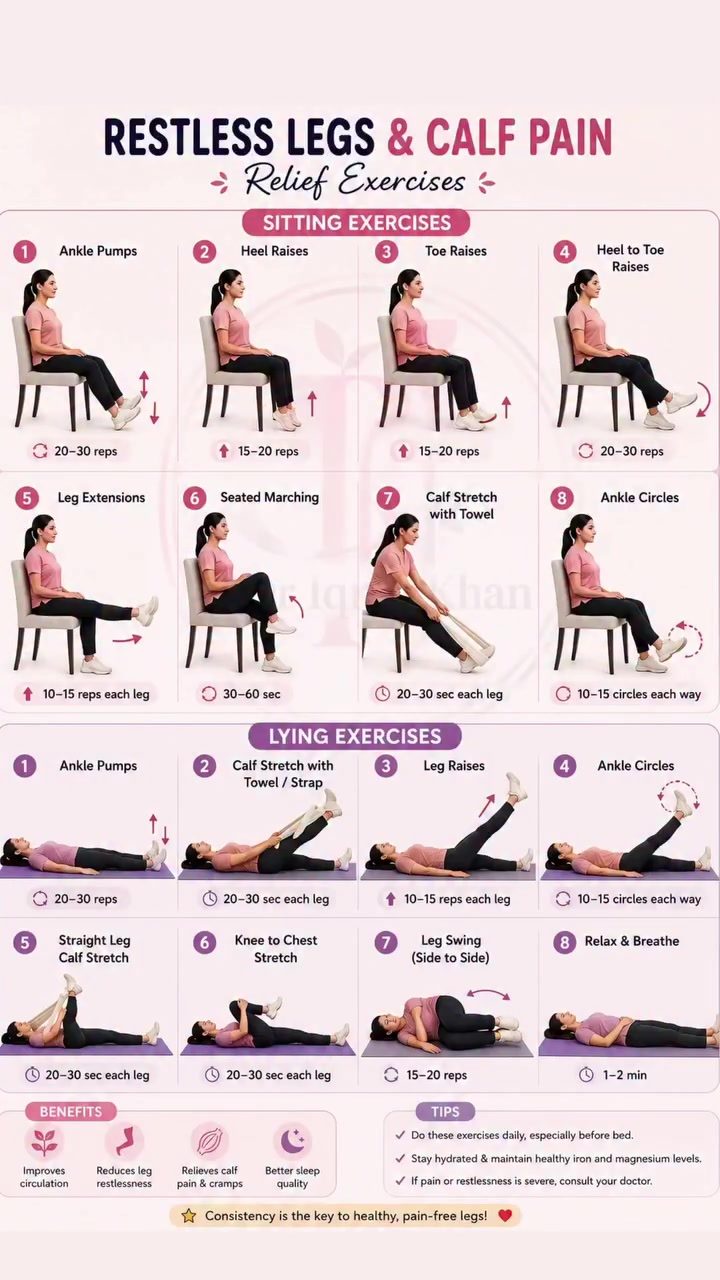
Restless legs and calf pain can be incredibly disruptive, especially when they interfere with sleep. These symptoms can have various causes, including poor circulation, muscle stiffness, and nutritional deficiencies. Fortunately, there are several exercises that can help alleviate these issues and promote better sleep.
Why This Matters
Restless leg syndrome (RLS) and calf pain are common complaints that can significantly impact daily life and sleep quality. Addressing these issues through targeted exercises can improve overall well-being, reduce discomfort, and enhance sleep patterns. Consistent practice of these exercises, along with maintaining healthy habits, can mitigate the symptoms effectively.
Main Discussion
Restless leg syndrome and calf pain relief exercises can be categorized into two main groups: sitting exercises and lying exercises. Each type targets different muscle groups and offers various benefits.
Sitting Exercises
Sitting exercises are particularly useful for improving circulation and reducing stiffness during the day. Here are some key exercises to try:
- Ankle Pumps: Sit at the edge of a chair and extend your legs. Pump your ankles up and down by flexing your feet towards your knees and then pointing your toes away. Do 20-30 repetitions.
- Heel Raises: Sit on a chair and lift your heels off the ground while keeping your toes on the floor. Lower your heels back down and repeat for 15-20 reps.
- Toe Raises: Sit and flex your toes towards your shins, then release and repeat. Aim for 15-20 reps.
- Heel to Toe Raises: Sit on a chair and lift your heels off the ground, then lift your toes. Lower everything back down and repeat 20-30 times.
- Leg Extensions: Sit and extend one leg out straight while keeping the other bent. Hold for 20-30 seconds, then switch legs and repeat.
- Seated Marching: Sit and lift your knees one at a time as if marching, repeating for 20-30 reps.
- Calf Stretch with Towel: Sit with one leg extended and loop a towel around the ball of your foot. Pull the towel gently to stretch your calf. Hold for 20-30 seconds and repeat on the other leg.
- Ankle Circles: Sit and lift one foot off the ground. Make circles with your ankle in both directions, repeating 10-15 times each way.
Lying Exercises
Lying exercises are excellent for relieving tension and promoting relaxation, making them ideal before bed:
- Leg Raises: Lie on your back and lift both legs slowly, keeping them straight. Lower them back down and repeat for 20-30 reps.
- Ankle Circles: Lie on your back and lift one foot off the ground. Make circles with your ankle in both directions, repeating 10-15 times each way.
- Straight Leg Calf Stretch: Lie on your back and extend one leg straight up, keeping the other leg flat on the ground. Bend the extending leg at the knee and pull it towards your chest with your hands. Hold for 20-30-60 seconds and repeat with the other leg.
- Knee to Chest Stretch: Lie on your back and pull one knee towards your chest, holding it with your hands. Hold for 20-30 seconds and repeat on the other side.
- Leg Swing (Side to Side): Lie on your back and lift one leg straight up, then swing it side to side like a pendulum. Repeat for 10-15 reps each leg.
- Relax and Breathe: Lie on your back, relax your body, and focus on taking slow, deep breaths. Hold for 1-2 minutes.
Practical Tips
To maximize the benefits of these exercises, follow these practical tips:
- Consistency: Incorporate these exercises into your daily routine, especially before bed. Consistency is key to maintaining healthy, pain-free legs.
- Hydration and Nutrition: Stay hydrated and ensure you have adequate levels of iron and magnesium. These nutrients are crucial for muscle health and can help alleviate symptoms of restless legs and calf pain.
- Professional Consultation: If your symptoms are severe, persistent, or regularly affecting your sleep, consult a healthcare provider. They can offer additional guidance and rule out any underlying conditions.
Important Takeaways
- Routine exercise can significantly improve circulation and reduce symptoms of restless leg syndrome and calf pain.
- Daily practice of sitting and lying exercises can enhance sleep quality and overall well-being.
- Maintaining hydration and adequate iron and magnesium levels is essential for muscle health.
- Consult a healthcare provider if symptoms are severe or persist.
Conclusion
Restless legs and calf pain can be managed effectively with the right exercises and healthy habits. By incorporating both sitting and lying exercises into your daily routine, you can improve circulation, reduce discomfort, and achieve better sleep. Remember to stay hydrated, monitor your iron and magnesium levels, and seek professional advice if needed. These simple steps can make a world of difference in your comfort and quality of life.
Watch the Reel
Questions readers ask
What are some effective exercises for restless leg syndrome?
Effective exercises for restless leg syndrome include seated leg extensions, ankle rolls, and toe curls. These exercises help stretch and strengthen the leg muscles, promoting better circulation and reducing discomfort. Perform these exercises while sitting or lying down for maximum benefit.
How can calf stretches help with calf pain relief?
Calf stretches target the muscles in the back of the lower leg, helping to alleviate pain and improve flexibility. Simple calf stretches, such as standing calf raises or seated calf stretches, can be done easily at home. Regular stretching can reduce muscle stiffness and improve overall leg function.
What are some ankle exercises that can benefit restless legs and calf pain?
Ankle exercises like ankle circles and ankle pumps help to improve circulation and relieve stiffness in the lower legs. These exercises are easy to perform while sitting or lying down, making them convenient for those experiencing discomfort. Regular ankle exercises can enhance mobility and reduce pain.
Can seated leg exercises improve sleep quality?
Yes, seated leg exercises can help improve sleep quality by reducing restless leg symptoms. Exercises like seated leg lifts and knee-to-chest poses can alleviate discomfort and promote relaxation. Incorporating these exercises into a daily routine may lead to fewer leg sensations and better sleep.
What are some of the best leg pain relief exercises for those with restless legs and calf pain?
Some of the best exercises for leg pain relief include leg swings, calf raises, and leg rolls. These exercises target various muscle groups in the legs, promoting better circulation and reducing discomfort. Consistent practice of these exercises can help manage symptoms and improve overall well-being.
How can I perform leg pain exercises while sitting?
Leg pain exercises that can be done while sitting include seated leg extensions, seated calf raises, and toe curls. These exercises are designed to be gentle and effective, making them suitable for those with discomfort or limited mobility. Perform these exercises slowly and gently to avoid strain and maximize relief.
How do exercises for restless legs and calf pain relief work?
These exercises work by promoting better circulation, reducing muscle stiffness, and alleviating discomfort. They target specific muscle groups, helping to improve flexibility and mobility. Regular practice of these exercises can lead to significant relief from restless leg symptoms and calf pain, enhancing overall well-being and sleep quality.
Recent articles
Fresh deep dives from the latest Reels we unpacked.




Comments
Be the first to comment.