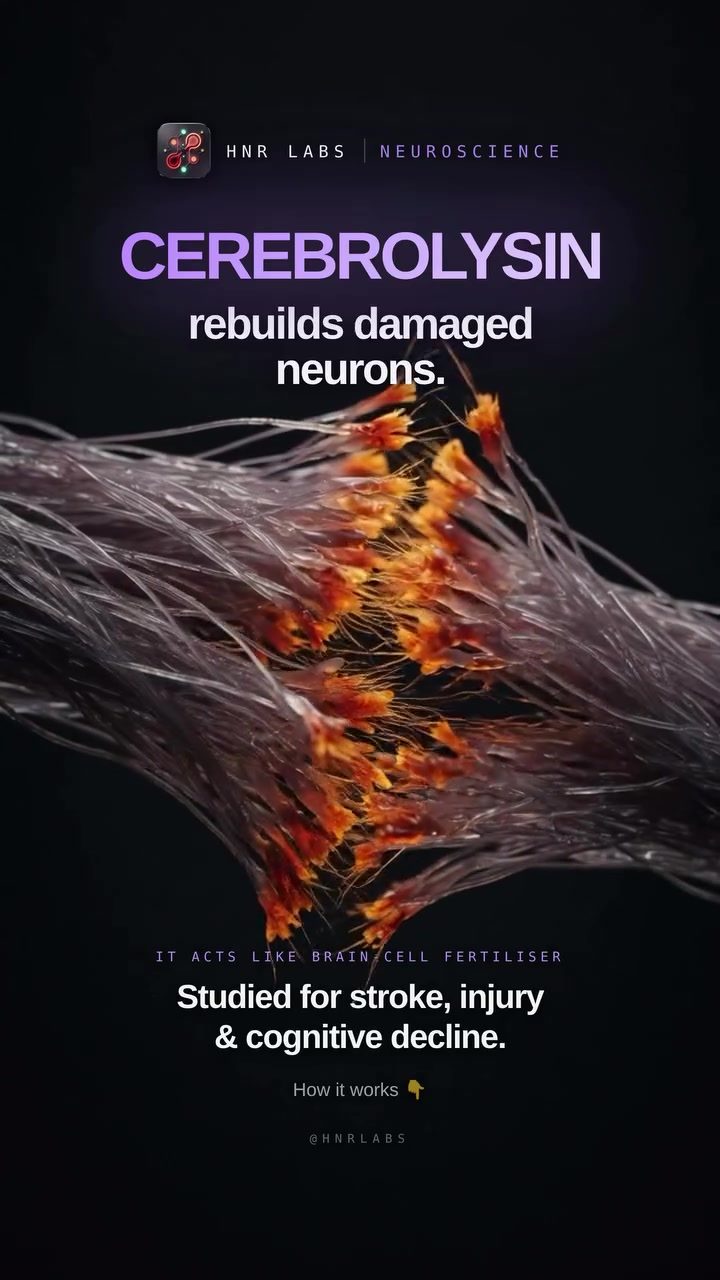
Brain Cell Regeneration with Cerebrolysin
Brain cells, unlike skin or muscle, don't typically regenerate when damaged. This poses a significant challenge, especially in cases of stroke, traumatic brain injury, and neurodegenerative decline, which can leave lasting deficits. One of the few substances studied to help brain cells recover is Cerebrolysin, a mix of small peptides and amino acids derived from brain proteins. This compound is designed to mimic the body's own neurotrophic factors, which are the natural "growth signals" that keep neurons alive, protect them from damage, and help them form new connections. Essentially, it acts as a brain-cell fertilizer.
Why This Matters
The brain's limited ability to repair itself is a major hurdle in treating conditions like stroke, traumatic brain injuries, and dementia. Cerebrolysin offers a promising avenue by protecting neurons under stress, supporting their survival, and encouraging the growth of new connections. This capability makes it a focal point in research spanning stroke recovery, traumatic brain injury, dementia, and cognitive decline.
Main Discussion
Understanding Cerebrolysin
Cerebrolysin is a unique compound composed of small peptides and amino acids. These components are derived from brain proteins, which gives the compound its distinctive properties. What sets Cerebrolyn apart is its ability to mimic the body's neurotrophic factors. These factors are crucial for the survival and growth of neurons, and Cerebrolysin’s ability to replicate them makes it a powerful tool in neuroscience.
How It Works
The brain's natural neurotrophic factors are essential for neuronal health and growth. These factors help keep neurons alive, protect them from damage, and facilitate the formation of new connections. Cerebrolysin mimics these factors, acting as a brain-cell fertilizer. By doing so, it supports the survival of neurons under stress, helps them form new connections, and even encourages the growth of new neurons. This process is particularly important in cases where brain damage has occurred, as it allows the brain to reroute around the damaged areas.
Applications and Research
Cerebrolysin has been extensively studied for its potential in various neurological conditions. Research indicates that it has applications in:
- Stroke Recovery: Cerebrolysin has been studied for its ability to aid in recovery from strokes by protecting neurons and promoting the formation of new connections.
- Traumatic Brain Injury: The compound is also being investigated for its potential to help patients recover from injuries, including those that result in cognitive decline.
- Dementia and Cognitive Decline: Studies have explored its role in mitigating the effects of dementia and cognitive decline, offering hope for improving the quality of life for patients.
Practical Tips
While Cerebrolysin shows promise, it's important to approach it with a balanced perspective. Here are some practical tips for those interested in learning more about it:
- Consult a Healthcare Professional: Before considering any new supplement or treatment, it's crucial to consult with a healthcare provider. They can provide personalized advice based on your medical history and current health condition.
- Stay Informed: Keep up-to-date with the latest research on Cerebrolysin. The field of neuroscience is rapidly evolving, and new findings are continually emerging.
- Be Aware of Controversies: While Cerebrolysin shows promising results, it is not without controversy. Some studies have yielded mixed results, and its effectiveness can vary depending on the individual and the specific condition being treated.
Important Takeaways
Cerebrolysin stands out as one of the few compounds aimed directly at helping the brain repair itself. Its unique composition and ability to mimic the body's natural neurotrophic factors make it a fascinating subject in the field of neuroscience. Research into its applications for stroke recovery, traumatic brain injury, and cognitive decline highlights its potential to improve outcomes for patients with these conditions. However, it is essential to approach this topic with a critical eye, considering both the promising results and the controversies surrounding its use.
Conclusion
Cerebrolysin offers a promising approach to brain cell regeneration, particularly in cases where the brain's natural repair mechanisms fall short. Its ability to mimic the body's neurotrophic factors and support neuronal growth and survival makes it a valuable subject of study. As research continues, there is hope that Cerebrolysin could play a significant role in improving outcomes for patients with neurological conditions.
Watch the Reel
Questions readers ask
What is Cerebrolysin and how does it work?
Cerebrolysin is a mixture of small peptides and amino acids that mimics the body's neurotrophic factors, which are natural brain growth signals. It helps to keep neurons alive, protect them from damage, and encourage them to form new connections, thereby aiding in the regeneration of brain cells.
Can Cerebrolysin help with stroke recovery?
Yes, Cerebrolysin shows promise in aiding stroke recovery. By protecting neurons and promoting their regeneration, it can help mitigate the lasting deficits often caused by strokes. It does this by mimicking natural neurotrophic factors, which are crucial for brain cell repair and growth.
How does Cerebrolysin assist in treating traumatic brain injuries?
Cerebrolysin can help treat traumatic brain injuries by protecting existing brain cells and fostering the growth of new neurons. This can potentially reduce the long-term effects of such injuries, as it actively promotes brain cell regeneration and recovery.
What are the benefits of Cerebrolysin for dementia patients?
Cerebrolysin may slow the progression of dementia by promoting the survival and growth of neurons. It achieves this by mimicking natural brain growth signals, which helps to protect brain cells from damage and encourages them to form new connections.
What makes Cerebrolysin different from other treatments?
Unlike many other treatments, Cerebrolysin is designed to mimic the body's own neurotrophic factors, making it a unique approach to brain cell protection and regeneration. It specifically targets brain cells, protecting them from damage and encouraging new growth, which is crucial for conditions like stroke, traumatic brain injuries, and dementia.
Are there any side effects associated with Cerebrolysin?
Cerebrolysin is generally well-tolerated, but like any medication, it can have side effects. Common side effects may include headaches, dizziness, and minor changes in blood pressure. It's important to consult with a healthcare provider for personalized advice.
How is Cerebrolysin administered?
Cerebrolysin is typically administered via intravenous (IV) infusion. The dosage and frequency of administration can vary depending on the specific condition being treated and the individual patient's needs, so it should be determined by a qualified healthcare professional.
Related deep dives
Similar reads based on topic and creator.

Recent articles
Fresh deep dives from the latest Reels we unpacked.




Comments
Be the first to comment.