Your Calf Muscles: Your Body’s Second Heart
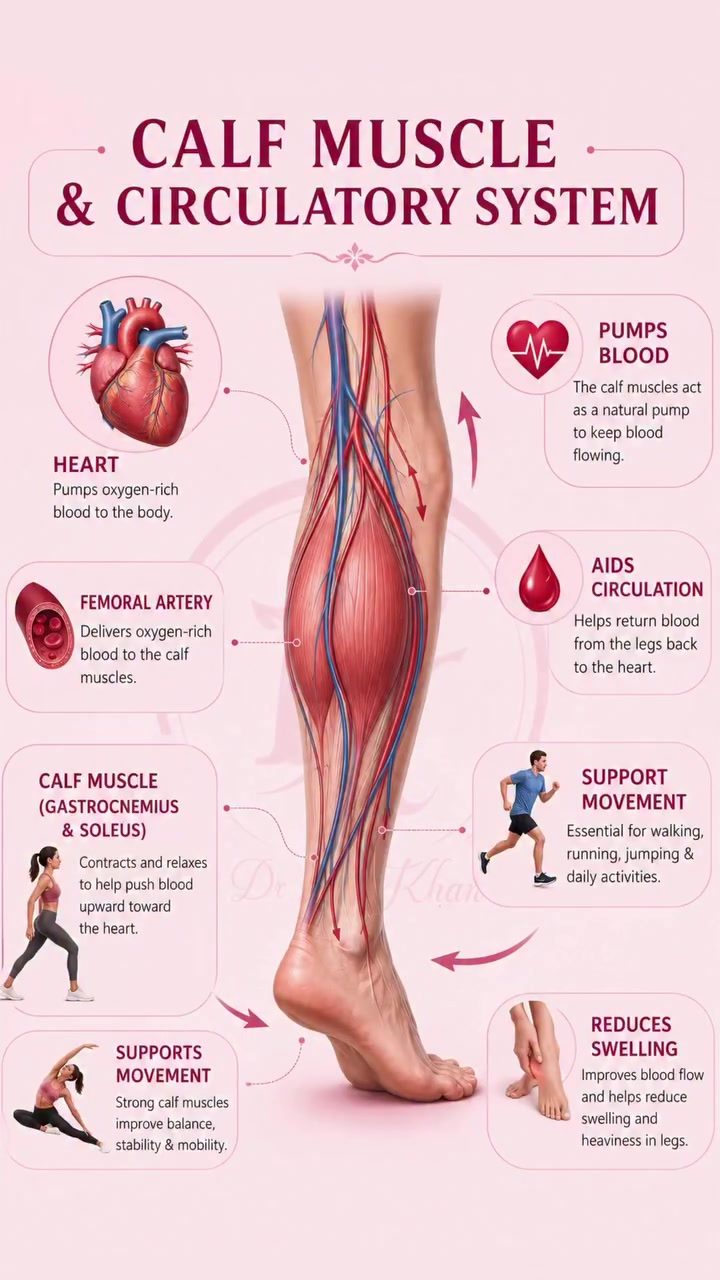
Calf muscles, specifically the gastrocnemius and soleus, are more than just the muscles that help you walk or run. They play a crucial role in your circulatory system, acting as a natural pump to keep blood flowing from your legs back to your heart. Understanding this function can help you appreciate the importance of maintaining strong calf muscles for overall health and mobility.
Context / Why This Matters
The calf muscles are composed of two main muscles: the gastrocnemius and the soleus. Together, these muscles are involved in various activities such as walking, running, and jumping. What many people may not realize is that these muscles also play a significant role in the circulatory system. Every step you take helps to improve circulation, reduce swelling, and support healthy blood flow. This makes strong calf muscles essential for overall health and well-being.
The Role of Calf Muscles in Circulation
How Calf Muscles Aid in Circulation
The calf muscles act as a natural pump, helping to push blood back up to the heart. This is particularly important for people who stand or sit for long periods, as it helps to prevent blood from pooling in the legs. The process involves the calf muscles contracting and relaxing, which helps to push blood upward toward the heart. This action is crucial for maintaining healthy blood flow and preventing issues like varicose veins and deep vein thrombosis.
The Circulatory Pathway
The circulatory pathway involving the calf muscles starts at the heart, which pumps blood through the femoral artery down to the legs. The blood delivers oxygen and nutrients to the calf muscles, which then contract and relax to push the blood back up toward the heart. This continuous cycle is essential for keeping blood flowing efficiently throughout the body.
Benefits of Strong Calf Muscles
Improved Venous Blood Circulation
Strong calf muscles significantly improve venous blood circulation. This means that blood is more efficiently returned to the heart, reducing the risk of circulatory issues. Improved circulation also helps to deliver oxygen and nutrients to the muscles more effectively, enhancing overall muscle performance.
Enhanced Daily Movement
Strong calf muscles support a wide range of daily activities, including walking, running, and jumping. They provide the necessary power and stability for these movements, making daily tasks easier and more efficient. Additionally, strong calf muscles improve balance and stability, reducing the risk of falls and injuries.
Reduced Swelling and Heaviness in Legs
One of the key benefits of strong calf muscles is their ability to help reduce swelling and heaviness in the legs. By acting as a natural pump, these muscles help to push blood upward, preventing it from pooling in the lower extremities. This is particularly beneficial for individuals who spend long hours standing or sitting, as it helps to alleviate discomfort and promote better leg health.
Assistance to the Heart
Because the calf muscles aid in returning blood to the heart, they effectively assist the heart in maintaining healthy circulation. This reduces the workload on the heart, contributing to overall cardiovascular health. By improving blood return from the legs, strong calf muscles help to maintain efficient circulation, which is essential for overall cardiovascular function.
Practical Tips for Maintaining Healthy Calf Muscles
Regular Exercises
Regular calf raises, ankle pumps, and walking can help keep your circulation healthy. These exercises not only strengthen the calf muscles but also improve their ability to act as an effective pump for blood flow.
- Calf Raises: Stand on the edge of a step or raised platform and lower your heels down, then push up onto your toes. Repeat for several sets.
- Ankle Pumps: Sit or lie down and flex your ankles by pointing your toes toward your shins, then relax. This exercise helps to improve circulation and strengthen the muscles.
- Walking: Regular walking is one of the best exercises for maintaining healthy calf muscles and overall circulation.
Stretching
Incorporating stretching exercises into your routine can help improve the flexibility and strength of your calf muscles. This can also help to reduce the risk of injury and improve overall mobility.
- Calf Stretches: Stand facing a wall and place your hands on the wall at shoulder height. Extend one leg behind you, keeping the heel on the ground, and lean forward until you feel a stretch in your calf. Hold for 20-30 seconds, then switch legs.
- Downward-Facing Dog: This yoga pose stretches the calf muscles and improves overall flexibility. Start on your hands and knees, then lift your hips toward the ceiling, forming an inverted V-shape with your body.
Important Takeaways
- Calf muscles act as a natural pump: They help to push blood back up to the heart, which is crucial for maintaining healthy circulation.
- Strong calf muscles improve mobility: They enhance balance, stability, and the ability to perform daily activities.
- Regular exercise and stretching: These are essential for maintaining healthy calf muscles and overall circulation.
Conclusion
The role of calf muscles in the circulatory system is often underestimated. By acting as a natural pump, these muscles help to keep blood flowing efficiently, reduce swelling, and support daily activities. Maintaining strong calf muscles through regular exercise and stretching can significantly improve overall health and mobility. Whether you're an athlete or someone who spends long hours standing or sitting, taking care of your calf muscles is essential for maintaining healthy circulation and overall well-being.
Watch the Reel
Questions readers ask
What are the primary functions of the calf muscles in the body?
The calf muscles, specifically the gastrocnemius and soleus, play a crucial role in various activities such as walking, running, and jumping. Additionally, they act as a natural pump to enhance blood flow from the legs back to the heart, improving overall circulation and supporting heart health.
How do strong calf muscles benefit heart health?
Strong calf muscles help to improve circulation, which in turn reduces the workload on the heart. By acting as a natural pump, they facilitate better blood flow from the legs to the heart, which can help prevent issues like varicose veins and promote better overall cardiovascular health.
Which calf muscles are most important for maintaining good leg circulation?
Both the gastrocnemius and soleus muscles are essential for maintaining good leg circulation. The soleus muscle, in particular, is active even when you are standing still, making it a key player in continuous blood flow. The gastrocnemius comes into play during activities like walking and running, further enhancing circulation.
What are some effective exercises to strengthen the calf muscles and improve blood flow?
To strengthen your calf muscles and improve blood flow, focus on exercises that target both the gastrocnemius and soleus. Some of the best exercises include calf raises, both seated and standing, as well as activities like walking uphill and jumping rope. These exercises help to build muscle strength and endurance, promoting better circulation.
How do calf muscles help to prevent issues like varicose veins?
Calf muscles help to prevent issues like varicose veins by acting as a natural pump to improve circulation. When you have strong calf muscles, they contract and relax with each step, facilitating the return of blood from the legs to the heart. This continuous pumping action reduces the risk of blood pooling in the veins, which can lead to varicose veins.
Can strengthening the calf muscles help reduce leg swelling?
Yes, strengthening the calf muscles can significantly reduce leg swelling. Strong calf muscles improve blood flow and lymphatic drainage, helping to reduce the accumulation of fluids in the legs. This is particularly beneficial for individuals who stand or sit for long periods, as it helps to minimize swelling and discomfort.
What are the daily benefits of maintaining strong calf muscles?
Maintaining strong calf muscles offers numerous daily benefits, including improved mobility, better circulation, and enhanced overall health. Strong calves support daily activities like walking and running, reduce the risk of leg discomfort, and promote better blood flow, which can lead to improved heart health and reduced swelling in the legs.
Recent articles
Fresh deep dives from the latest Reels we unpacked.




Comments
Be the first to comment.