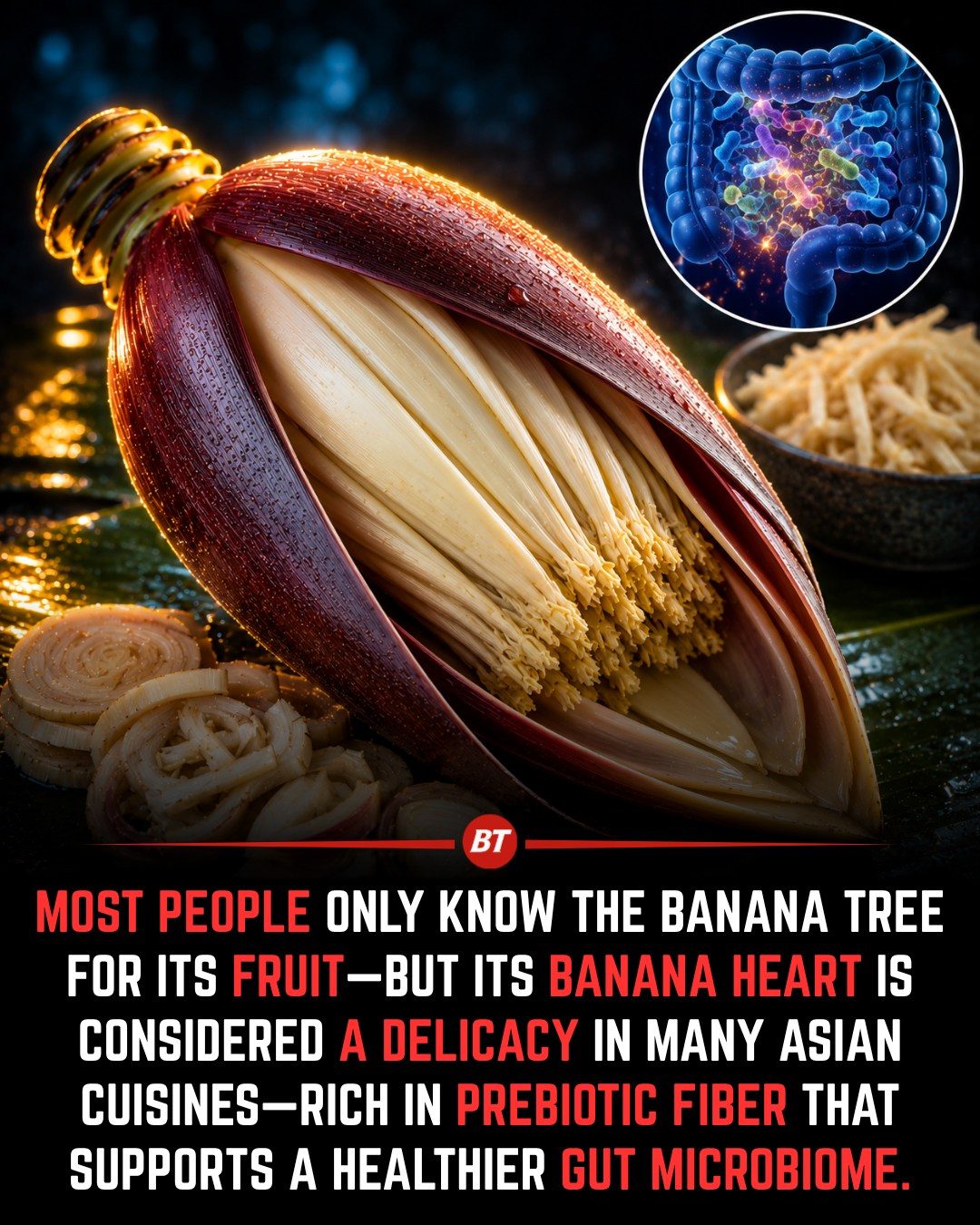
Banana Heart: A Nutritious Delicacy from Asian Cuisines
Banana heart, a delicacy in many Asian cuisines, is often overlooked despite its rich nutritional profile. This large purple flower, also known as the banana blossom, grows at the tip of a banana cluster. It is a staple in traditional dishes across the Philippines, Thailand, India, Vietnam, and Sri Lanka.
Why This Matters
Beyond its unique flavor and texture, the banana heart is naturally rich in dietary fiber, including prebiotic fibers. These fibers nourish the beneficial bacteria living in the digestive tract, promoting a healthier gut microbiome. As these microbes ferment the fiber, they produce short-chain fatty acids such as butyrate, which help maintain the intestinal lining, support immune function, and promote overall gut health.
Culinary Uses and Nutritional Benefits
Culinary Uses
Banana heart is versatile and can be used in a variety of dishes. In many Asian cuisines, it is a key ingredient in soups, curries, stir-fries, and fresh salads. Its delicate flavor and firm texture make it a great addition to both savory and spicy dishes.
Nutritional Benefits
Banana heart is packed with essential nutrients. It provides vitamin C, potassium, and magnesium, which are crucial for overall health. Additionally, it contains protective plant compounds such as flavonoids and polyphenols. These compounds help defend cells against oxidative stress, contributing to better health and wellness.
The Health Benefits of Prebiotic Fiber
Prebiotic fibers in the banana heart play a vital role in maintaining a healthy gut microbiome. As the prebiotic fibers ferment in the gut, they produce short-chain fatty acids. These acids, including butyrate, help maintain the intestinal lining, support immune function, and promote a healthier gut environment. This process is essential for both digestive health and overall wellness.
How to Prepare Banana Heart
Preparing banana heart requires a few simple steps to ensure the best flavor and texture.
- Remove the Outer Bracts: Start by removing the tough outer bracts of the banana heart. This will reveal the tender inner flower.
- Slice the Inner Flower: Once the outer bracts are removed, carefully slice the tender inner flower into desired pieces.
- Soak in Lemon Juice: To reduce browning, soak the sliced banana heart in water with a bit of lemon juice for a short period. This step helps maintain the vibrant color and freshness.
- Cooking: After soaking, you can add the banana heart to your favorite dishes. It pairs well with curries, coconut milk dishes, stir-fries, and fresh salads, providing a fiber-rich addition to any meal.
Practical Tips for Incorporating Banana Heart into Your Diet
- Experiment with Flavors: Try different recipes to find the flavors and textures that best suit your palate. From sweet and spicy curries to tangy stir-fries, the banana heart offers a delightful culinary journey.
- Combine with Other Nutritious Ingredients: Pair banana heart with other nutrient-dense ingredients to boost the nutritional value of your meals. For example, add it to a salad with leafy greens, nuts, and seeds.
- Store Properly: If you have leftover banana heart, store it in an airtight container in the refrigerator. This will help maintain its freshness and prevent browning.
Important Takeaways
- Versatile Ingredient: Banana heart is a versatile ingredient that can be used in various dishes, from soups and curries to stir-fries and salads.
- Rich in Prebiotic Fiber: The prebiotic fibers in banana heart support a healthy gut microbiome, which is crucial for digestive health and overall wellness.
- High in Nutrients: This delicacy is packed with essential nutrients, including vitamin C, potassium, magnesium, and protective plant compounds.
- Easy to Prepare: With a few simple steps, you can prepare and incorporate banana heart into your meals, adding both flavor and nutritional value.
Conclusion
The banana heart is a hidden gem in the world of culinary delights and nutritious foods. Its rich nutritional profile, combined with its versatility in the kitchen, makes it a valuable addition to any diet. By incorporating banana heart into your meals, you can enjoy its unique flavor and texture while reaping the benefits of a healthier gut and overall improved nutrition.
Watch the Reel
Questions readers ask
What are the key nutrients found in banana heart?
Banana heart is packed with essential nutrients, including dietary fiber, vitamin C, potassium, and magnesium. These nutrients contribute to a healthier gut microbiome, support immune function, and provide protective plant compounds.
How does banana heart support gut health?
Banana heart is rich in prebiotic fibers, which nourish beneficial gut bacteria. As these bacteria ferment the fiber, they produce short-chain fatty acids that help maintain the intestinal lining and promote overall gut health.
What are some popular banana heart dishes in Asian cuisine?
Banana heart is a staple in various Asian dishes, such as Thai salad, Filipino ginataan, and Indian banana blossom curry. These recipes showcase the versatility and unique flavor of this ingredient.
How can banana heart boost the immune system?
The vitamin C and other antioxidants in banana heart help strengthen the immune system. Additionally, the prebiotic fibers support a healthy gut microbiome, which plays a crucial role in immune function.
What is the best way to prepare banana heart for cooking?
Before using banana heart, peel off the layers to reveal the tender inner core. Cut into thin slices or strips, and soak in water with lemon juice to prevent browning. This preparation method helps maintain the delicate flavor and firm texture of the banana heart and it is used in many traditional Asian banana heart recipes.
How does banana heart compare to other prebiotic foods?
Banana heart stands out due to its high fiber content and unique combination of nutrients. It is especially beneficial for those looking to diversify their prebiotic food intake, as it offers a different profile compared to more common sources like garlic, onions, and asparagus.
Can banana heart be used in both savory and sweet dishes?
Yes, banana heart is versatile and can be incorporated into a variety of dishes. It is commonly used in savory recipes, such as salads and curries, but it can also be used in sweet preparations, like banana blossom fritters or even smoothies, to add a unique twist to your cooking.
Related deep dives
Similar reads based on topic and creator.




Recent articles
Fresh deep dives from the latest Reels we unpacked.




Comments
Be the first to comment.