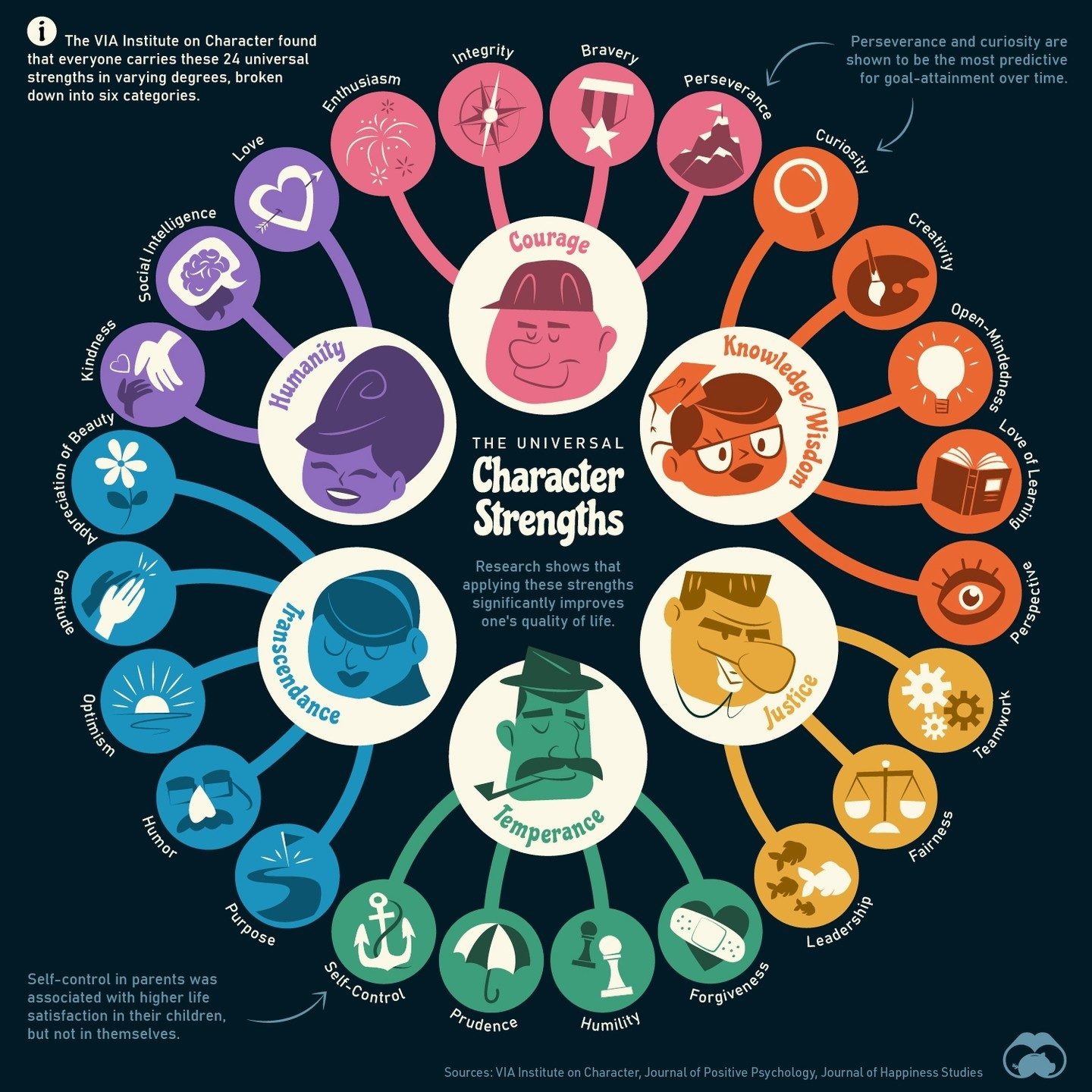
Character Strengths Diagram
The study of personality is a cornerstone of psychology, with extensive research dedicated to understanding human traits. In the 1990s, Dr. Martin Seligman and Dr. Christopher Peterson embarked on a groundbreaking journey to identify the best qualities in people, ultimately cataloging 24 universal character strengths. These strengths are believed to enhance an individual's quality of life when cultivated and applied effectively. The VIA Institute on Character has compiled these strengths into a comprehensive diagram, offering a visual representation of what it means to embody these traits.
Why This Matters
Understanding and applying character strengths can have profound implications for personal well-being and interpersonal relationships. By identifying and leveraging these strengths, individuals can navigate challenges, build resilience, and foster a more fulfilling life. The VIA Institute on Character's work provides a framework for individuals and organizations to focus on these strengths, promoting positive psychology and mental health.
The 24 Universal Character Strengths
The VIA Institute on Character defines 24 strengths that are universally applicable. These strengths are divided into six key categories: Wisdom, Courage, Humanity, Justice, Temperance, and Transcendence. Let's delve into each category and explore the specific strengths they encompass.
Wisdom
Wisdom encompasses strengths that involve the acquisition and application of knowledge. These strengths help individuals make decisions, solve problems, and understand the world around them. The strengths in this category include:
- Creativity: The ability to think outside the box and come up with innovative ideas.
- Curiosity: A keen interest in exploring new things and understanding how the world works.
- Open-mindedness: Willingness to consider new ideas and perspectives.
- Love of Learning: A passion for continuous learning and personal growth.
- Perspective: The ability to provide wise counsel to others.
Courage
Courage involves strengths that allow individuals to take action, face challenges, and overcome obstacles. These strengths are essential for personal growth and resilience. The strengths in this category include:
- Bravery: The willingness to stand up for what is right, even in the face of adversity.
- Perseverance: The ability to keep going despite obstacles and setbacks.
- Honesty: The commitment to truth and integrity.
- Zest: A sense of enthusiasm and energy for life.
Humanity
Humanity focuses on the strengths that foster strong, positive relationships with others. These strengths are essential for building communities, maintaining friendships, and fostering a sense of belonging. The strengths in this category include:
- Love: The capacity to care deeply for others.
- Kindness: The desire to act in ways that benefit others.
- Social Intelligence: The ability to understand and navigate social situations effectively.
Justice
Justice involves strengths that promote fairness, equity, and teamwork. These strengths are crucial for maintaining strong relationships and building cohesive communities. The strengths in this category include:
- Teamwork: The ability to work well with others to achieve a common goal.
- Fairness: The commitment to treating others with respect and equality.
- Leadership: The ability to inspire and guide others toward a shared vision.
Temperance
Temperance encompasses strengths that involve self-control and self-regulation. These strengths are essential for maintaining balance, avoiding excess, and fostering personal well-being. The strengths in this category include:
- Forgiveness: The ability to let go of grudges and move forward.
- Humility: The willingness to recognize one's limitations and accept feedback.
- Patience: The ability to remain calm and composed in the face of challenges.
- Self-regulation: The capacity to control one's thoughts, emotions, and behaviors.
Transcendence
Transcendence involves strengths that connect individuals to something greater than themselves. These strengths are essential for finding meaning, purpose, and fulfillment in life. The strengths in this category include:
- Appreciation of Beauty and Excellence: The ability to recognize and appreciate beauty and excellence in all its forms.
- Gratitude: The capacity to be thankful for the good things in life.
- Hope: The ability to look forward to the future with optimism and faith.
- Humor: The ability to find joy and laughter in life, even in difficult times.
- Spirituality: The sense of connection to something greater than oneself.
Practical Tips
To cultivate and apply these strengths effectively, consider the following practical tips:
Self-Awareness
Begin by assessing your strengths and understanding where you excel. This self-awareness will help you identify areas where you can grow and focus on developing your strengths.
Set Goals
Set specific, measurable, achievable, relevant, and time-bound (SMART) goals to develop your character strengths. For example, if you want to improve your creativity, set a goal to engage in creative activities regularly.
Practice Mindfulness
Mindfulness practices, such as meditation and deep breathing, can help you become more aware of your thoughts and emotions. This awareness can enhance your self-control, patience, and overall well-being.
Seek Feedback
Don't hesitate to seek feedback from others. Constructive feedback can provide valuable insights into your strengths and areas for improvement, helping you develop your character strengths more effectively.
Engage in Community
Engage in activities that foster a sense of community and belonging. Volunteer work, social gatherings, and team sports can help you develop your strengths related to humanity and justice.
Important Takeaways
The 24 universal character strengths provide a comprehensive framework for understanding and developing the best qualities in people. By focusing on these strengths, individuals can enhance their personal well-being, build stronger relationships, and contribute to their communities. The VIA Institute on Character's work highlights the importance of these strengths and offers practical tools for cultivating them.
Conclusion
Character strengths are essential for personal growth, resilience, and well-being. The VIA Institute on Character's diagram of 24 universal strengths offers a valuable framework for understanding and applying these qualities. By cultivating and applying these strengths, individuals can improve their quality of life and contribute to a more positive world.
Watch the Reel
Questions readers ask
What are the 24 universal character strengths identified by the VIA Institute?
The 24 universal character strengths identified by the VIA Institute are categorized into six core virtues: Wisdom (creativity, curiosity, judgment, love of learning, perspective), Courage (bravery, perseverance, honesty, zest), Humanity (love, kindness, social intelligence), Justice (teamwork, fairness, leadership), Temperance (forgiveness, humility, prudence, self-regulation), and Transcendence (appreciation of beauty and excellence, gratitude, hope, humor, spirituality).
How can understanding the 24 character strengths benefit me?
Understanding the 24 character strengths can benefit you by providing a practical framework for personal growth and improving your relationships. By identifying and cultivating these strengths, you can enhance your well-being and resilience, leading to a more fulfilling life.
Who developed the list of 24 character strengths?
The list of 24 universal character strengths was developed by Dr. Martin Seligman and Dr. Christopher Peterson in the 1990s. Their work aimed to identify and catalog the best qualities in people, which are now widely recognized as a cornerstone of positive psychology.
What are the six virtues that categorize the 24 character strengths?
The six virtues that categorize the 24 character strengths are Wisdom, Courage, Humanity, Justice, Temperance, and Transcendence. Each virtue encompasses four unique strengths that collectively contribute to a comprehensive model of character development.
How can organizations utilize the VIA character strengths?
Organizations can utilize the VIA character strengths to foster a positive work environment, enhance team dynamics, and promote leadership development. By encouraging the cultivation of these strengths, organizations can improve employee satisfaction, productivity, and overall organizational success.
What is the VIA Character Strengths inventory?
The VIA Character Strengths inventory is a scientifically validated assessment tool provided by the VIA Institute. It helps individuals identify their top character strengths, providing a personalized roadmap for self-improvement and personal development. The inventory is designed to be accessible and insightful for anyone seeking to enhance their well-being.
Can the 24 character strengths be applied to different aspects of life?
Yes, the 24 character strengths can be applied to various aspects of life, including personal relationships, work, and community involvement. By intentionally cultivating and applying these strengths, individuals can navigate challenges more effectively, build stronger connections, and achieve personal and professional goals.
Related deep dives
Similar reads based on topic and creator.


Recent articles
Fresh deep dives from the latest Reels we unpacked.




Comments
Be the first to comment.