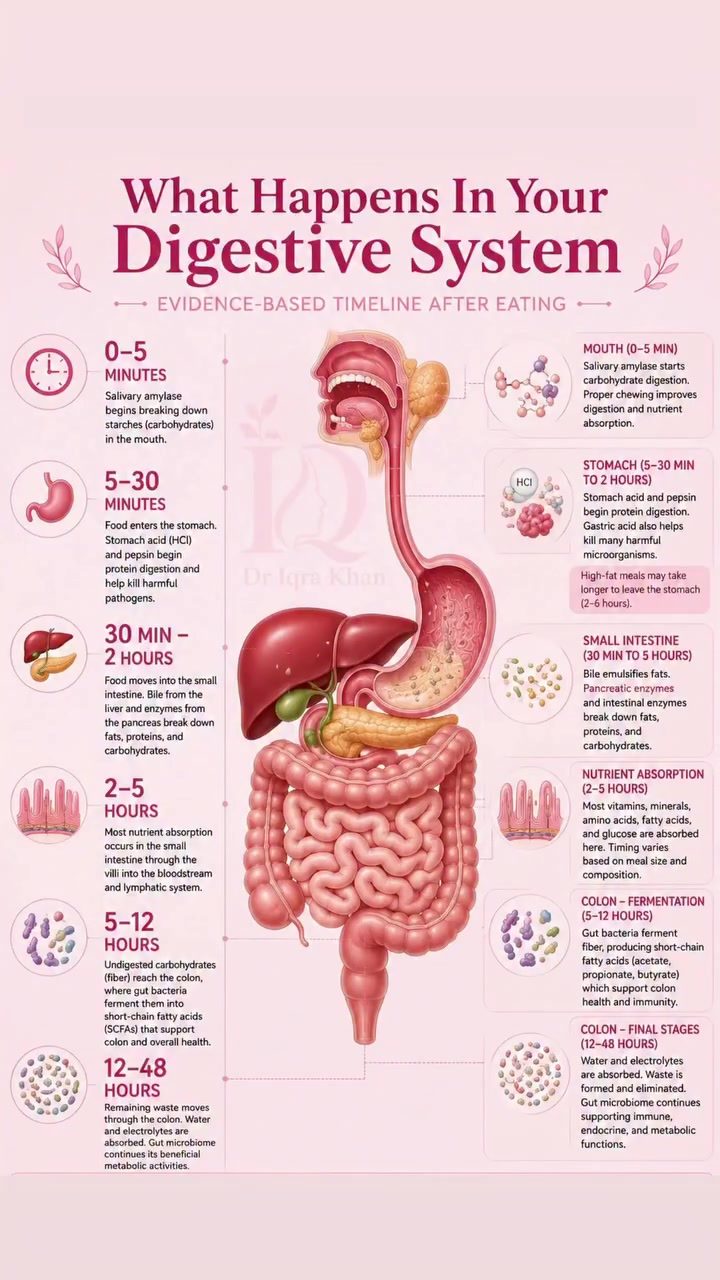
Digestive System Timeline: What Happens to Your Food After You Eat
From the moment you take your first bite to the final stages of digestion, your digestive system undergoes a remarkable journey to break down food, absorb nutrients, and fuel your body. This process is continuous and involves several key stages, each playing a crucial role in maintaining your health.
Context / Why this matters
Understanding the digestive process helps to appreciate the complexity of the human body and the importance of proper nutrition. Each stage of digestion—from the mouth to the colon—serves a unique and essential function. By learning about these stages, you can better understand how your body processes food and why certain dietary habits may be beneficial or detrimental to your health.
Main discussion
The Mouth: The First Line of Defense
Digestion begins in the mouth, where salivary amylase starts breaking down starches (carbohydrates) into simpler sugars. This enzyme begins the process of carbohydrate digestion, making it easier for the body to absorb and utilize these nutrients. Proper chewing is crucial at this stage as it increases the surface area of the food, allowing salivary amylase to act more efficiently. Additionally, chewing helps to mix the food with saliva, forming a bolus that can be easily swallowed and moved into the stomach.
The Stomach: Breaking Down Proteins
After food enters the stomach, a mixture of stomach acid and the enzyme pepsin begin the process of protein digestion. The stomach acid, primarily hydrochloric acid, helps to break down proteins into smaller peptides and amino acids. This acidic environment also serves as a defense mechanism, killing many harmful pathogens that may have been ingested with the food. Pepsin, activated by the low pH of the stomach, further breaks down the proteins into smaller peptides and amino acids, which can then be absorbed in the small intestine.
The Small Intestine: Nutrient Absorption
Food moves into the small intestine within 30 minutes to 2 hours after eating. In the small intestine, bile from the liver and enzymes from the pancreas and small intestine itself break down fats, proteins, and carbohydrates into their simplest forms. The small intestine is the site of most nutrient absorption, where vitamins, minerals, amino acids, fatty acids, and glucose are absorbed through the villi into the bloodstream. This process can take several hours, depending on the size and composition of the meal.
The Colon: Fermentation and Waste Elimination
Undigested waste moves through the colon between 5 to 12 hours after eating, where water continues to be absorbed and electrolytes are returned to the body. Gut bacteria in the colon ferment fiber, producing short-chain fatty acids (SCFAs) such as butyrate, propionate, and acetate. These SCFAs support colon health and boost immunity. After 12 to 48 hours, the remaining waste is formed and eliminated, marking the final stage of the digestive process.
Practical tips
Chewing Thoroughly
Proper chewing is essential for effective digestion. Chewing your food thoroughly increases the surface area of the food, allowing salivary amylase to act more efficiently. Aim for at least 20-30 chews per bite to ensure proper breakdown of carbohydrates.
Stay Hydrated
Hydration plays a crucial role in digestion. Drinking enough water helps to soften food, making it easier to chew and digest. Additionally, water aids in the absorption of nutrients and the elimination of waste.
Eat a Balanced Diet
A balanced diet rich in fiber, proteins, healthy fats, and carbohydrates supports efficient digestion. Fiber, in particular, promotes the growth of beneficial gut bacteria and aids in the production of SCFAs, which support colon health and immunity.
Maintain a Healthy Lifestyle
Regular physical activity and a healthy lifestyle can improve digestion. Exercise stimulates the movement of food through the digestive tract, reducing the risk of constipation and other digestive issues. Aim for at least 30 minutes of moderate physical activity most days of the week.
Be Mindful of Meal Size
The size and composition of your meals can affect digestion. Eating smaller, more frequent meals can help to reduce the workload on your digestive system, making it easier to break down and absorb nutrients. Avoid eating large meals close to bedtime, as this can disrupt digestion and sleep.
Importance of Probiotics
Probiotics are live microorganisms that, when administered in adequate amounts, confer a health benefit on the host. Probiotics can help to maintain a healthy balance of gut bacteria, supporting digestion and overall health. Consider incorporating probiotic-rich foods such as yogurt, kefir, and sauerkraut into your diet, or consult a healthcare professional about taking a probiotic supplement.
Important takeaways
- Digestion Begins in the Mouth: The process of breaking down food starts in the mouth with salivary amylase, which begins carbohydrate digestion.
- Stomach Acid and Pepsin: These play a crucial role in breaking down proteins and killing harmful pathogens.
- Nutrient Absorption in the Small Intestine: Most nutrients are absorbed in the small intestine through the villi.
- Colon Health: The colon supports gut bacteria and absorbs water, producing SCFAs that support colon health and immunity.
- Digestion Timing: The timing of digestion can vary based on factors such as meal size, composition, hydration, activity level, and overall health.
Conclusion
The digestive system is a complex and efficient machine that works continuously to break down food, absorb nutrients, and fuel the body. From the mouth to the colon, each stage of digestion plays a crucial role in maintaining overall health. By understanding the digestive process and implementing practical tips, you can support your digestive system and improve your overall well-being.
Watch the Reel
Questions readers ask
What are the initial steps of the digestion process in the mouth?
The digestion process begins in the mouth as soon as you start chewing. Saliva, produced by the salivary glands, contains enzymes like amylase that start breaking down carbohydrates. Chewing also physically breaks down food into smaller pieces, making it easier to swallow and digest.
How does the stomach contribute to food breakdown?
The stomach plays a vital role in the digestion process by mixing and breaking down food with the help of strong stomach acids and digestive enzymes. These acids, primarily hydrochloric acid, create an acidic environment that activates enzymes and kills harmful bacteria. The stomach's churning action further breaks down food into a semi-liquid mixture called chyme, which then moves into the small intestine.
What is the primary function of the small intestine in digestion?
The small intestine is where the majority of nutrient absorption occurs. It receives chyme from the stomach and, with the help of enzymes from the pancreas and bile from the liver, breaks down proteins, fats, and carbohydrates into absorbable nutrients. These nutrients are then transported into the bloodstream and delivered to the rest of the body.
How does the colon support digestive health?
The colon, or large intestine, is primarily responsible for waste removal and reabsorbing water and electrolytes from undigested food. It also houses beneficial bacteria that help in the final stages of digestion and produce certain vitamins, such as vitamin K and B vitamins. The colon ensures that the body retains essential nutrients and fluids while efficiently eliminating waste.
What is the role of digestive enzymes in the breakdown of food?
Digestive enzymes are specialized proteins that play a crucial role in breaking down food into smaller, absorbable components. They are produced by various organs, including the mouth (salivary glands), stomach, pancreas, and small intestine. Enzymes like amylase, protease, and lipase break down carbohydrates, proteins, and fats, respectively, facilitating efficient nutrient absorption.
How long does the entire digestion process typically take?
The time taken for complete digestion can vary depending on the type of food consumed and individual digestive health. Generally, the process takes about 24-72 hours. This includes the time food spends in the stomach, small intestine, and colon. Understanding this timeline can help in recognizing how the body processes different types of foods and the importance of maintaining a healthy digestive system.
Recent articles
Fresh deep dives from the latest Reels we unpacked.




Comments
Be the first to comment.