Digestion Time of Foods
Understanding how long different foods take to digest is crucial for maintaining a healthy digestive system. Digestion isn't an instant process; your body needs time to break down food, absorb nutrients, and move everything through your digestive system. The timing varies from person to person and depends on several factors, including the meal’s size, fat, protein, fiber content, and your individual digestive system.
Foods higher in fat and protein often take longer to leave the stomach compared to lighter, carbohydrate-rich foods. Additionally, eating a variety of foods together can change how quickly the meal moves through your stomach. Here are some key points to consider:
Context / Why this matters
Variability in Digestion
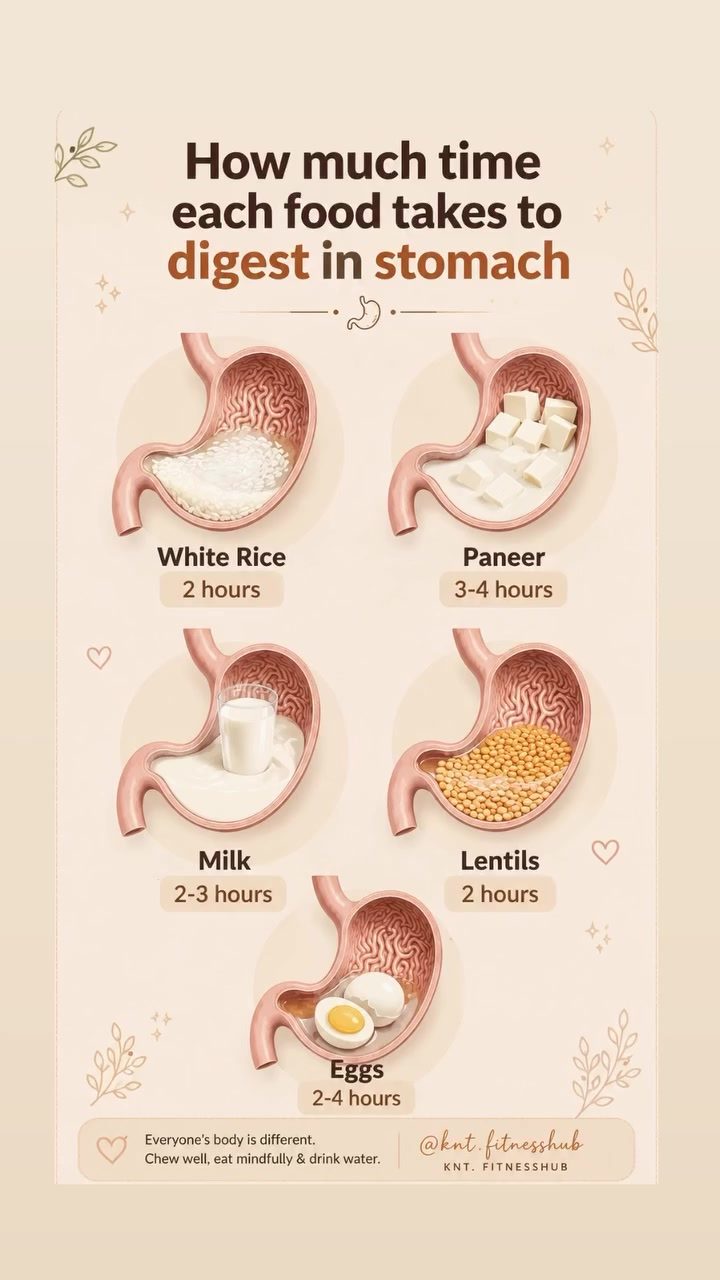
Everyone’s body digests food differently. This variability means that while general guidelines can be helpful, individual experiences may differ. Factors such as age, overall health, and the specific composition of your meal can all influence how quickly food moves through your digestive system. For instance, white rice typically takes around 2 hours to digest, while paneer can take 3-4 hours. Milk and lentils are generally digested in about 2-3 hours and 2 hours, respectively. Eggs fall into a similar range, taking 2-4 hours to digest.
Main discussion
Factors Affecting Digestion Time
-
Meal Composition
The composition of your meal plays a significant role in digestion time. Foods rich in fat and protein, such as paneer and eggs, tend to take longer to digest compared to carbohydrate-rich foods like white rice. Understanding this can help you plan your meals more effectively, especially if you have digestive issues or specific dietary goals.
-
Hydration and Fiber
Proper hydration and a diet rich in fiber are essential for healthy digestion. Water helps to break down food and move it through the digestive system more efficiently. Fiber-rich foods, such as lentils, add bulk to your stool and promote regular bowel movements. Combined, these elements can significantly improve digestion and overall gut health.
-
Mindful Eating
Eating mindfully and chewing your food well are often overlooked but crucial aspects of digestion. When you chew your food thoroughly, it breaks down more easily, making it simpler for your stomach to process. This practice can also help you eat more slowly, allowing your body to better regulate hunger and fullness cues.
-
Physical Activity
Gentle physical activity after meals, such as a short walk, can aid digestion. Movement stimulates the digestive system, helping to digest food more efficiently and reduce the risk of digestive discomfort.
-
Protein and Sleep
Ensuring you have enough protein in your diet is important for digestion, as protein-rich foods like eggs and paneer help maintain muscle mass and support overall health. Adequate sleep and stress management are also vital. Poor sleep and high stress levels can disrupt digestive processes, leading to issues like bloating, indigestion, and other gastrointestinal problems.
Practical Tips
For better digestion, consider incorporating the following tips into your daily routine:
-
Increase Fiber Intake: Include fiber-rich foods in your meals, such as lentils, fruits, and vegetables. These foods add bulk to your stool and promote regular bowel movements.
-
Stay Hydrated: Drink plenty of water throughout the day to help break down food and move it through your digestive system.
-
Practice Gentle Exercise: Take a short, gentle walk after meals to stimulate your digestive system and improve digestion.
-
Chew Thoroughly: Eat slowly and chew your food well to aid in the digestion process. This practice can also help you feel more satisfied and reduce overeating.
-
Enjoy a Protein-Rich Diet: Include enough protein in your diet to support muscle health and overall well-being.
-
Prioritize Quality Sleep: Ensure you get adequate sleep and manage stress levels, as sleep and stress can significantly impact your digestion.
Important Takeaways
-
Individual Variation: Recognize that everyone’s body digests food differently. The digestion times provided are approximate and can vary based on individual factors.
-
Holistic Approach: Healthy digestion involves more than just eating the right foods. It includes staying hydrated, eating mindfully, and maintaining a balanced lifestyle.
-
Balance is Key: Incorporate a variety of foods into your diet and pay attention to your body’s responses to different meals. This will help you find the right balance that supports your digestive health.
Conclusion
Understanding the digestion time of various foods and implementing practical tips for better digestion can significantly improve your overall health. By focusing on a balanced diet, adequate hydration, mindful eating, and gentle physical activity, you can support your body’s natural digestive processes and enhance your well-being. Always remember that healthy digestion is about supporting your body consistently, not watching the clock.
Watch the Reel
Questions readers ask
What are some examples of fast-digesting foods?
Fast-digesting foods are typically those high in carbohydrates and low in fat and fiber. Examples include white bread, pasta, and sugary snacks. These foods can move through your digestive system in as little as 1–2 hours.
Why do high-protein foods take longer to digest?
High-protein foods, like meat, fish, and eggs, take longer to digest because proteins require more energy and time to break down. The process involves complex enzymatic reactions, which slows down the digestion process in your stomach.
How does the digestion time of rice compare to other foods?
White rice generally digests quickly, often within 2-3 hours, similar to other refined carbohydrates. However, brown rice takes longer, around 3-4 hours, due to its higher fiber content which can slow digestion.
How does the time it takes to digest food impact my meals?
Understanding digestion times can help you plan your meals more effectively. For instance, if you need a quick boost of energy before a workout, opt for fast-digesting carbohydrates. Conversely, if you want to feel fuller for longer, include foods high in protein and fiber.
What factors influence the stomach digestion time of a meal?
Several factors influence digestion time, including the meal's composition (e.g., fat, protein, fiber content), the size of the meal, and individual digestive health. Eating a variety of foods together can also alter the digestion rate of the entire meal.
Why does my body need time to digest food?
Food digestion is a complex process. Your body requires time to break down food into nutrients, absorb these nutrients, and move the food through your digestive tract. The speed of this process can impact how full you feel and your overall energy levels.
How can I create a digestion time chart for my meals?
To create a digestion time chart, start by identifying the main components of your meals and estimating their individual digestion times. For example, meals high in protein and fat will take longer to digest than those high in carbohydrates. Document the timing of each meal to observe how quickly or slowly your body processes it.
Related deep dives
Similar reads based on topic and creator.



Recent articles
Fresh deep dives from the latest Reels we unpacked.




Comments
Be the first to comment.