Environmental Impact of Foods
Food and agriculture play a crucial role in shaping our planet's health, particularly through carbon emissions, water usage, and land use. Understanding the environmental impact of different food items can help individuals and communities make more informed choices about their diets. Let's delve into the environmental footprints of various foods, focusing on their greenhouse gas (GHG) emissions and water withdrawals.
Context: Why This Matters
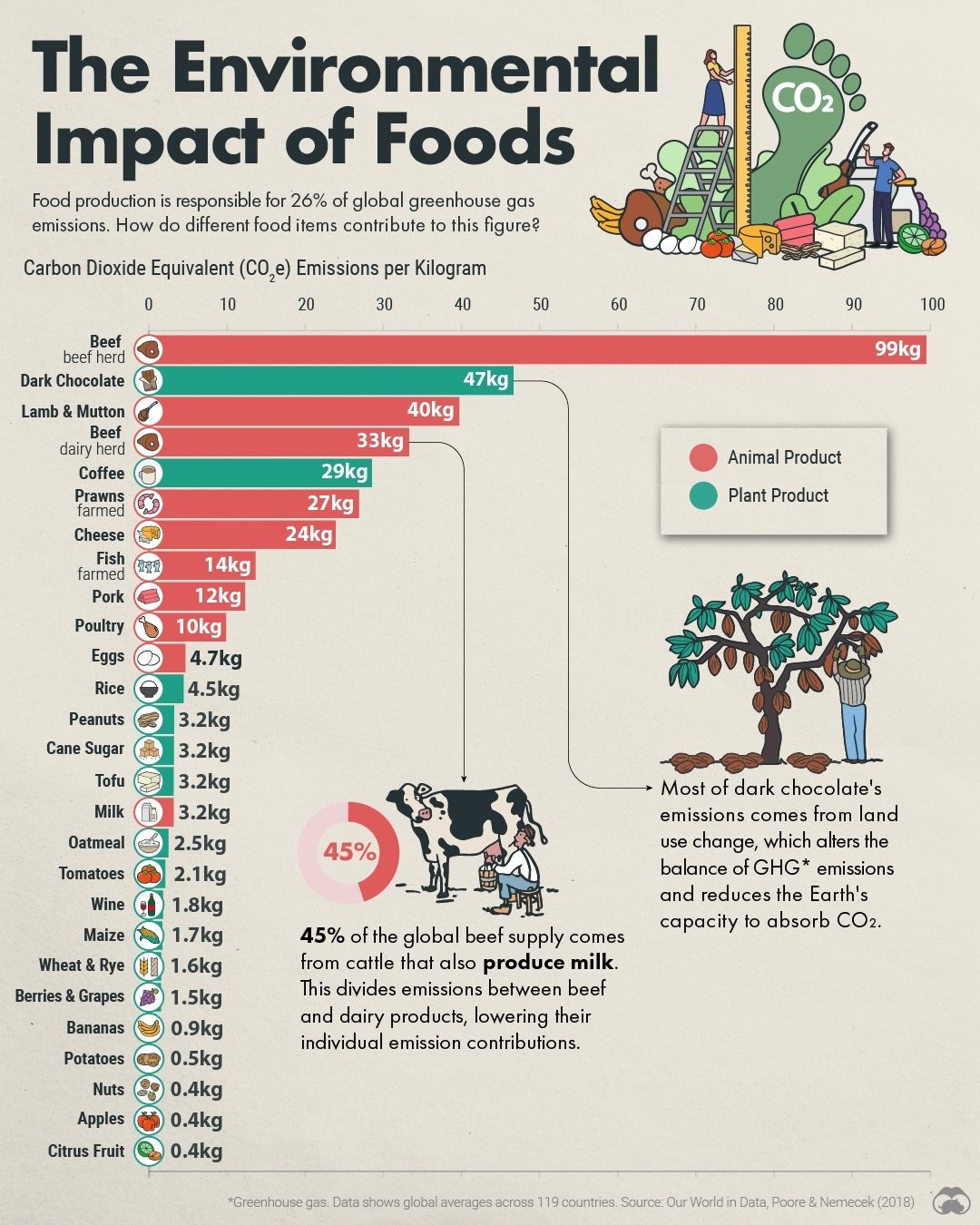
The environmental impacts of food production are substantial. According to the visual information, food production is responsible for 26% of global greenhouse gas emissions. This figure underscores the importance of being mindful of the foods we consume and how they are produced. By understanding the environmental implications of our dietary choices, we can make changes that contribute to a more sustainable future.
The Environmental Impact of Different Foods
Animal Products
Animal products generally have a higher environmental impact compared to plant-based foods. This is primarily due to the significant amounts of land and water required for livestock farming, as well as the greenhouse gases emitted during the process.
Beef and Lamb
Beef has one of the highest carbon footprints, emitting approximately 47 kilograms of carbon dioxide equivalent (CO₂e) per kilogram of meat. This is largely due to the methane released by cattle and the extensive land use required for grazing. Lamb and mutton also have substantial carbon footprints, though slightly lower than beef.
Dairy and Eggs
Products like cheese, milk, and eggs also contribute to high GHG emissions. Cheese, for instance, has a significant carbon footprint due to the energy-intensive processes involved in its production and the methane emissions from dairy cows. Poultry and eggs, while lower on the emissions scale, still have a notable impact.
Fish and Seafood
Fish and seafood have varying impacts depending on the species and farming methods. Farmed fish, such as salmon, often have higher emissions due to the feed and energy required for aquaculture.
Plant-Based Foods
Plant-based foods generally have a lower environmental impact compared to animal products. This is because they require less land, water, and energy to produce.
Grains and Legumes
Grains like rice and legumes like tofu have relatively low carbon footprints. Rice, for example, emits around 2.7 kilograms of CO₂e per kilogram, while tofu has an even lower footprint at approximately 2.5 kilograms of CO₂e per kilogram. These foods are not only environmentally friendly but also provide essential nutrients.
Fruits and Vegetables
Fruits and vegetables are among the most environmentally friendly food options. Foods like tomatoes, bananas, and citrus fruits have low GHG emissions and water withdrawals. Similarly, nuts and oatmeal are also sustainable choices, with relatively low carbon footprints.
Sugars and Beverages
Sugars and beverages like wine also have varying impacts. Cane sugar, for example, has a carbon footprint of around 1.7 kilograms of CO₂e per kilogram, while wine can be more variable depending on production methods and region.
Special Cases
Chocolate
Dark chocolate, while a popular treat, has a surprisingly high carbon footprint. Approximately 45% of its emissions come from land use change. This is because cocoa plantations often lead to deforestation, which not only releases stored carbon but also reduces the Earth's capacity to absorb CO₂. This highlights the importance of sustainable farming practices in mitigating the environmental impact of chocolate production.
Practical Tips for Making Sustainable Food Choices
Choosing foods with lower environmental impacts can significantly reduce your carbon footprint. Here are some practical tips:
Opt for Plant-Based Foods
Incorporating more plant-based foods into your diet can significantly lower your carbon footprint. Focus on grains, legumes, fruits, and vegetables, which are generally more sustainable. These foods are not only environmentally friendly but also provide a range of essential nutrients.
Choose Sustainable Seafood
When it comes to seafood, opt for sustainably farmed or wild-caught options. Look for certifications like the Marine Stewardship Council (MSC) label, which ensures that the seafood was harvested responsibly.
Reduce Meat Consumption
Reducing your intake of beef and lamb can have a significant positive impact on the environment. Consider incorporating more plant-based protein sources like tofu, lentils, and beans into your diet. When you do consume meat, choose options that are sustainably raised and processed.
Support Sustainable Agriculture
Supporting sustainable agriculture practices can help mitigate the environmental impact of food production. Look for products that are certified organic or produced using regenerative farming methods. These practices prioritize soil health, biodiversity, and water conservation.
Make Informed Choices
Being informed about the environmental impacts of different foods can help you make better choices. Pay attention to food labels and choose products that are produced with minimal environmental impact.
Important Takeaways
- Food production accounts for 26% of global greenhouse gas emissions.
- Animal products generally have a higher environmental impact than plant-based foods.
- Incorporating more plant-based foods, choosing sustainable seafood, and reducing meat consumption can significantly lower your carbon footprint.
- Supporting sustainable agriculture practices and making informed choices about the foods we consume can contribute to a more sustainable future.
Conclusion
Understanding the environmental impacts of different foods is crucial for making informed dietary choices. By opting for foods with lower carbon footprints and supporting sustainable agriculture, we can contribute to a more environmentally friendly food system. Making these changes can have a significant positive impact on the planet, helping to reduce greenhouse gas emissions and conserve natural resources.
Watch the Reel
Questions readers ask
Which foods contribute most to greenhouse gas emissions?
Animal products, particularly beef and lamb, are among the largest contributors to greenhouse gas emissions. These foods have a significantly higher environmental impact compared to plant-based foods.
How does water usage vary among different types of food?
Water usage in food production can vary greatly. For instance, producing a kilogram of beef requires much more water than producing a kilogram of vegetables or grains. This is an important factor to consider when evaluating the environmental impact of our diets.
What role do land use and food production play in environmental impact?
Land use for food production is a significant factor in environmental impact. Livestock farming, especially for beef and dairy, requires large amounts of land, contributing to deforestation and habitat loss. In contrast, plant-based foods generally require less land.
Why is it important to be mindful of the environmental impact of food production?
Being mindful of the environmental impact of food production is crucial because it helps reduce our carbon footprint. By choosing foods with lower environmental impacts, we can contribute to global efforts to mitigate climate change and preserve natural resources.
How can understanding the environmental impact of food help in daily life?
Understanding the environmental impact of food can guide daily dietary choices. For example, opting for more plant-based meals and reducing the consumption of high-impact animal products can lead to a more sustainable lifestyle.
Are there any benefits to reducing meat consumption?
Yes, reducing meat consumption, especially beef and lamb, can significantly lower your carbon footprint. Plant-based alternatives often require less water and land, making them more environmentally friendly.
What are some sustainable food choices I can make?
Sustainable food choices include increasing the consumption of plant-based foods, opting for locally sourced produce, and choosing foods with lower water and land requirements. Additionally, reducing food waste and adopting a more balanced diet can contribute to sustainability.
Related deep dives
Similar reads based on topic and creator.



Recent articles
Fresh deep dives from the latest Reels we unpacked.




Comments
Be the first to comment.