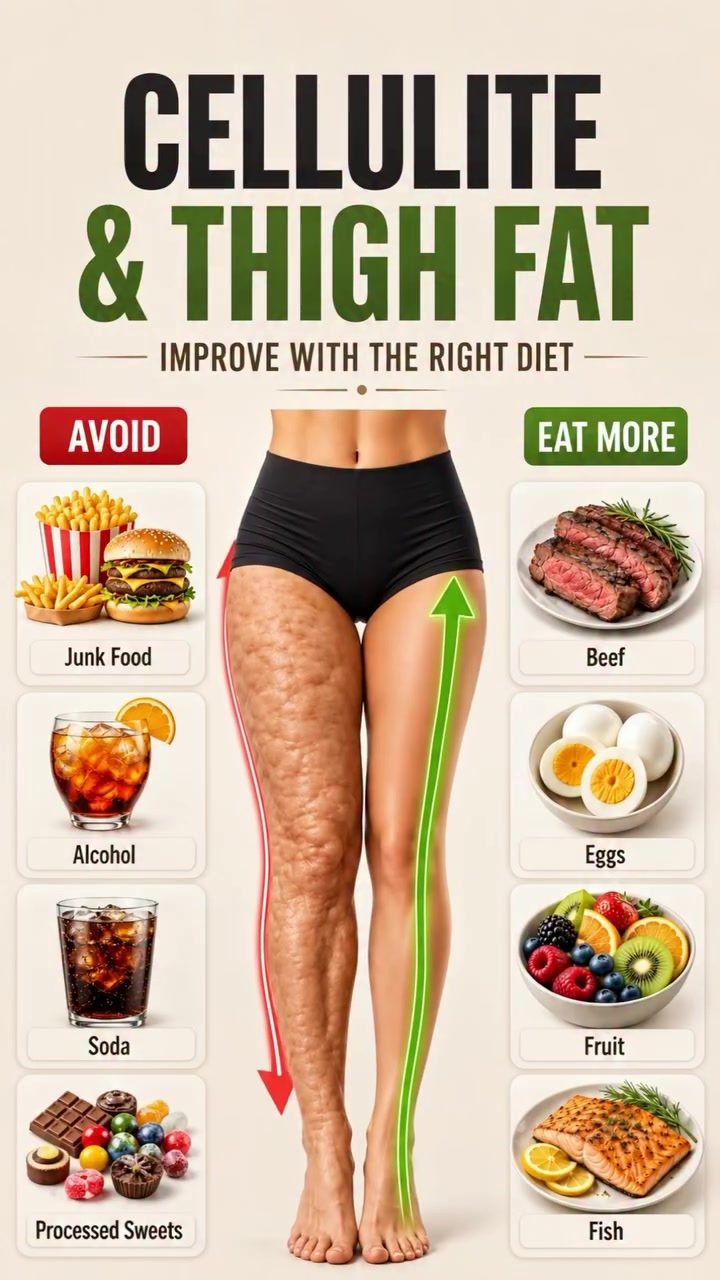
Cellulite and Thigh Fat: Dietary Tips for Improvement
Cellulite is a common concern, affecting 80–90% of women at some point in their lives, regardless of weight or fitness level. While there is no magic solution to eliminate cellulite, focusing on diet, muscle mass, and hydration can significantly reduce its appearance. This article will explore the role of nutrition in managing cellulite and thigh fat, along with practical tips to support a healthier, more confident lifestyle.
Why This Matters
Cellulite, a normal part of human anatomy, is characterized by dimpled, lumpy skin that often appears on the thighs, buttocks, and hips. It is caused by the interaction between the connective tissue beneath the skin and the layer of fat that lies directly beneath it. While it's important to note that cellulite is not a sign of poor health, many people seek to minimize its appearance for aesthetic reasons or to feel more comfortable in their skin.
What Influences Cellulite and Thigh Fat
Nutrition and Body Fat
One of the key factors influencing the appearance of cellulite and thigh fat is body fat levels. A higher percentage of body fat can make cellulite more noticeable, as the fat deposits push through the connective tissue, creating the dimpled effect.
Muscle Mass
Muscle mass also plays a significant role. Building muscle through strength training can help reduce the appearance of cellulite. Stronger muscles can support the skin and connective tissue, making the dimples less visible.
Hydration
Staying hydrated is crucial for maintaining healthy skin. Proper hydration helps to plump up skin cells, making the skin appear smoother and reducing the visibility of cellulite.
Dietary Strategies to Improve Cellulite and Thigh Fat
Foods to Limit
To improve cellulite and thigh fat, focus on reducing the intake of foods that can hinder your progress. These include:
- Ultra-processed fast food: High in unhealthy fats, sodium, and calories, these foods can contribute to weight gain and make it harder to stay in a calorie deficit.
- Alcohol: Excessive alcohol consumption can interfere with your body's ability to burn fat and can lead to dehydration, both of which can exacerbate cellulite.
- Sugar-sweetened drinks: These beverages are high in added sugars and calories, contributing to weight gain and making it more challenging to achieve and maintain a healthy weight.
- Sugary snacks and desserts: These foods are high in sugar and often low in nutritional value, leading to excess body fat and more noticeable cellulite.
Foods to Eat More Of
To support your goal of reducing cellulite and thigh fat, incorporate more of the following foods into your diet:
- Beef: Rich in protein, which supports muscle growth and skin structure.
- Eggs: High in protein and essential vitamins, such as B vitamins and choline, which are crucial for overall health and muscle function.
- Fish: A good source of healthy fats and omega-3 fatty acids, which can help reduce inflammation and support skin health.
- Fruit and Vegetables: Colorful fruits and vegetables are packed with antioxidants, fiber, and essential vitamins and minerals that promote overall health and help maintain a healthy weight.
Practical Tips
Progressive Strength Training
Combining a balanced diet with progressive strength training is one of the most effective ways to reduce the appearance of cellulite. Strength training helps build muscle, which in turn can support the skin and connective tissue, making the dimples less visible. Focus on exercises that target the areas where cellulite is most common, such as the thighs, buttocks, and hips.
Stay Hydrated
Drinking plenty of water is essential for maintaining healthy, smooth skin. Aim for at least 8 glasses of water per day, and more if you are physically active or live in a hot climate. Proper hydration helps to plump up skin cells and can make cellulite less noticeable.
Maintain a Calorie Deficit
If weight loss is part of your goal, maintaining a calorie deficit is crucial. This means consuming fewer calories than your body needs to maintain its current weight. Focus on a balanced diet rich in whole foods, lean proteins, and healthy fats, and avoid ultra-processed foods, sugary snacks, and desserts.
Important Takeaways
No Magic Solutions
It's important to understand that no single food, cream, or supplement can "remove" cellulite. However, a balanced diet rich in whole foods, combined with progressive strength training and adequate hydration, can significantly reduce its appearance.
Consistency is Key
Consistency is crucial when it comes to improving cellulite and thigh fat. Stick to a balanced diet and regular strength training routine over time, and you will see gradual but noticeable improvements.
Conclusion
Cellulite is a normal part of human anatomy, and while it cannot be entirely eliminated, its appearance can be significantly reduced through a combination of a balanced diet, progressive strength training, and adequate hydration. Focus on incorporating more whole foods, lean proteins, and healthy fats into your diet, and limit ultra-processed foods, sugary snacks, and desserts. Remember, the goal is not to achieve perfection but to become healthier, stronger, and more confident in your own skin.
Watch the Reel
Questions readers ask
What are some foods that can help reduce the appearance of cellulite and thigh fat?
Foods rich in protein, such as lean meats, fish, and legumes, can help build muscle mass and reduce the appearance of cellulite. Additionally, consuming fruits, vegetables, and whole grains can improve skin health and promote overall fat loss, which can lead to a reduction in thigh fat.
How does hydration play a role in managing cellulite?
Staying hydrated is crucial for maintaining skin elasticity and reducing the appearance of cellulite. Aim for at least 8 glasses of water daily, and consider incorporating foods with high water content, such as watermelon and cucumbers, into your diet.
Which processed foods should be avoided to combat cellulite and thigh fat?
Limit your intake of processed foods high in sugar, unhealthy fats, and sodium. These foods can contribute to fat storage and inflammation, which can exacerbate the appearance of cellulite. Opt for whole, natural foods instead.
What exercises are effective for reducing cellulite and thigh fat?
Strength training exercises that target the lower body, such as squats and lunges, can help build muscle mass and reduce the appearance of cellulite. Incorporate cardio exercises like running or cycling to promote overall fat loss in the thighs.
How does protein help in the fight against cellulite?
Protein is essential for building and repairing muscle tissue. By increasing your protein intake, you can enhance muscle mass, which can help reduce the appearance of cellulite. Include protein sources like chicken, turkey, eggs, and plant-based options such as tofu and lentils in your meals.
What are some natural foods that can help fight cellulite?
Natural foods rich in antioxidants, such as berries and leafy greens, can help combat inflammation and promote skin health. Incorporating foods high in omega-3 fatty acids, like salmon and walnuts, can also improve skin elasticity and reduce the appearance of cellulite.
Can specific diets help reduce thigh fat and cellulite?
Diets that focus on whole, natural foods and adequate protein intake can support the reduction of thigh fat and cellulite. Consider diets like the Mediterranean diet, which emphasizes fruits, vegetables, whole grains, and lean proteins, as a beneficial approach to managing these concerns.
Recent articles
Fresh deep dives from the latest Reels we unpacked.




Comments
Be the first to comment.