The 2024 Corruption Perceptions Index and Denmark's Record-Breaking Score
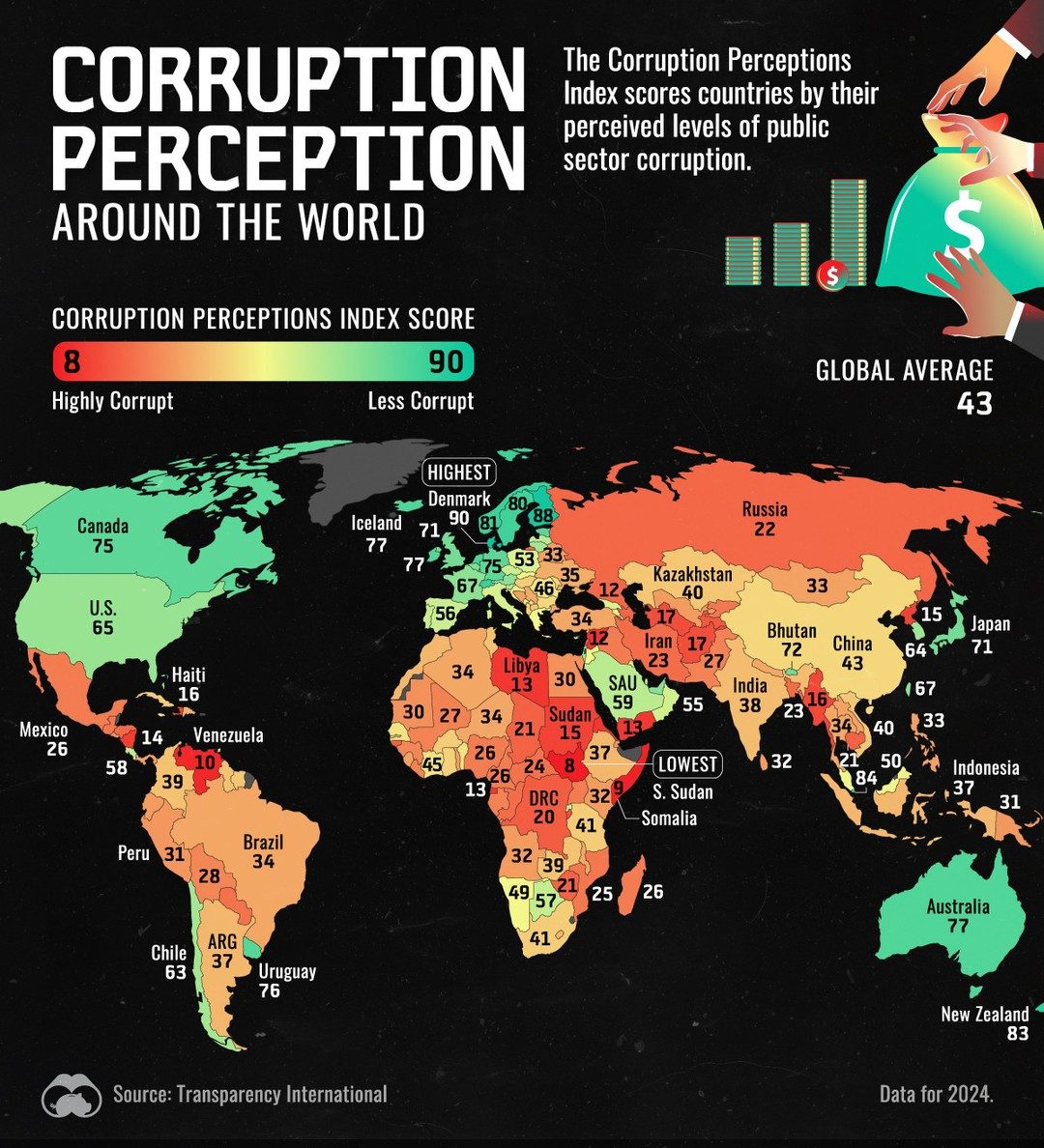
Denmark's consistent performance in the 2024 Corruption Perceptions Index (CPI) is a testament to its commitment to transparency in governance. This year, Denmark tops the list for the seventh consecutive year, reinforcing its reputation as a leader in public sector integrity. Let's dive into the significance of these findings and explore how different countries fared in the 2024 CPI.
Context / Why This Matters
The Corruption Perceptions Index, compiled by Transparency International, is an annual analysis that evaluates countries based on perceived levels of public sector corruption. This metric is crucial for understanding global governance trends, public sector performance, and economic stability. It also serves as a benchmark for international organizations and policymakers to implement effective anti-corruption measures.
Denmark's top ranking in the 2024 CPI underscores the country's dedication to maintaining transparent, accountable, and efficient public administration. This achievement not only highlights Denmark's internal success but also sets a standard for other nations aiming to reduce corruption in their public sectors. Given that moderate corruption concerns affect the United States and Canada, this index provides valuable insights into the areas where these countries need to focus their efforts.
Main Discussion
The 2024 CPI scores reflect a range of corruption concerns across 180 countries and territories. These scores are based on expert assessments and surveys, providing a comprehensive view of public sector corruption.
Top Performers and Their Scores
Countries at the top of the CPI are often characterized by robust anti-corruption frameworks, strong rule of law, and a transparent public administration. For 2024, Denmark leads with a score of 80, followed by Iceland and New Zealand, both with scores of 77. Other high-performing countries include Australia, with a score of 77, and Canada with a score of 75. The global average score is 43, indicating that there is still significant work to be done to achieve global transparency.
Countries with Moderate Corruption Concerns
The United States and Canada, with scores of 65 and 75, respectively, fall into the category of moderate corruption concerns. This slight drop from 2023 indicates that while progress has been made, there are still areas where these countries need to improve their anti-corruption efforts. The decline in scores can be attributed to various factors, including public dissatisfaction with governance, lack of transparency in public procurement, and weak enforcement of anti-corruption laws.
Highly Corrupt Countries
At the other end of the spectrum, countries like Venezuela, Somalia, and Haiti rank as the most corrupt, with scores of 8, 9, and 30, respectively. These countries face significant challenges in maintaining public trust, economic stability, and overall governance. High levels of corruption can lead to widespread poverty, social unrest, and a lack of trust in public institutions, making it difficult for these countries to achieve sustainable development.
Practical Tips
For countries aiming to improve their CPI scores, here are some practical steps to consider:
- Strengthen Legal Frameworks: Implement comprehensive anti-corruption laws and regulations that cover all aspects of public administration and private sector interactions.
- Enhance Transparency: Foster a culture of transparency by ensuring that all public transactions are open and accessible to the public.
- Promote Public Accountability: Encourage public participation in governance and ensure that public officials are held accountable for their actions.
- Invest in Technology: Use advanced technology to monitor and track public sector activities, making it easier to detect and prevent corruption.
- Education and Awareness: Conduct public awareness campaigns to educate citizens about the harmful effects of corruption and the importance of transparent governance.
Important Takeaways
The 2024 Corruption Perceptions Index provides a wealth of information on global corruption trends:
- Denmark's Leadership: Denmark's top ranking highlights the importance of a strong legal framework, transparency, and public accountability in maintaining low corruption levels.
- United States and Canada: These countries need to address moderate corruption concerns by strengthening law enforcement and promoting transparency.
- Global Average: The global average score of 43 shows that while progress has been made, there is still significant work to be done to achieve a truly transparent and accountable global public sector.
- Highly Corrupt Countries: Countries like Venezuela, Somalia, and Haiti need urgent interventions to address systemic corruption and rebuild public trust.
Conclusion
The 2024 Corruption Perceptions Index is a critical tool for understanding global governance trends and the effectiveness of anti-corruption measures. Denmark's continued leadership in this index sets a benchmark for other countries to follow. By focusing on transparency, accountability, and robust legal frameworks, any country can work towards reducing public sector corruption and enhancing public trust. The moderate corruption concerns in the United States and Canada underscore the importance of continuous effort and vigilance in maintaining a transparent and accountable public sector.
Watch the Reel
Questions readers ask
What is the Corruption Perceptions Index (CPI) and who compiles it?
The Corruption Perceptions Index (CPI) is an annual report that ranks countries based on perceived levels of public sector corruption. It is compiled by Transparency International, a global organization dedicated to fighting corruption. The index uses a scale of 0 to 100, where 0 indicates high levels of perceived corruption and 100 suggests very low levels.
Why is Denmark's top score in the 2024 CPI significant?
Denmark's top score in the 2024 CPI is significant because it marks the seventh consecutive year that the country has achieved this rank. This consistency highlights Denmark's sustained commitment to maintaining high standards of public sector integrity and transparency in governance.
How does the CPI help in understanding global governance trends?
The CPI provides valuable insights into global governance trends by offering a comparative analysis of perceived corruption levels across different countries. It helps identify countries with strong public sector integrity and those that may struggle with corruption, enabling stakeholders to assess and address areas of concern.
What does a high score in the CPI indicate about a country's public sector?
A high score in the CPI indicates that a country has a public sector with low levels of perceived corruption. This suggests strong governance mechanisms, effective anti-corruption policies, and a high level of trust in public institutions.
Which countries typically rank high in the CPI and what can other nations learn from them?
Countries that typically rank high in the CPI, such as Denmark, often have robust legal frameworks, independent judiciaries, and strong democratic institutions. Other nations can learn from these countries by studying their policies, implementing similar anti-corruption measures, and fostering a culture of transparency and accountability within their public sectors.
How can the CPI help investors and businesses?
The CPI helps investors and businesses by providing a benchmark for assessing the integrity and stability of a country's public sector. A high CPI score can indicate a lower risk of corruption, which is crucial for making informed decisions about investments, partnerships, and operations.
What are some of the challenges in measuring corruption perceptions?
Measuring corruption perceptions comes with several challenges, including the subjective nature of the data, which relies on expert assessments and surveys. Additionally, perceptions may not always align with actual corruption levels, and the index may not capture all forms of corruption equally. However, the CPI remains a valuable tool for highlighting global trends and promoting anti-corruption efforts.
Recent articles
Fresh deep dives from the latest Reels we unpacked.




Comments
Be the first to comment.