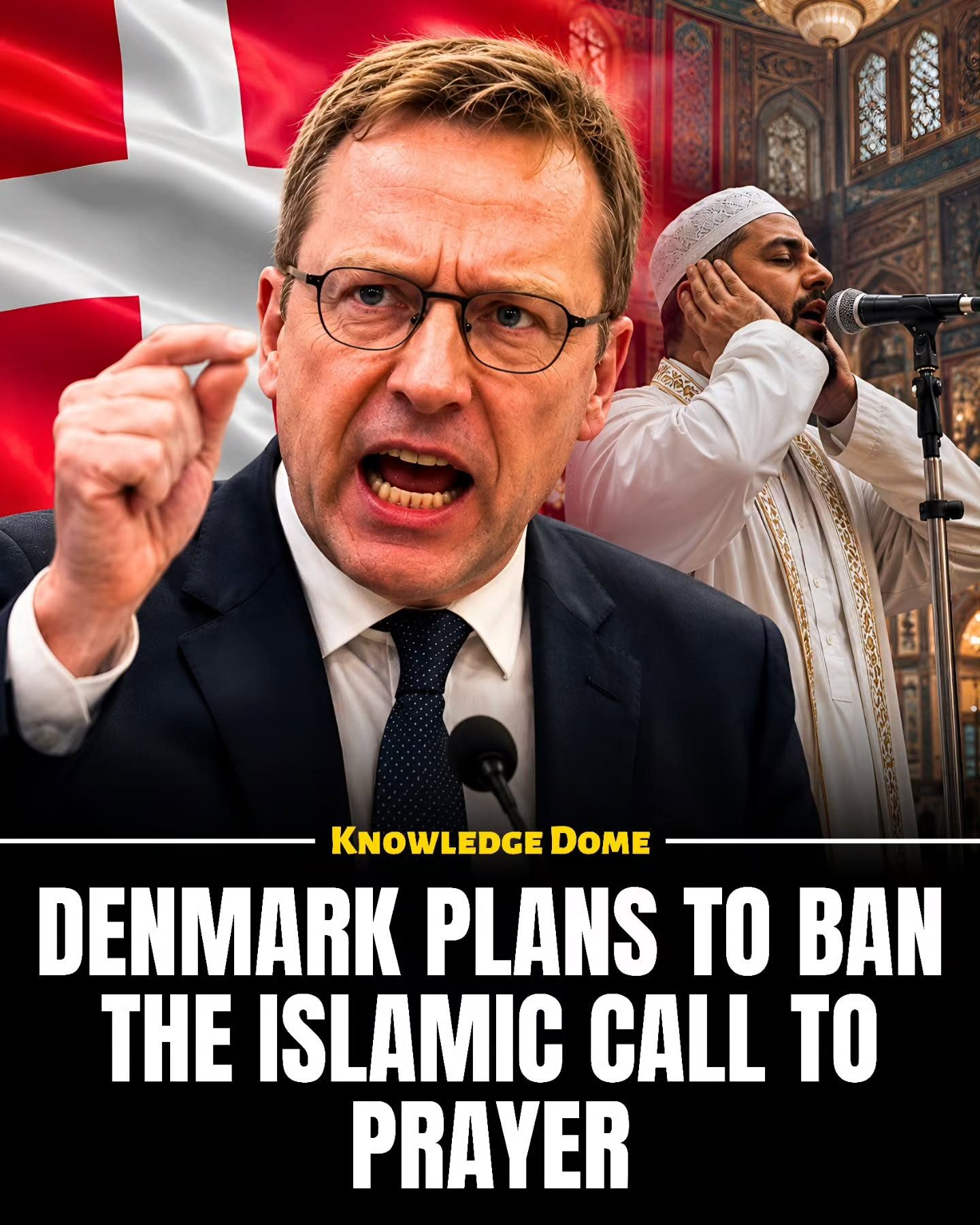
Denmark's Potential Nationwide Ban on the Islamic Call to Prayer
Denmark is currently reviewing a proposal to impose a nationwide ban on the public broadcast of the Islamic call to prayer, known as the Adhan or Azaan. This contentious issue has sparked a significant debate across the country, with proponents and opponents voicing strong opinions on the matter.
Why this Matters
The debate surrounding the potential ban on the Islamic call to prayer in Denmark is not a new one. This is the third attempt by a Danish immigration minister to build a legal case for such a ban, following previous efforts in 2020 and 2025. The current proposal has been put forth by Immigration Minister Morten Bødskov, who has stated that the government is examining whether a nationwide ban can be legally implemented under Danish law.
The Call to Prayer and Its Significance
The Adhan or Azaan is a traditional Islamic call to prayer that is broadcast from mosques five times a day. It serves as a communal invitation for Muslims to gather and pray together. The call is typically made through loudspeakers, which have become a symbol of Islamic presence in many communities worldwide.
The Context of the Proposal
The proposal to ban the public broadcast of the call to prayer has been met with mixed reactions. Supporters of the ban argue that loudspeaker prayer calls are not necessary in modern Denmark and that such broadcasts can disrupt the daily routines of residents. Critics, however, contend that the proposal unfairly targets one particular faith and inflicts on religious freedom. The debate reflects broader concerns about immigration, diversity, and religious practices in a secular society.
Legal and Constitutional Considerations
The proposal raises several legal and constitutional questions. Denmark has strong protections for religion and public worship, and any ban on the call to prayer must navigate these protections. Officials are currently studying whether a nationwide ban would conflict with these constitutional safeguards.
Previous Efforts and Local Regulations
Efforts to ban the call to prayer are not unprecedented in Denmark. Previous attempts in 2020 and 2025 have faced similar challenges and debates. Additionally, some local regulations in areas like Copenhagen already limit the use of loudspeakers due to noise pollution concerns. This suggests that the current proposal may not be starting from scratch but rather building upon existing local laws.
The Role of Immigration Minister Morten Bødskov
Immigration Minister Morten Bødskov has been vocal about his concerns regarding the "Islamisation" of parts of Denmark. He has used strong language, comparing certain areas to a suburb of Islamabad, and has suggested that the country is changing too rapidly. His comments have further fueled the debate, with some seeing his remarks as divisive and others viewing them as a call for cultural preservation.
Public Opinion and Community Impact
The potential ban on the call to prayer has divided public opinion. Supporters of the ban often cite concerns about noise pollution and cultural integration, while opponents argue for the importance of religious freedom and the right to practice one’s faith openly. Some Muslims in Denmark view the proposal as a direct attack on their religious practices and identity.
Practical Tips for Navigating the Debate
As the debate continues, it is essential for all parties to engage in open and respectful dialogue. Here are some practical tips for navigating this complex issue:
- Engage in Constructive Dialogue: Seek to understand the perspectives of all parties involved, including supporters and opponents of the ban, as well as the broader community.
- Stay Informed: Stay updated on the legal and constitutional considerations surrounding the proposal. Understanding the legal framework can provide valuable context for the debate.
- Encourage Inclusivity: Promote a culture of inclusivity and respect for diverse religious practices. Recognize the importance of religious freedom and the impact of the ban on the Muslim community.
Important Takeaways
- The proposal to ban the public broadcast of the Islamic call to prayer in Denmark is part of a broader debate about immigration, diversity, and religious practices.
- The ban raises significant legal and constitutional questions, and officials are currently studying its implications for religious freedom in Denmark.
- Public opinion is divided, with supporters citing concerns about noise pollution and cultural integration, while opponents argue for the importance of religious freedom.
Conclusion
The potential nationwide ban on the Islamic call to prayer in Denmark highlights the complex interplay between religious freedom, cultural integration, and legal considerations. As the debate continues, it is crucial for all parties to engage in respectful dialogue and understand the perspectives of others. The outcome of this proposal will have significant implications for religious practices and community dynamics in Denmark.
Watch the Reel
Questions readers ask
What is the current status of the proposed ban on the Islamic call to prayer in Denmark?
The proposal to ban the public broadcast of the Islamic call to prayer, or Adhan, is currently under review by the Danish government. This is the third attempt by a Danish immigration minister to pursue such a ban, with the current proposal coming from Immigration Minister Morten Bødskov.
What is the Adhan and why is it a point of contention?
The Adhan, also known as the Azaan, is the Islamic call to prayer recited by a Muezzin. It is broadcast publicly from mosques. The controversy arises from differing views on the role of religion in public spaces and the potential impact on local communities.
What are the arguments for and against the ban?
Proponents argue the ban is necessary to preserve public order and respect for local customs. Opponents assert that it infringes on religious freedom and could set a precedent for restricting other religious practices.
How have previous attempts to ban the Adhan in Denmark been handled?
Previous attempts in 2020 and 2025 did not result in a ban. The current proposal is the third attempt, and this time the government is reportedly exploring the legal feasibility of a nationwide ban.
What does this debate tell us about Denmark's approach to immigration and religious diversity?
The debate highlights Denmark’s ongoing discussions about immigration and the integration of religious practices into Danish society. It reflects a broader conversation about balancing secular laws with the rights of religious minorities.
What are the potential legal implications of implementing a ban on the Adhan?
Implementing a ban could have significant legal implications, particularly concerning human rights laws and freedom of religion. The Danish government must consider how such a ban would comply with international and domestic legal standards.
What role do public opinion and religious institutions play in this debate?
Public opinion is deeply divided, with some supporting the ban as a means to maintain community harmony and others opposing it as a form of religious discrimination. Religious institutions, particularly Muslim communities, are actively engaged in the discussion, advocating for their right to practice their faith openly.
Related deep dives
Similar reads based on topic and creator.




Recent articles
Fresh deep dives from the latest Reels we unpacked.




Comments
Be the first to comment.