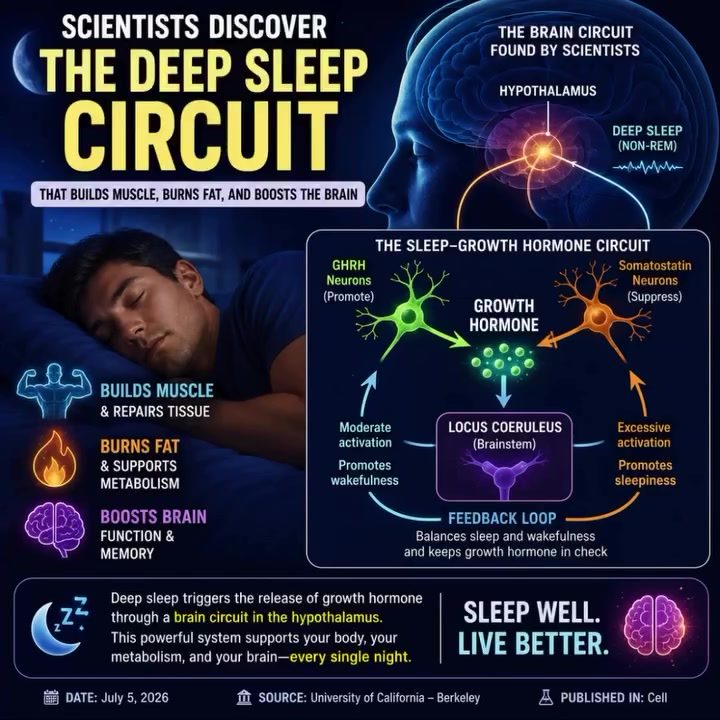
Deep Sleep Circuit
The deep sleep circuit is a fascinating network within the brain that plays a crucial role in regulating growth hormone release and overall bodily functions. Recent research from scientists at UC Berkeley has mapped out this intricate circuit, providing insights into how deep sleep influences various physiological processes.
Why This Matters
Understanding the deep sleep circuit is essential because it directly impacts muscle growth, tissue repair, metabolism, and cognitive functions. During deep sleep, the body undergoes critical processes that support overall health and well-being. By delving into this circuit, we can gain a better understanding of how to optimize our sleep patterns for better health outcomes.
The Deep Sleep Circuit: A Detailed Look
The Role of the Hypothalamus
The hypothalamus, a small but vital region of the brain, is central to the deep sleep circuit. Within the hypothalamus, two key types of neurons play pivotal roles:
- GHRH Neurons (Growth Hormone-Releasing Hormone): These neurons act as accelerators, promoting the release of growth hormone.
- Somatostatin Neurons: These neurons function as brakes, suppressing the release of growth hormone.
During deep non-REM sleep, somatostatin levels drop, while GHRH levels rise moderately. This delicate balance triggers the biggest surge of growth hormone release in the body, which is essential for muscle building, tissue repair, fat burning, and metabolic support.
The Locus Coeruleus: The Wakefulness Switch
Once growth hormone levels rise, they activate the locus coeruleus, a region in the brainstem associated with alertness and cognitive functions. Interestingly, the locus coeruleus has a dual role:
- Moderate Activation: Promotes wakefulness and alertness.
- Excessive Activation: Can push you toward wakefulness if the activity gets too high.
This feedback loop is crucial as it keeps growth hormone levels in check and balances sleep and wakefulness. It ensures that the body does not produce excessive amounts of growth hormone, which could disrupt the sleep cycle and overall health.
Practical Tips for Enhancing Deep Sleep
While understanding the deep sleep circuit is informative, applying this knowledge to improve sleep quality is even more valuable. Here are some practical tips to enhance deep sleep:
Create a Sleep-Conducive Environment
- Dark Room: Ensure your bedroom is dark. Use blackout curtains if necessary.
- Cool Temperature: Keep the room temperature between 60-67°F (15-19°C). Cool environments promote better sleep.
- Comfortable Bedding: Invest in a comfortable mattress and pillows.
Develop a Consistent Sleep Schedule
- Regular Bedtime: Go to bed and wake up at the same time every day, even on weekends.
- Avoid Screens: Limit exposure to electronic devices at least an hour before bedtime. The blue light emitted by these devices can interfere with the production of melatonin, a hormone that regulates sleep.
Optimize Your Diet and Exercise Routine
- Balanced Diet: Eat a balanced diet rich in fruits, vegetables, and lean proteins. Avoid heavy meals close to bedtime.
- Regular Exercise: Engage in regular physical activity. Aim for at least 30 minutes of moderate exercise most days of the week. However, avoid intense workouts close to bedtime as they can be stimulating.
Important Takeaways
The deep sleep circuit is a complex network that regulates growth hormone release and supports various bodily functions. Key points to remember include:
- Deep sleep is crucial for muscle growth, tissue repair, metabolism, and cognitive functions.
- The hypothalamus plays a central role, with GHRH and somatostatin neurons controlling growth hormone release.
- The locus coeruleus acts as a feedback loop, balancing sleep and wakefulness.
- Creating a sleep-conducive environment, maintaining a consistent sleep schedule, and optimizing diet and exercise can enhance deep sleep quality.
Conclusion
The deep sleep circuit is a remarkable system that highlights the intricate connection between sleep and overall health. By understanding how this circuit works and implementing practical tips to improve deep sleep, you can support your body's natural processes and enhance your well-being. Prioritize good sleep hygiene and create an environment that promotes restful sleep to reap the benefits of this powerful biological mechanism.
Watch the Reel
Questions readers ask
What are the key benefits of deep sleep for the body and brain?
Deep sleep plays a pivotal role in muscle growth, tissue repair, and metabolism. It also significantly enhances cognitive functions, such as memory consolidation and problem-solving skills. During this stage, the body undergoes essential processes that support overall health and well-being.
How does the deep sleep circuit in the brain function?
The deep sleep circuit involves a complex network within the brain, primarily regulated by the hypothalamus and locus coeruleus. This circuit manages the release of growth hormones, which are crucial for muscle growth, tissue repair, and metabolic processes. By understanding this circuit, we can gain insights into optimizing sleep patterns.
What is the role of the hypothalamus in regulating deep sleep?
The hypothalamus is a key player in the deep sleep circuit, working in tandem with the locus coeruleus to control the release of growth hormones. This interaction is crucial for maintaining the body's physiological balance and ensuring that deep sleep supports muscle growth, metabolism, and cognitive health.
What is the significance of the growth hormone-releasing hormone (GHRH) and somatostatin in deep sleep?
GHRH and somatostatin are hormones that play crucial roles in the regulation of growth hormones during deep sleep. GHRH stimulates the release of growth hormones, while somatostatin inhibits it. This dynamic interplay is essential for maintaining the body's growth and repair processes during sleep.
How does UC Berkeley's research contribute to our understanding of deep sleep?
UC Berkeley's research has provided significant insights into the deep sleep circuit, revealing how the brain's hypothalamus and locus coeruleus work together to manage growth hormones. This research helps us understand how deep sleep influences muscle growth, metabolism, and cognitive functions, paving the way for optimizing sleep patterns for better health outcomes.
What happens to the brain during deep sleep?
During deep sleep, the brain undergoes a series of critical processes that support cognitive functions and overall health. The deep sleep circuit, involving the hypothalamus and locus coeruleus, regulates the release of growth hormones, which are essential for tissue repair, muscle growth, and metabolic processes.
How does deep sleep impact muscle growth and metabolism?
Deep sleep is crucial for muscle growth and metabolism, as it is during this stage that the body releases growth hormones. These hormones support tissue repair, muscle growth, and metabolic processes, ensuring that the body maintains optimal health and function. Understanding and optimizing deep sleep can lead to better physical health and performance.
Related deep dives
Similar reads based on topic and creator.

Recent articles
Fresh deep dives from the latest Reels we unpacked.




Comments
Be the first to comment.