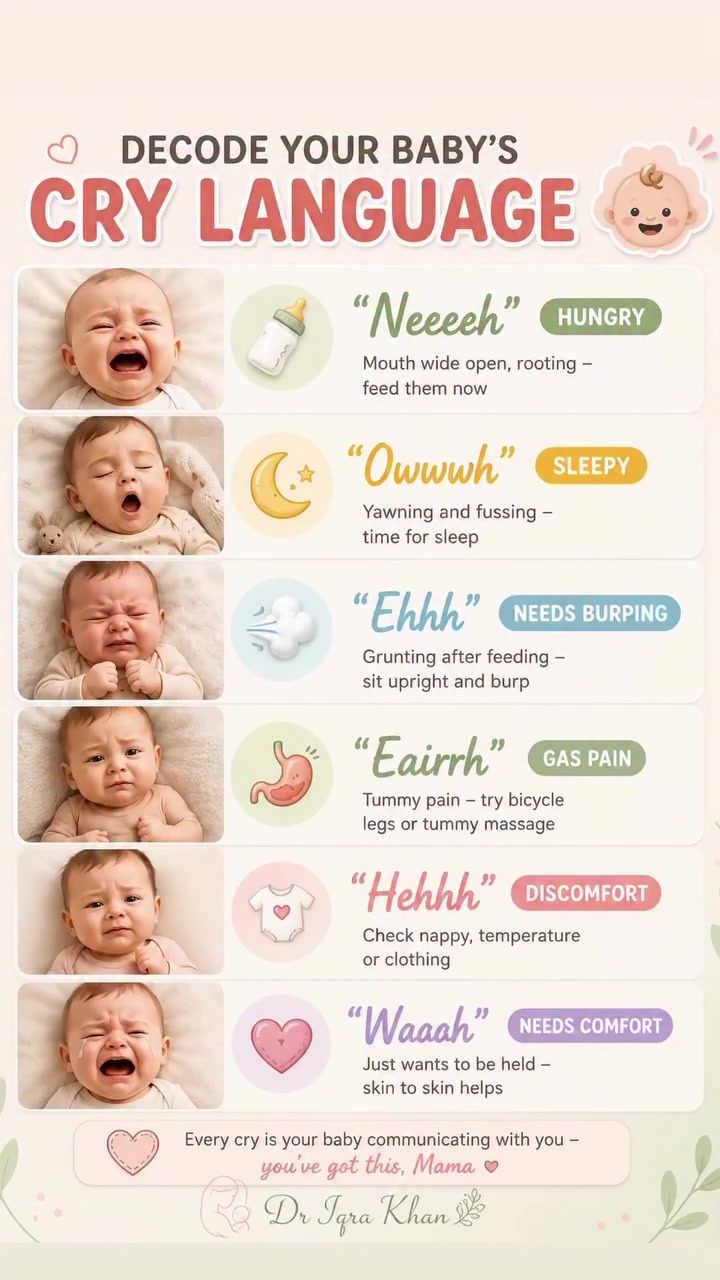
Decoding Baby Cries: A Guide for Parents
Understanding baby cries is a vital skill for new parents. Babies communicate through their cries, and learning to recognize different crying sounds and body cues can help you respond to their needs more effectively.
Why This Matters
Every parent wants to provide the best care for their baby, and understanding baby cries is a crucial part of that. By recognizing the different types of cries, you can address your baby's needs more quickly and confidently, fostering a deeper bond and ensuring your baby's well-being.
Understanding Different Baby Cries
Hunger
One of the most common reasons babies cry is hunger. A hungry baby often makes a "Neeech" sound, accompanied by a wide-open mouth and rooting movements. These cues signal that it's time to feed your baby. Responding promptly to these signs can help maintain your baby's feeding schedule and ensure they get the nutrition they need.
Sleepiness
Babies also cry when they are tired. A sleepy cry is distinct and often characterized by a soft "Owwwh" sound, along with yawning and fussing. Recognizing these signs means you can put your baby to sleep, promoting better rest and potentially preventing overtiredness.
Need to Burp
After feeding, babies may need to burp to release trapped air. This can cause discomfort, leading to a cry that sounds like "Ehhh." If your baby is grunting or seems unsettled after a feeding, try sitting them upright and gently patting their back to help them burp.
Gas Pain
Gas pain is another common cause of baby cries. A cry indicating gas pain typically sounds like "Eairrh" and is often accompanied by signs of tummy discomfort. To soothe your baby, try gentle tummy massages or bicycle leg movements to help release the gas.
Discomfort
Babies may also cry due to discomfort related to their diaper, temperature, or clothing. This cry often sounds like "Hehhh." Check your baby's diaper, ensure they are at a comfortable temperature, and adjust their clothing as needed to alleviate their discomfort.
Need for Comfort
Sometimes, babies just need comfort and cuddles. A cry that sounds like "Waaah" usually indicates that your baby wants to be held. Skin-to-skin contact can be particularly soothing and help strengthen the bond between you and your baby.
Practical Tips for Parents
Trust Your Instincts
Every baby is unique, and while these cues can be helpful, they are not always exact. Trust your instincts as a parent. You know your baby best and can often sense what they need, even if it doesn't fit the typical patterns.
Respond Promptly
When your baby cries, respond promptly to address their needs. This not only helps soothe your baby but also builds trust and security.
Seek Medical Advice When Needed
If your baby cries persistently, has a fever, difficulty breathing, poor feeding, or seems unusually sleepy, seek medical advice promptly. These symptoms could indicate a more serious issue that requires professional attention.
Important Takeaways
- Hunger, sleepiness, and discomfort are common reasons babies cry.
- Recognizing the distinct sounds and body cues can help you address your baby's needs more effectively.
- Prompt response and trust in your instincts are key to good parenting.
Conclusion
Learning to decode your baby's cries is an essential skill that can greatly enhance your parenting experience. By understanding the different cries and responding appropriately, you can ensure your baby's needs are met, fostering a deeper bond and ensuring their well-being.
Watch the Reel
Questions readers ask
How can I tell if my baby is crying because they are hungry?
Hungry babies often produce a distinctive 'Neeech' sound. You may also notice that your baby opens their mouth wide and makes rooting movements, as if searching for food. These cues together indicate that your baby is likely hungry.
What does a high-pitched 'Owwwh' cry mean?
A higher-pitched 'Owwwh' cry is often an indicator that your baby is tired and needs sleep. Responding to this cry by helping your baby settle down for a nap can help prevent them from becoming overtired and fussy.
How can I distinguish between a cry for sleep and a cry for hunger?
The pitch and rhythm of the cry can help you distinguish between these two needs. A hunger cry is often lower and more rhythmic, with a distinctive 'Neeech' sound, while a sleep cry is higher-pitched and may sound more urgent and inconsolable, such as an 'Owwwh' sound.
What should I do if my baby's cry sounds like they are in pain?
If your baby's cry is accompanied by a grimace, tensed body, or a sudden, intense sound, they may be experiencing discomfort such as gas or tummy pain. Try gentle patting on the back, or bicycle movements with their legs to help relieve gas. If the discomfort persists, consult your pediatrician.
Are there other cues besides crying that can help me understand my baby's needs?
Yes, babies use a variety of cues to communicate. Along with different cries, pay attention to body language. For example, a baby who is hungry might also have a wide-open mouth and rooting reflex, while a baby who is tired might rub their eyes or yawn.
What if I can't figure out why my baby is crying?
If you're unsure why your baby is crying, stay calm and go through a checklist of their basic needs: hunger, sleep, diaper change, and comfort. Hold your baby close, offer a pacifier, or try different soothing techniques. If the crying continues, it's always a good idea to contact your pediatrician for advice.
Can different baby cry sounds change over time as the baby grows?
Yes, baby cries can evolve as your baby grows and develops. Newborns have a more limited range of cries, but as they grow, their cries become more varied, and you may notice different sounds and patterns. Staying attuned to these changes can help you better understand and respond to your baby's needs.
Recent articles
Fresh deep dives from the latest Reels we unpacked.




Comments
Be the first to comment.