The Shifting Landscape of Global Economic Power: G7 vs. G20
The dynamic nature of global economic power has become increasingly evident as the G7's share of global GDP has declined significantly over the past few decades. This shift is largely due to the rise of emerging economies, particularly China and India. The change in global economic influence has far-reaching implications, including reduced global influence, changes in trade dynamics, and altered investment flows. To understand these changes, it is crucial to compare the economic trajectories of the G7 and G20 over the past three decades, utilizing data from the World Bank.
Why This Matters
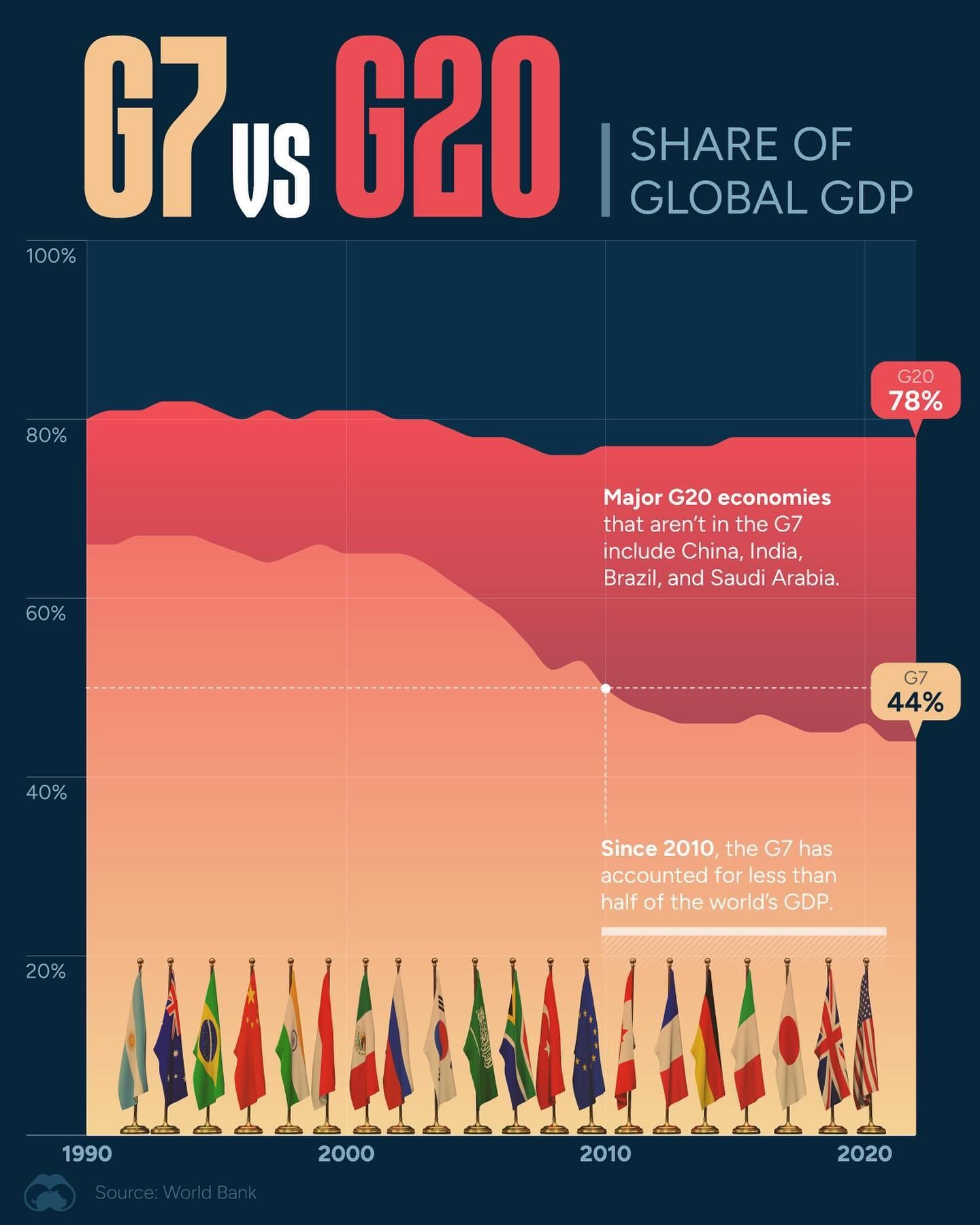
The decline in the G7's share of global GDP from 67% in 1994 to 44% in 2022 signifies a fundamental shift in global economic power. This change has profound implications for international trade, investment, and geopolitical dynamics. Understanding these shifts helps in predicting future economic trends and adapting to a more multipolar world.
The G7 and G20: A Comparative Analysis
To grasp the magnitude of this shift, let's delve into the historical data comparing the G7 and G20 economies from 1990 to 2020.
The G7: A Decline in Dominance
The G7, comprising the United States, Japan, Germany, the United Kingdom, France, Italy, and Canada, has been a dominant force in the global economy for decades. However, recent data shows a notable decline in its share of global GDP. In 1994, the G7's share was 67%, but by 2022, it had dropped to 44%. This decline is particularly pronounced since 2010, when the G7's share fell below 50% for the first time.
The factors contributing to this decline are multifaceted. One of the primary reasons is the economic rise of emerging markets, particularly China and India. These economies have seen rapid growth and have become significant players in the global economy. Additionally, the G7's economic growth has been relatively stagnant compared to these emerging economies. This shift has altered the balance of economic power, reducing the G7's influence on global economic policies and decisions.
The G20: Rising Influence
The G20, which includes the G7 countries plus Argentina, Australia, Brazil, China, India, Indonesia, Mexico, Russia, Saudi Arabia, South Africa, South Korea, and Turkey, represents a broader and more diverse group of economies. The G20's share of global GDP has increased significantly over the past three decades, reaching 78% in 2020. This increase is driven by the rapid economic growth of major economies like China, India, Brazil, and Saudi Arabia, which are not part of the G7.
The rise of the G20 reflects a more inclusive and representative global economic landscape. This group includes both developed and emerging economies, providing a more comprehensive platform for global economic decision-making. The G20's influence has grown in areas such as trade, investment, and financial regulation, reflecting the changing dynamics of the global economy.
The Impact on Trade and Investment
The shift in economic power from the G7 to the G20 has significant implications for global trade and investment. The rise of emerging economies has led to changes in global trade patterns, with increased trade between developing countries and a more diverse set of trade partners for developed economies. This trend is likely to continue as emerging markets become more integrated into the global economy.
Investment flows have also been altered by this shift. Emerging markets, particularly China and India, have attracted significant amounts of foreign direct investment (FDI). This investment has been driven by factors such as market size, growth potential, and cost advantages. As a result, the G7's share of FDI has declined, reflecting the changing dynamics of global investment.
Practical Tips for Navigating the Changing Landscape
For businesses and investors, navigating this changing landscape requires a strategic approach. Here are some practical tips for staying ahead in a multipolar world:
-
Diversify Your Market Strategy: Expand your market presence to include emerging economies. This diversification can help mitigate risks and capitalize on growth opportunities in new markets.
-
Understand Local Market Dynamics: Each emerging market has its unique characteristics and challenges. Conduct thorough market research to understand local dynamics and tailor your strategies accordingly.
-
Build Strong Partnerships: Establish robust partnerships with local businesses and governments. These partnerships can provide valuable insights and help navigate regulatory challenges.
-
Adapt to New Trade Patterns: Stay informed about changing trade patterns and adapt your supply chain and sourcing strategies to reflect these shifts.
-
Stay Agile and Flexible: The global economic landscape is continually evolving. Maintain an agile and flexible approach to quickly respond to new opportunities and challenges.
Important Takeaways
The decline in the G7's share of global GDP and the rise of the G20 reflect a fundamental shift in global economic power. This shift has significant implications for trade, investment, and geopolitical dynamics. To navigate this changing landscape, businesses and investors must adopt a strategic and adaptable approach, diversifying their market presence and staying informed about emerging trends.
Understanding these changes is crucial for anticipating future economic trends and adapting to a more multipolar world. By staying abreast of these developments, businesses and investors can position themselves to capitalize on new opportunities and navigate the evolving global economic landscape effectively.
Conclusion
The decline in the G7's share of global GDP and the rise of the G20 mark a significant shift in global economic power. This shift has far-reaching implications for trade, investment, and geopolitical dynamics. By understanding these changes and adapting their strategies, businesses and investors can navigate the changing landscape and capitalize on new opportunities. As the world becomes more interconnected and diverse, staying informed and agile will be key to success in the global economy.
Watch the Reel
Questions readers ask
Why has the G7's share of global GDP been decreasing?
The G7's share of global GDP has been decreasing primarily due to the rapid economic growth of emerging markets, such as China and India. These countries have experienced significant economic expansion, which has shifted the global GDP distribution towards the G20. The G7 has lost 23% of its global GDP share from 1994 to 2022, a significant decline in its global economic power.
How does the G20 compare to the G7 in terms of economic growth?
The G20 encompasses both developed and developing economies, including major players like China and India. This broader representation has led to more inclusive global economic growth, with the G20's share of global GDP increasing as emerging markets have grown. In contrast, the G7, consisting of only developed economies, has experienced slower growth rates and a decline in its global GDP share.
What are the implications of the shift from G7 to G20 dominance?
The shift from G7 to G20 dominance has several implications. It results in reduced global influence for the G7, changes in trade dynamics, and altered investment flows. Emerging markets now have a significant impact on global trade and GDP. The world's economic center of gravity is shifting towards the East, reflecting the growing economic power of countries like China and India.
Which emerging markets have contributed most to the G7's declining GDP share?
China and India have contributed most to the G7's declining GDP share. These countries have experienced remarkable economic growth over the past few decades, driving the rise of the G20. The economic growth in these countries has significantly altered the global GDP distribution, reflecting the growing importance of emerging markets in the global economy.
How has the change in global economic influence affected global trade?
The changing global economic influence has led to a shift in global trade. The rise of emerging markets has transformed trade dynamics, with goods and services flowing more between developing countries and less between developed nations. The G7's declining influence has led to a change in global trade patterns, with G7 countries trading less among themselves and more with emerging markets.
What is the significance of the G7 vs. G20 comparison in understanding world economic shifts?
The G7 vs. G20 comparison provides a clear picture of how global economic power has shifted over the past three decades. By analyzing the economic trajectories of these two groups, we can gain insights into the changing global economic landscape. This includes the decline of the G7's share of global GDP and the rise of the G20, reflecting the growing importance of developing economies in the world.
What are the implications of the shifting global economic power for investment flows?
The shifting global economic power has led to altered investment flows, with more capital moving towards emerging markets and less towards traditional G7 economies. The economic growth of emerging markets, particularly China and India, has created significant investment opportunities. This shift in investment flows reflects the growing importance of developing economies in the global economy, as well as the changing global economic landscape.
Related deep dives
Similar reads based on topic and creator.


Recent articles
Fresh deep dives from the latest Reels we unpacked.




Comments
Be the first to comment.