Payment Trends in America
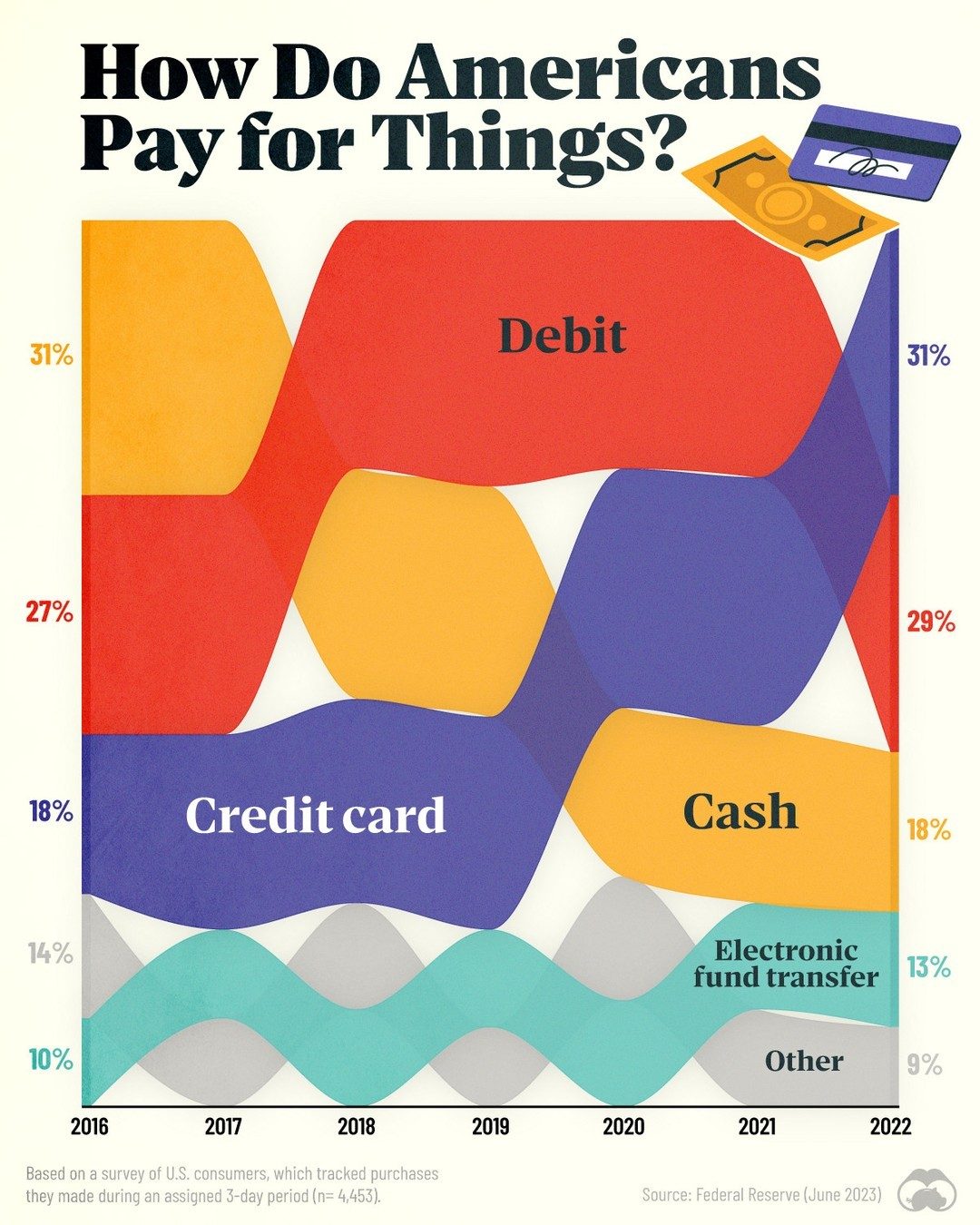
The way Americans pay for goods and services has changed significantly in recent years. From 2016 to 2022, the use of cash in the U.S. decreased from 31% to 18%. This shift is part of a broader trend toward digital and card-based payments. Let's delve into the factors driving this change and what it means for consumers and businesses.
Context / Why This Matters
Understanding the evolution of payment methods is crucial for businesses and consumers alike. As cash becomes less prevalent, businesses must adapt to new payment technologies, and consumers need to stay informed about the best ways to manage their finances in this changing landscape. The Federal Reserve’s Diary of Consumer Payment Choice provides valuable insights into these trends, helping us comprehend the wider implications of this shift.
Main Discussion
The Rise of Digital Payments
The decline in cash usage coincides with the rise of digital payment methods. Credit and debit cards have become the most common forms of payment. According to the Federal Reserve's survey, credit card payments were 27% in 2016 and 29% in 2022, while debit card usage was 2016's 13% increasing to 2022's 18%. This trend highlights the growing convenience and security of card-based transactions.
Electronic fund transfers (EFTs) and other digital payment methods have also seen a notable increase. The data shows that EFTs accounted for 13% of payments in 2022, up from 18% in 2016. This includes online banking transfers, mobile payments, and peer-to-peer (P2P) transactions. The convenience of paying bills and transferring money digitally has driven this growth.
COVID-19 Impact
The COVID-19 pandemic accelerated the shift away from cash. With social distancing measures in place, contactless payments became the preferred method for many consumers. This trend is likely to persist, as businesses and consumers alike have become accustomed to the ease and safety of digital transactions.
Cashless Society
The term "cashless society" has become more prevalent in discussions about payment trends. While the U.S. is not yet entirely cashless, the data suggests a clear movement in that direction. Businesses are increasingly adopting cashless policies, and consumers are becoming more comfortable with digital alternatives.
Practical Tips
For Consumers
-
Stay Informed: Keep up with the latest payment technologies and understand their benefits and risks. This includes learning about mobile wallets, P2P payment apps, and digital banking tools.
-
Adapt to Change: Embrace the convenience of digital payments, but also be mindful of security. Use secure passwords, enable two-factor authentication, and monitor your accounts regularly.
-
Plan for the Future: As cash becomes less common, consider how you will manage your finances. Digital budgeting tools and financial planning apps can help you stay on track.
For Businesses
-
Adopt Multiple Payment Options: Offer a variety of payment methods to accommodate different customer preferences. This includes traditional credit and debit cards, as well as mobile payments and digital wallets.
-
Invest in Technology: Upgrade your point-of-sale (POS) systems to handle digital transactions efficiently. This includes contactless payment options and mobile payment integration.
-
Educate Your Staff: Train your employees on the new payment technologies and how to assist customers with different payment methods. This ensures a smooth and efficient checkout process.
Important Takeaways
-
Cash Usage is Declining: The use of cash has fallen sharply, from 31% in 2016 to 18% in 2022. This trend is likely to continue as more people adopt digital payment methods.
-
Digital Payments are Dominating: Credit and debit cards, as well as electronic fund transfers, are the most common forms of payment. Businesses need to cater to these preferences to stay competitive.
-
COVID-19 Accelerated the Shift: The pandemic played a significant role in accelerating the move away from cash. This trend is expected to persist as consumers and businesses become more comfortable with digital transactions.
-
Security and Convenience are Key: As the use of digital payments increases, so does the need for robust security measures. Consumers and businesses must prioritize safety while enjoying the convenience of digital transactions.
Conclusion
The shift from cash to digital payments is a significant trend in the U.S. Understanding and adapting to this change is essential for both consumers and businesses. By staying informed, embracing new technologies, and prioritizing security, everyone can navigate this evolving landscape successfully. As we move towards a more digital future, it's clear that the way we pay for goods and services will continue to evolve, shaping the financial landscape for years to come.
Watch the Reel
Questions readers ask
Why has cash usage declined in the U.S. between 2016 and 2022?
Cash usage has declined due to the rising popularity of digital and card-based payments, driven by their convenience and enhanced security. The COVID-19 pandemic significantly accelerated this trend as contactless payments became more prevalent.
What are the most common digital payment methods in the U.S. now?
The most common digital payment methods in the U.S. now include credit and debit cards, as well as electronic fund transfers. Mobile payments and contactless payments have also seen substantial growth in recent years.
How has the Federal Reserve's data influenced the understanding of payment trends?
The Federal Reserve’s Diary of Consumer Payment Choice has provided valuable insights into how Americans are shifting from cash to digital and card-based payments. This data helps businesses and consumers understand the changing landscape of payment methods.
What role did the COVID-19 pandemic play in the decline of cash payments?
The COVID-19 pandemic accelerated the decline of cash payments as more people opted for contactless and digital payment methods to minimize physical contact and reduce the risk of virus transmission.
What should businesses do to adapt to the decline in cash payments?
Businesses should consider adopting multiple digital payment options to cater to the growing number of consumers who prefer cashless transactions. This includes accepting credit and debit cards, as well as integrating mobile and contactless payment systems.
What are the advantages of digital payments over cash?
Digital payments offer several advantages, including convenience, speed, and enhanced security features like encryption and fraud detection. They also provide a digital record of transactions, making it easier to track spending and manage finances.
Related deep dives
Similar reads based on topic and creator.



Recent articles
Fresh deep dives from the latest Reels we unpacked.




Comments
Be the first to comment.