Data Center Investment and Copper Usage
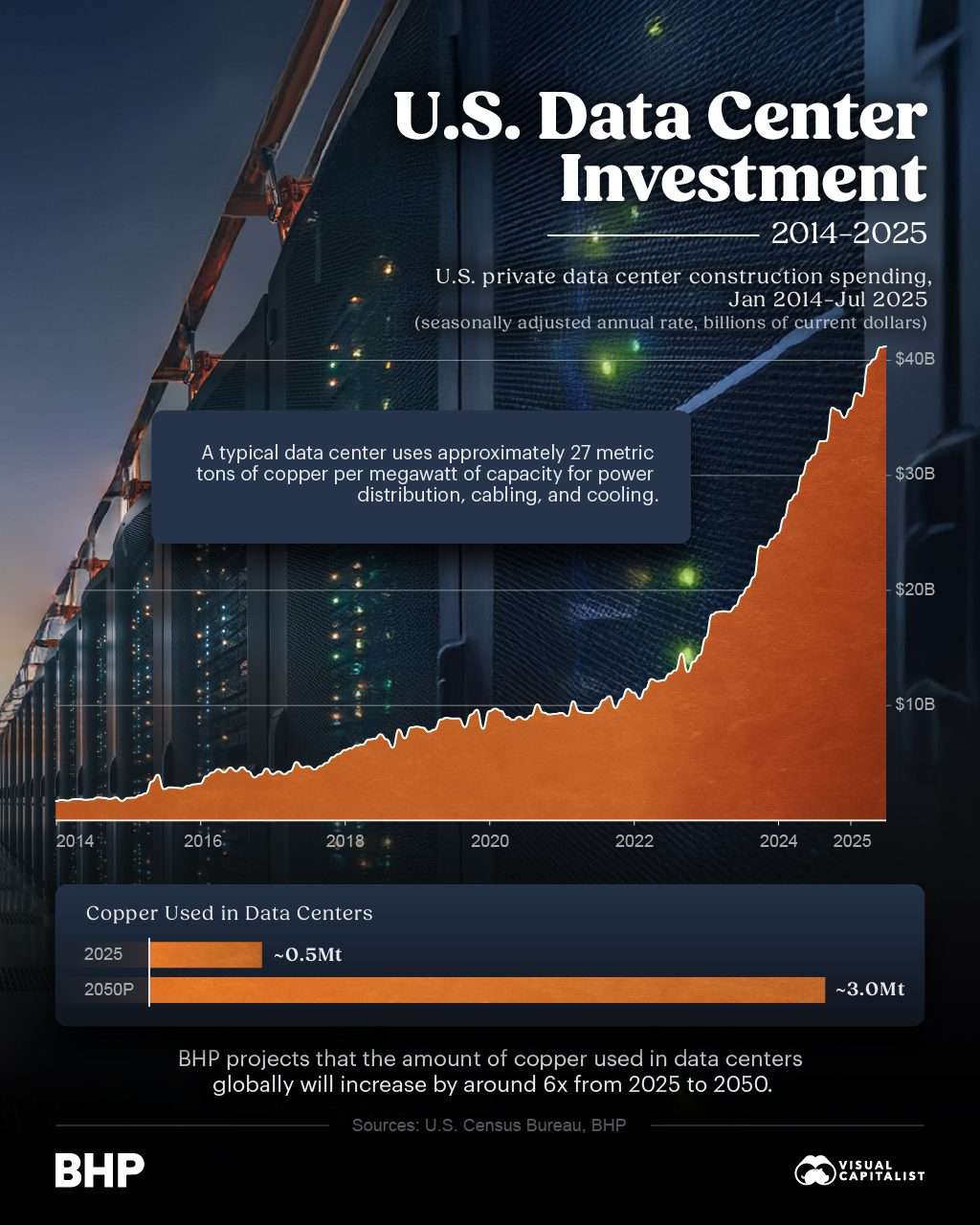
U.S. data center infrastructure is experiencing a dramatic surge in investment, driven largely by the growing demand for AI and other advanced technologies. This investment trend not only impacts the construction sector but also has significant implications for copper demand and future electricity needs.
Why This Matters
Data centers are the backbone of modern digital infrastructure, housing the servers and equipment that power everything from cloud computing to artificial intelligence. The significant increase in data center construction spending reflects the escalating demand for these services. Understanding the scale of this investment and its broader impacts is crucial for stakeholders in the tech industry, as well as policymakers and those involved in energy and resource management.
The Surge in Data Center Investment
Historical Trends and Future Projections
From 2014 to 2025, U.S. private data center construction spending is projected to see a substantial rise. In 2014, the spending was around 40 billion dollars. By 2025, this figure is expected to climb significantly, driven by the need for more robust and efficient data center infrastructure to support emerging technologies.
Key Drivers of Investment
The primary drivers of this investment surge include:
- AI and Machine Learning: The exponential growth of AI and machine learning applications requires more powerful and efficient data centers. These technologies demand high computational power, leading to increased investment in data center infrastructure.
- Cloud Computing: The widespread adoption of cloud services by businesses and consumers alike has fueled the need for more data centers. Cloud providers are constantly expanding their data center footprint to meet the growing demand for storage and processing power.
- 5G and IoT: The rollout of 5G networks and the proliferation of Internet of Things (IoT) devices are also contributing to the surge. These technologies generate vast amounts of data that need to be processed and stored, necessitating more data centers.
Copper Demand and Data Centers
Copper Usage in Data Centers
Copper is a critical component in data center construction. A typical data center uses approximately 27 metric tons of copper per megawatt for power distribution, cabling, and cooling systems. This substantial copper demand is driven by the need for efficient and reliable electrical infrastructure.
Projected Increase in Copper Usage
BHP projects that the amount of copper used in data centers globally will increase by around six times from 2025 to 2050. This projected increase is a direct result of the growing number of data centers and the escalating demand for copper in their construction.
Environmental and Economic Implications
The rising copper demand has both environmental and economic implications. On one hand, it highlights the need for sustainable mining practices and efficient use of resources. On the other, it presents opportunities for copper producers and suppliers, driving economic growth in related sectors.
Future Electricity Needs
Energy Consumption
Data centers are notorious for their high energy consumption. The surge in data center construction spending will inevitably lead to an increase in electricity demand. This poses challenges for energy providers and policymakers, who must ensure a reliable and sustainable energy supply to support this growing sector.
Renewable Energy Solutions
To mitigate the environmental impact, there is a growing focus on renewable energy solutions for data centers. Many tech companies are investing in renewable energy sources such as solar and wind power to reduce their carbon footprint and meet sustainability goals.
Practical Tips for Stakeholders
For Data Center Operators
- Efficient Design: Invest in energy-efficient designs and technologies to reduce power consumption and operational costs.
- Renewable Energy: Explore the use of renewable energy sources to power data centers, aligning with sustainability goals.
- Resource Management: Implement effective resource management practices to optimize copper usage and minimize waste.
For Copper Suppliers
- Sustainable Practices: Adopt sustainable mining and production practices to meet the increasing demand for copper while minimizing environmental impact.
- Innovation: Invest in research and development to find more efficient and cost-effective ways to extract and process copper.
For Policymakers
- Regulation: Develop regulations that promote energy efficiency and sustainability in data center operations.
- Infrastructure: Support the development of renewable energy infrastructure to meet the growing electricity needs of data centers.
Important Takeaways
- Investment Surge: U.S. data center construction spending is projected to see a significant increase from 2014 to 2025, driven by the demand for AI, cloud computing, and 5G technologies.
- Copper Demand: The reliance on copper in data center construction is substantial, with a projected sixfold increase in global copper usage by 2050.
- Energy Needs: The surge in data center investment will lead to increased electricity demand, necessitating sustainable energy solutions.
Understanding these trends and their implications is crucial for stakeholders in the tech industry, as well as for policymakers and those involved in energy and resource management.
Conclusion
The surge in U.S. data center investment is a clear indicator of the growing demand for advanced technologies and the crucial role data centers play in supporting these innovations. The significant increase in copper usage and future electricity needs present both challenges and opportunities. By adopting sustainable practices, investing in renewable energy, and promoting efficient resource management, stakeholders can harness the benefits of this investment while mitigating its environmental impact.
Watch the Reel
Questions readers ask
How does the growth of data centers impact copper demand?
The expansion of data centers, particularly driven by AI and cloud computing, requires extensive copper use for wiring and cooling systems. As more data centers are built, the demand for copper is projected to surge, with significant increases expected by 2050.
What role do AI and cloud computing play in the rise of data center investment?
AI and cloud computing are key drivers of data center investment. These technologies require vast amounts of data processing power, leading to a significant increase in the construction of data centers to support their infrastructure needs.
Why is the data center construction trend important for the tech industry and beyond?
The data center construction trend is crucial as it reflects the growing demand for digital services. This trend not only drives the tech industry but also has broader implications for copper demand and electricity requirements, affecting stakeholders in various sectors.
What are the primary uses of copper in data centers?
Copper is essential in data centers for various applications, including electrical wiring, cooling systems, and data transmission cables. Its excellent conductivity makes it indispensable for the efficient operation of servers and other critical equipment.
How will data center growth by 2025 affect global copper demand?
The projected significant increase in data center construction spending by 2025 is expected to drive up global copper demand. This surge in construction will require substantial amounts of copper for infrastructure development, impacting the global copper market.
What are the implications of increased data center construction on electricity demand?
As data centers continue to grow, so does their electricity demand. The increased construction and operation of data centers will require more power to support their energy-intensive operations, leading to a rise in overall electricity consumption.
How does the investment in data centers affect the construction sector?
The boom in data center investment has a direct impact on the construction sector, leading to increased demand for construction services, materials, and labor. This includes the building of new facilities and the expansion of existing ones to accommodate growing data center needs.
Related deep dives
Similar reads based on topic and creator.


Recent articles
Fresh deep dives from the latest Reels we unpacked.




Comments
Be the first to comment.